


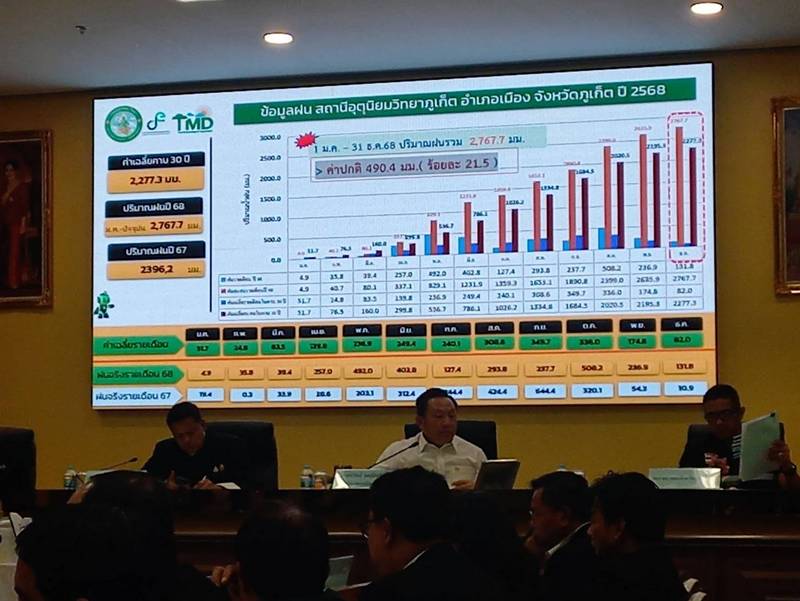

Wirot Liucharoensap, the Director of the Southern Meteorological Center (West Coast), which operates under the Thai Meteorological Department (TMD), told The Phuket News that temperatures recorded in early February are consistent with long-term climate data and should not be considered unusual.
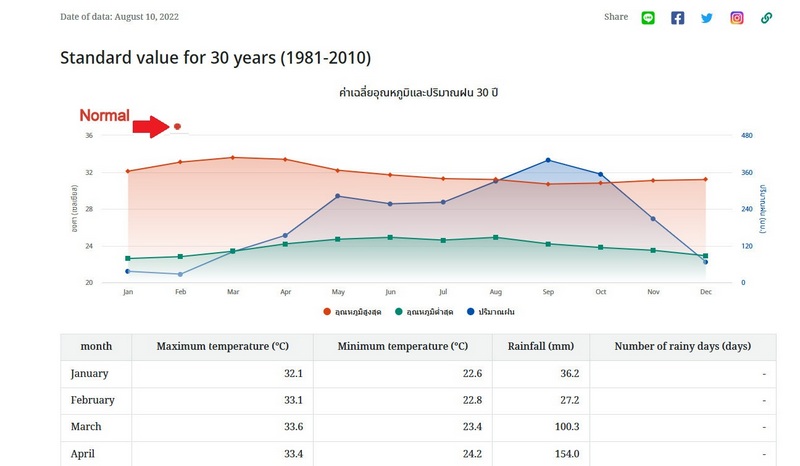
“Based on the 30-year average, maximum temperatures in Phuket during this period are typically around 34-35°C,” Mr Wirot said. “This is a normal seasonal pattern.”
However, even after he was presented the TMD’s own 30-year average showing 32°C as more common in early February, Mr Wirote maintained that the recent hot days this past week were “normal”.
He explained that February marks the transition out of the cool season, though Southern Thailand does not experience a true winter. Combined with minimal cloud cover, solar radiation remains strong.
“Early January is when the sun is closest to the Earth. When this coincides with clear skies and very little cloud cover, sunlight reaches the surface at full intensity,” he said. “This is why the heat feels stronger.”
Addressing public concern that temperatures are already nearing typical April levels, Mr Wirot stressed that such conditions are common for the Andaman coast.
“It is normal for temperatures to reach the mid-30s in February,” he said, adding that current conditions are not classified as extreme.
When asked whether this year is hotter than previous years, he said there is no clear indication yet of abnormal warming.
“At this point, temperatures remain within the normal range. There is no definitive evidence that this year is hotter than the same period in previous years,” he said.
Regarding public health advisories, Mr Wirot noted that the Meteorological Department issues official heat warnings only when temperatures reach the ‘severe heat’ threshold of 40°C or higher.
“For southern Thailand, such temperatures usually occur later in the year, particularly in April, and more often in inland areas such as Krabi and Trang,” he said. “Phuket is surrounded by the sea, so temperatures generally peak at around 37-38°C.”
He added that Phuket’s highest recorded temperature he has observed was around 39°C in 2019, but did not offer a definitive answer to Phuket’s hottest temperature on record.
Mr Wirot also explained that the intense heat sensation currently being felt is partly due to environmental factors, including the absence of rainfall, reduced cloud cover, declining green spaces, and increased urban activity, which can cause short-term heat accumulation.
“Once sea breezes develop, cooler air from the ocean helps lower temperatures,” he said. “This prevents Phuket from experiencing prolonged extreme heat like inland areas.”
Mr Wirot reaffirmed that no heat warning is planned at this time, advising residents and tourists to stay hydrated, avoid prolonged outdoor exposure during peak sun hours, and take basic heat precautions.
“Overall, conditions remain normal for this time of year,” he said.
However, local officials in 2024 issued heatstroke warnings when temperatures hit over 37°C for over a week. Heat warnings were more serious in 2023, when temperatures hit 40°C.
AVOIDING SHORTAGES
Meanwhile, prolonged dry conditions associated with the hot weather have heightened concerns over Phuket’s water supply, prompting officials to meet and discuss the risk of potential water shortages during the February-April hot season.
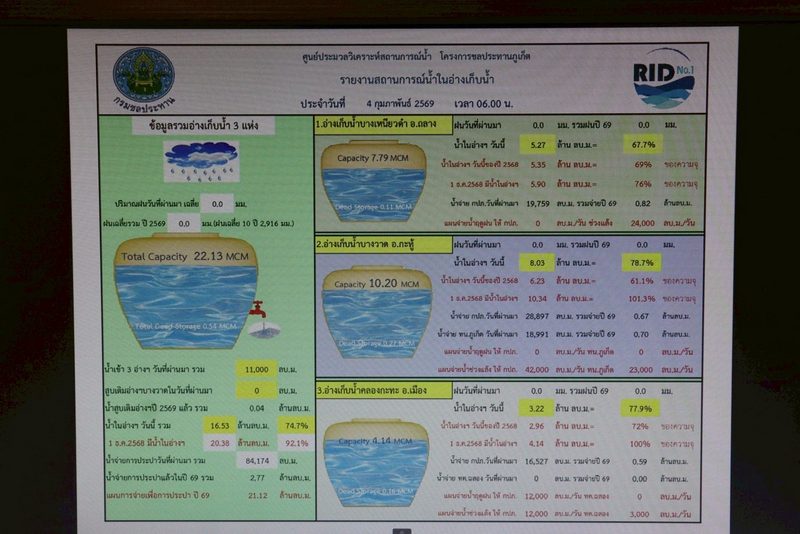
“Currently, the total water storage in the three reservoirs – Bang Neow Dam, Bang Wad, and Klong Kata – is 16,530,000 cubic metres,” said an official report of the meeting.
According to data from the Royal Irrigation Department, Phuket’s key reservoirs currently retain relatively high water levels.
Bang Wad Reservoir, the island’s main water source, has a total capacity of 10.2 million cubic metres and is currently holding 7.97 million cubic metres, or 78% of capacity, with 7.7mn cubic metres classified as usable water.
Klong Kata Reservoir is currently storing 3.22mn cubic metres, also around 78% of capacity, with 3.06mn cubic metres available for use. Meanwhile, Bang Neow Dam is holding 5.26mn cubic metres, equivalent to 68% of its 7.2mn-cubic-metre capacity, with 5.23mn cubic metres usable.
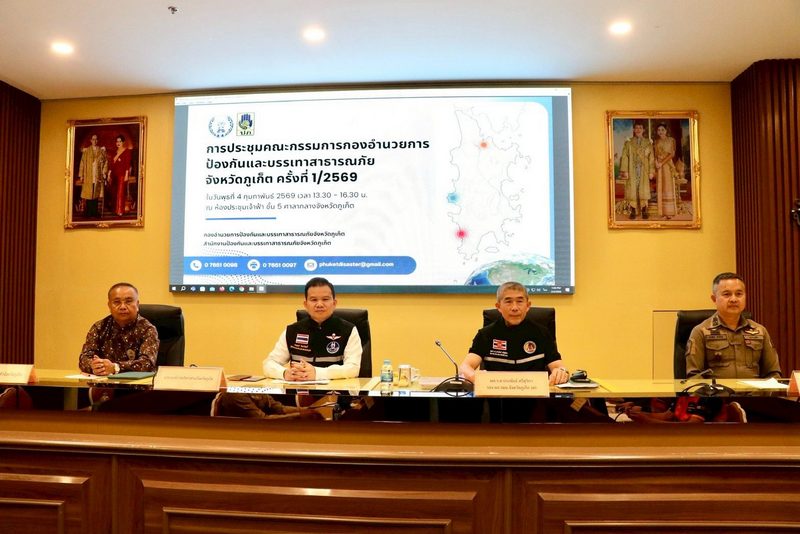
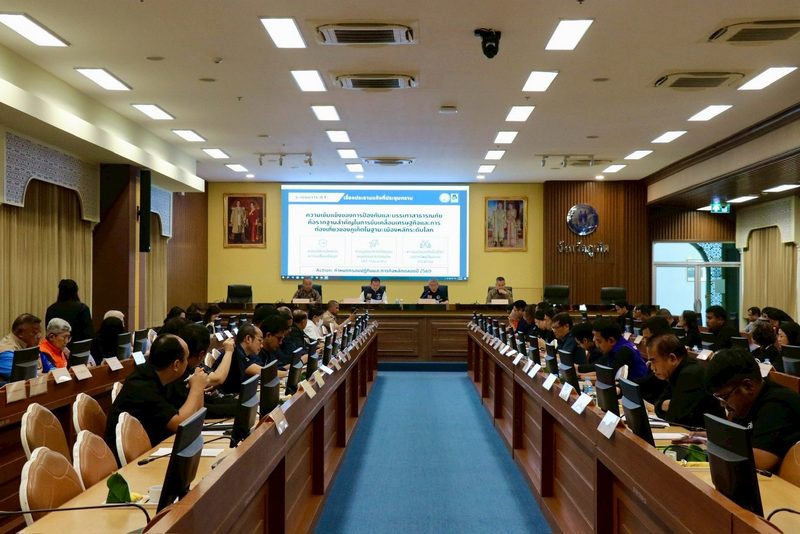
A meeting of officials at Phuket Provincial Hall on Thursday (Feb 5) agreed on water management strategies, including contingency plans and purchasing water from the private sector to ensure sufficient supply.
However, Thanit Yuthong, the new Chief of the Phuket branch of the Royal Irrigation Department (RID Phuket) who replaced Krirksak Leenanon in October, assured that the decades-in-coming project to pipe in water from Phang Nga should begin by next year.
Mr Thanit declined to provide a specific timeline, citing the ongoing transition in his position and noting that some projects still require further review.