


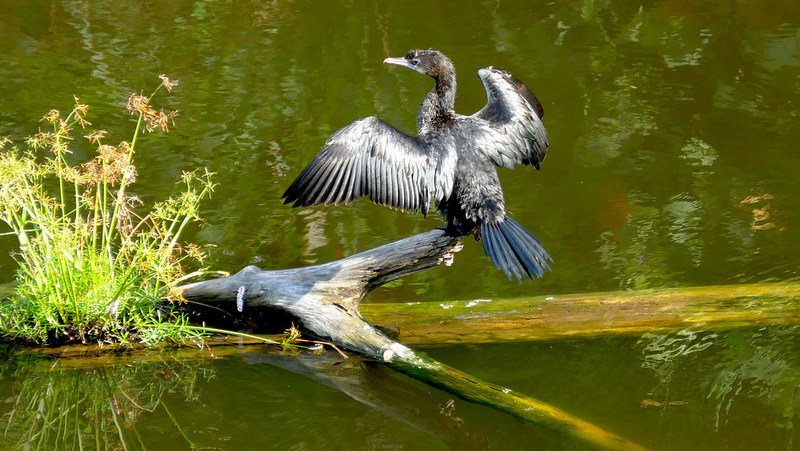
It all started after I snapped a couple photos of a Little Cormorant in the water pool outside my balcony. This bird is there everyday, diving for fish before perching on a small log with its wings outstretched, drying in the sun. This is where the history lesson in school about dinosaurs came into my mind. Yes, we all know the main ones such as the T.Rex and Triceratops that were in all the movies. But the photos reminded me of Archaeopteryx – one, if not the first, of the feathered birds.
The Archaeopteryx evolved in the area that is now southern Germany around 150 million years ago when Europe was a warm tropical sea, full of islands and much closer to the equator than it is today. A quick check revealed that the Cormorant is a very old species of bird that has been around for around 35mn years. There are different types and sub species that all evolved to match their environment over time, but the Cormorant in various guises goes right back to the dinosaurs that died out 65mn years ago. Looking at the photo in the pond out the back and comparing it to fossils and the like of Archaeopteryx, they look remarkably similar.
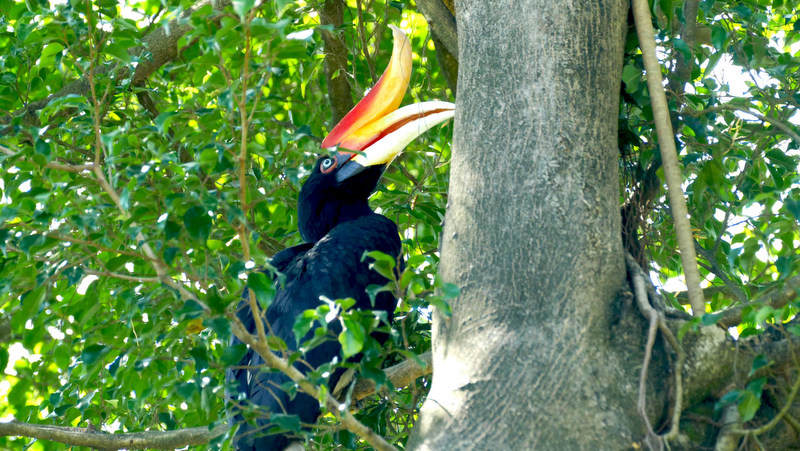
Then there are the various types of Hornbill present in Thailand that occasionally surface in Phuket. The Hornbills have also been knocking around for a very, very long time, around 48 to 50mn years. They originated in Africa before spreading to Asia, in a similar manner to humanity. Around 22mn years ago the species split into ground-dwelling and tree-dwelling Hornbills, with the ones similar to what we have today emerging around 19mn years ago. However, Hornbills are believed to have split from their closest living relative, the Hoopoes, around 75mn years ago, meaning they survived the dinosaurs’ extinction. Today, there are over 60 recognised species of Hornbills, with the highest diversity found in Asia.
Ancient
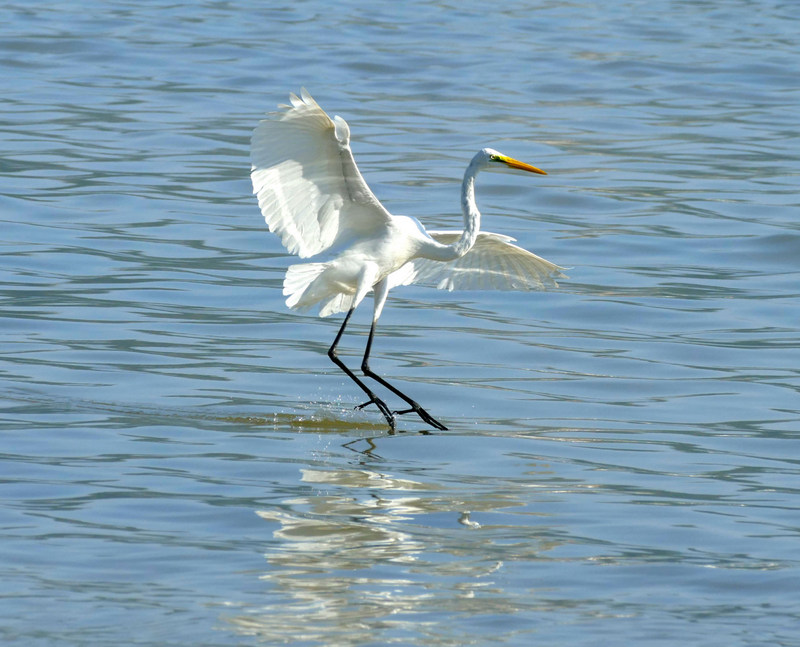
Others that surprised me include Herons, Egrets and Storks. We have a fair few types here in Phuket seen on the beaches, ponds and water holes. Herons (family Ardeidae) are a fairly ancient group of birds, with fossils in the family dating as far back as 60mn years. While the family emerged shortly after the dinosaurs (Paleogene period), modern-looking Heron species appeared more recently, around 7mn years ago, with some of the current types arriving during The Miocene Epoch (23 to 5.3mn years ago). Some specific species have remained largely unchanged for millions of years; for instance, the Great Blue Heron has existed in its current form for over 1.5 to 1.8mn years.
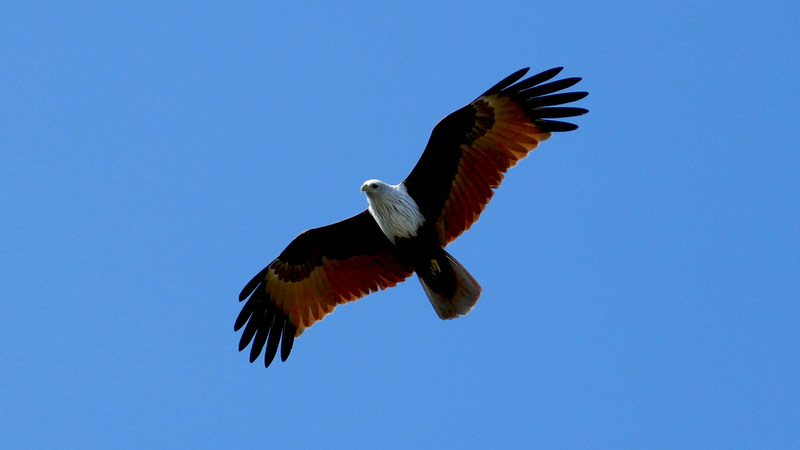
Then there is the Grey Faced Buzzard. There are many birds of prey in Phuket such as the Oriental Honey Buzzard, White Bellied Sea Eagle, Brahminy Kite, Booted Eagle, Peregrine Falcon and the Grey Faced Buzzard. What surprised me is that Eagles seem to be the most recently evolved. Eagles, Hawks and Kites all came from the family Accipitridae and split into their own species at various times since. Kites seem to have been the first to evolve around 36mn years ago. Based on biological research, the evolutionary timeline indicates that an ancient group of birds recognised as Kites appeared around 36mn years ago and Eagles are believed to have descended from this, with the first to emerge Sea Eagles, followed by Booted Eagles. This interetsed me as the White Bellied Sea Eagle and Booted Eagle are a common sight in Phuket.
While they share a common ancestor within the family Accipitridae, Kites are generally considered a more ancient line of birds. However, the genus Butastur (which includes the Grey Faced Buzzard) belongs to the family Accipitridae, with origins in the Early Eocene (about 50mn years ago). The Grey Faced was one of the early Buzzards but in its current form is only around 300,000 years old.
An interesting fact I did not know is that Falcons are NOT part of that group and are decended from the same family as parrots. Falcons (family Falconidae) evolved from, or are closely related to, an ancestral group of predatory birds in the Southern Hemisphere, around 50 to 60mn years ago. They belong to the group Australaves, sharing a more recent common ancestor with parrots and songbirds than with Hawks or Eagles. Falcons evolved approximately 50 to 35mn years ago, with earlier raptorial ancestors dating back 58 to 55mn years, while modern Falcons began diversifying around 7.5mn years ago, likely originating in Africa, or Eurasia. The Peregrine Falcon diverged roughly 3 to 8mn years ago and is the fastest bird on the planet, reaching speeds over 200mph in its hunting dive, known as a stoop, with some estimates reaching up to 238mph.
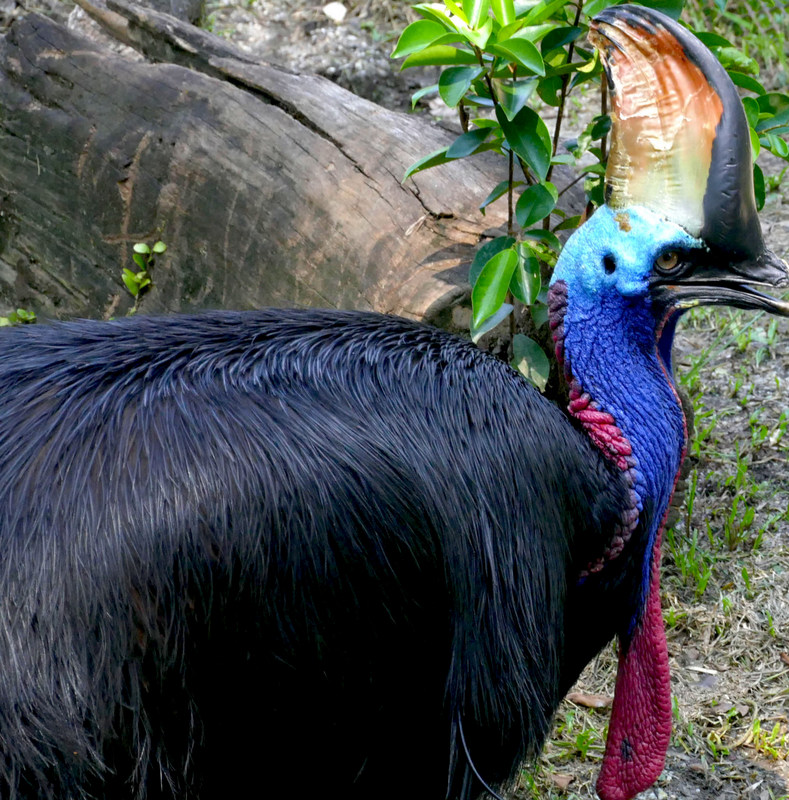
Many birds that have been flying Phuket skies in their current form trace back before even the earliest humans set foot on the planet, some to the time of the dinosaurs. Yes, flightless birds such as Ostriches, Emus and Cassowaries are older but, of course, they do not inhabit Phuket. All wildlife interests me, particularly evolution and how nature determined certain shapes, colours and traits were key to the survival of certain species. I am not a paleontologist or evolutionary biologist but was amazed that this discovery came from just a couple of photos from my balcony while drinking coffee and I hope this read provides a nice differential from the news we take in everyday.