


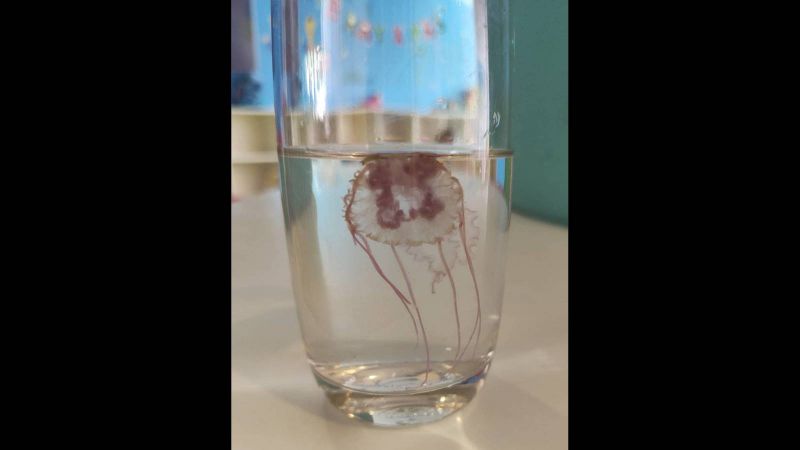
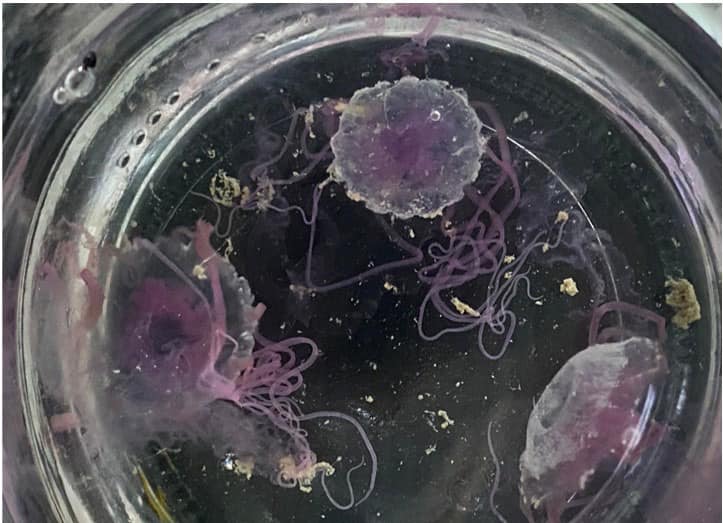
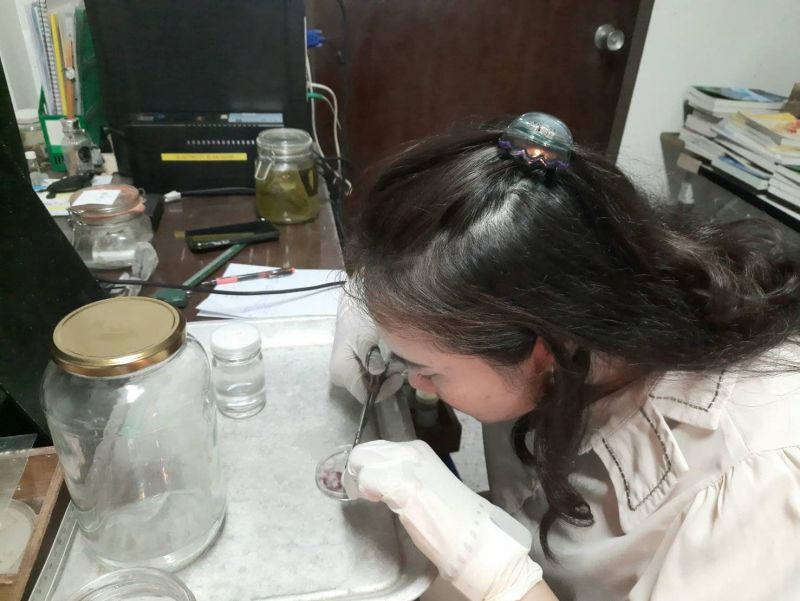
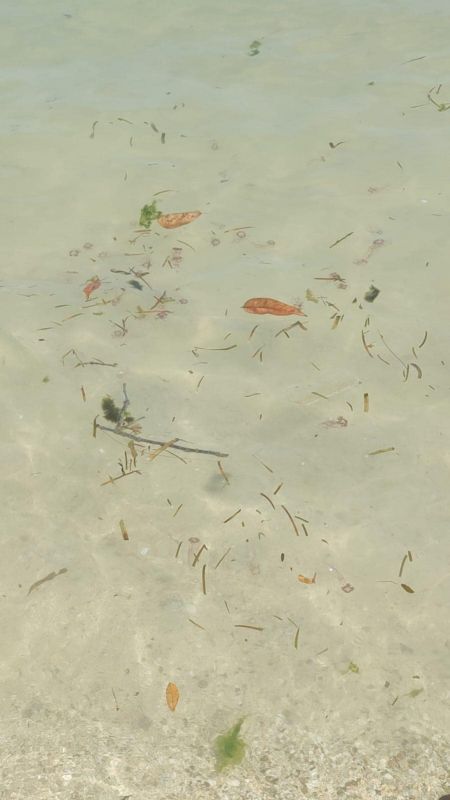

Upon notification by Pullman Panwa Beach Resort staff, marine wildlife officials from the DMCR visited the small beach near the resort and collected "samples" of jellyfish. The marine creatures were identified as Pelagia sp, belonging to the Pelagiidae family.
According to the World Register of Marine Species, the only properly recognized jellyfish in the genus Pelagia is Pelagia noctiluca, commonly known as the mauve stinger, purple stinger, purple jellyfish, and luminous jellyfish, among other names. The DMCR referred to it in the report as "fire jellyfish."
Pelagia noctiluca is found worldwide in tropical and warm temperate seas. It is a relatively small jellyfish, with adults having a bell diameter of 3-12cm. The color ranges from mauve and purple to pink and yellow. Pelagia noctiluca is bioluminescent, producing low light visible in the dark.
Pelagia noctiluca is known to sting with both its tentacles and the bell. Even recently dead, stranded individuals can sting. The sting causes pain that typically lasts 1-2 weeks, but there have been no known fatalities, according to research.
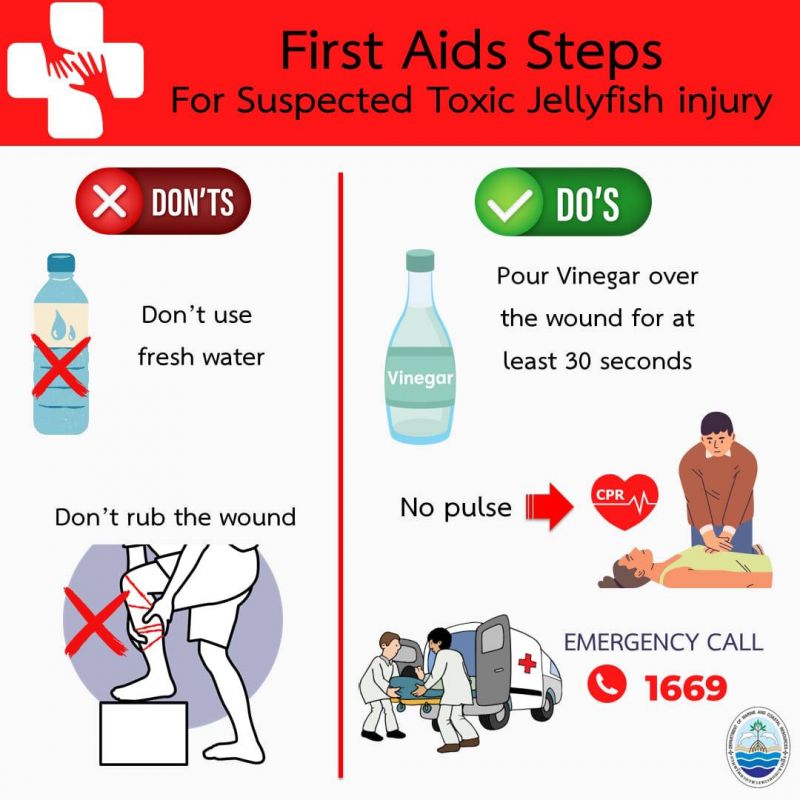
Following the discovery of the jellyfish on Phuket’s eastern coast, the DMCR repeated its basic safety warning for beachgoers regarding possible stings. When supplemented with the previous advice from Phuket lifeguards, the recommendations are as follows:
1. Contact a lifeguard on the beach, request assistance, and follow the lifeguard’s competent advice.
If there are no lifeguards on the beach,
2. Wash any remaining stinging cells from your skin with seawater. Do not use fresh water for this.
3. Apply vinegar to the affected area by pouring it for at least 30 seconds. Do not rub or massage the area.
4. See a medical specialist at a local hospital or clinic. In case of severe symptoms, call 1669 immediately.
5. If the stung person is unresponsive, not breathing, and has no pulse, call an ambulance and provide CPR until rescue workers arrive.