


Wacharin Prapha, Manager of the Provincial Electricity Authority (PEA) Phuket office, reported current electricity use on the island at 573 megawatts (MW), the highest among the 14 southern provinces.
The figure puts Phuket ahead of Songkhla, which records about 555MW, followed by Surat Thani at 476MW and Nakhon Sri Thammarat at around 371MW. Total electricity demand across Southern Thailand is estimated at roughly 3,100MW.
The figures underscore Phuket’s position as one of Thailand’s most energy-intensive provincial economies, with demand closely tied to its role as a major tourism and commercial hub, Mr Watcharin said.
According to Mr Wacharin, electricity demand on the island is projected to climb to around 900MW by 2036 ‒ an increase of nearly 60% over current levels. The rise is being driven by continued expansion in tourism, real estate development and the services sector, all of which rely heavily on stable and high-capacity electricity supply.
THE FIVE
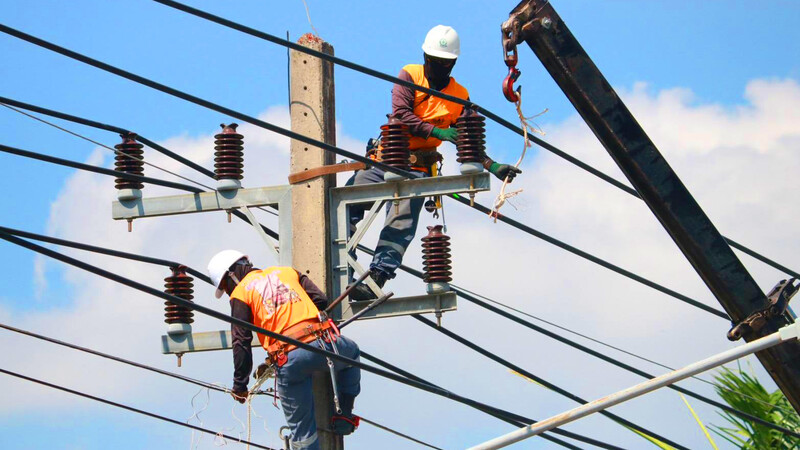
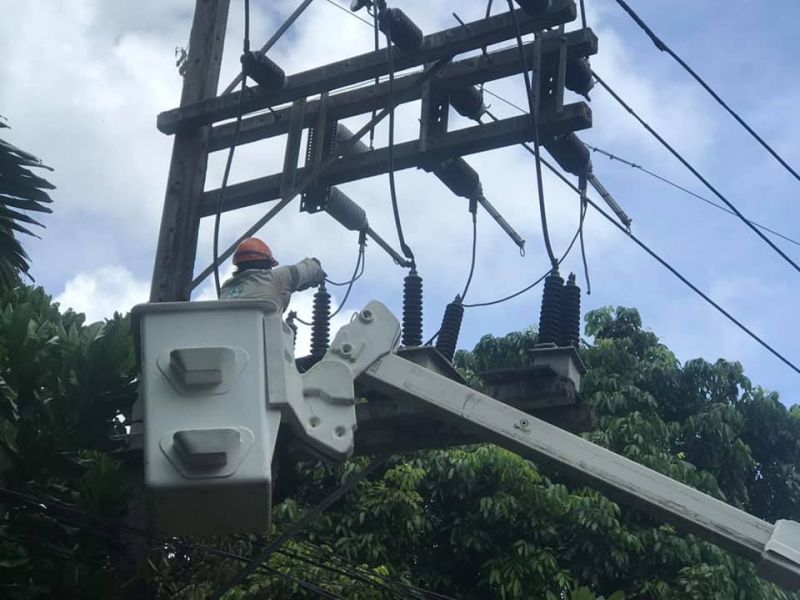
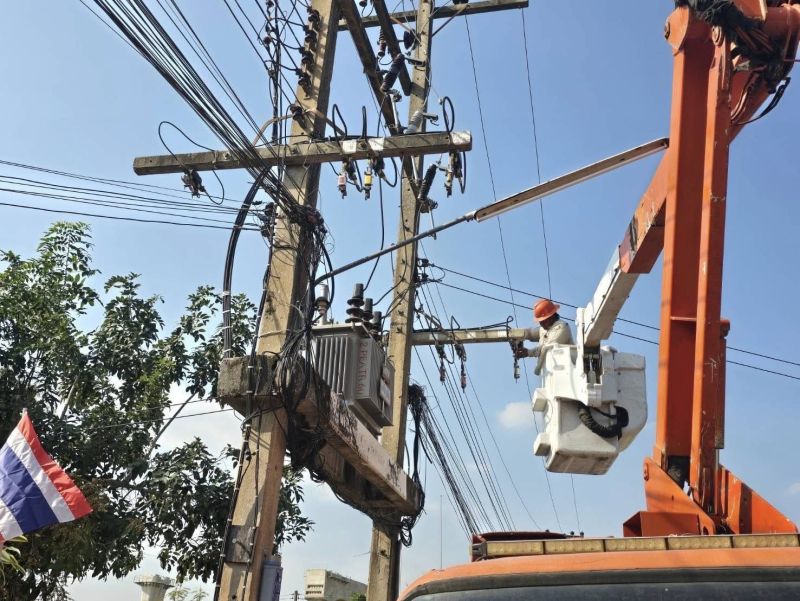
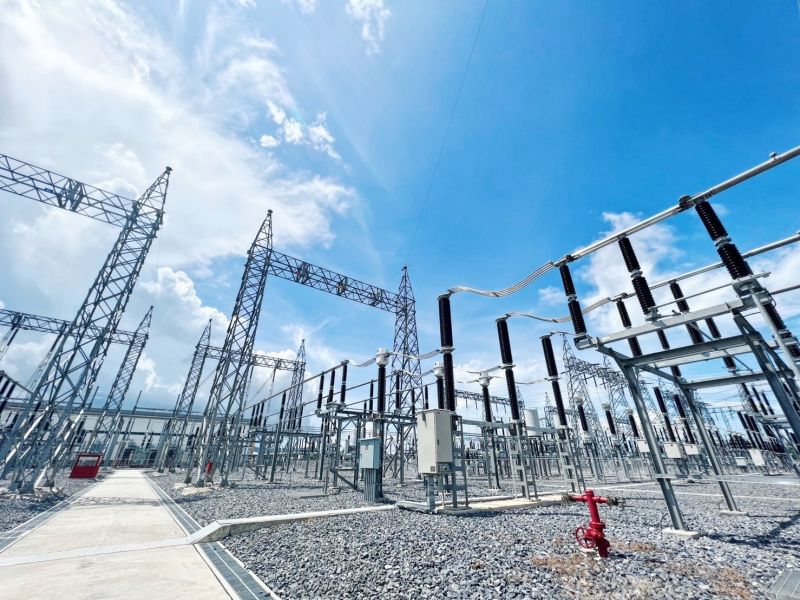
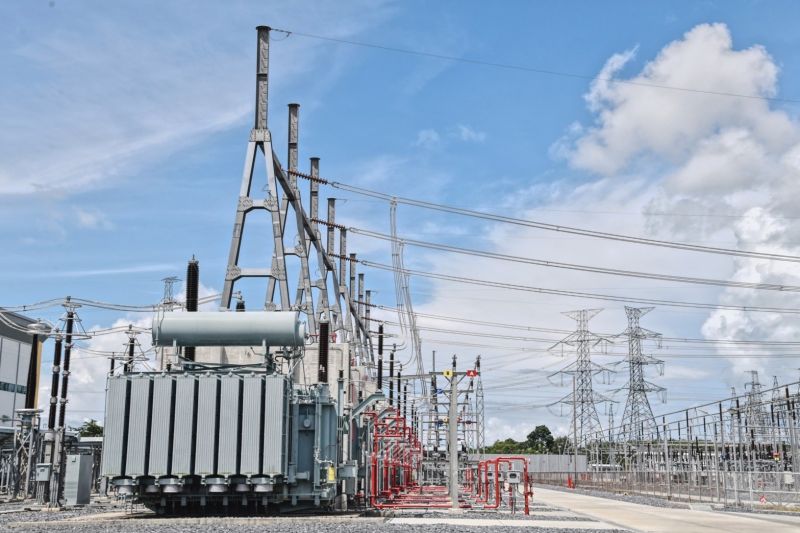
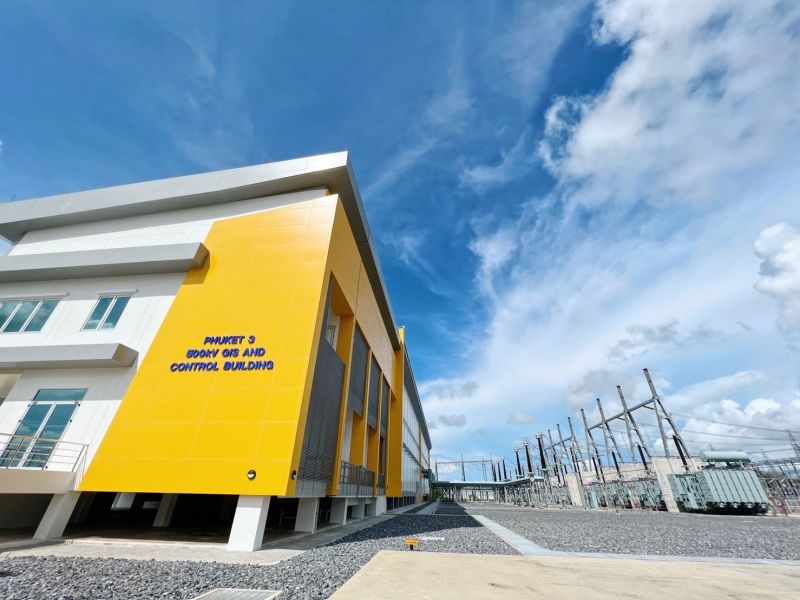
To support that growth, the PEA has outlined plans to construct five new substations across Phuket over the coming years, alongside upgrades to the island’s transmission network.
The first of the new facilities, located in Kathu near Prince of Songkla University, came online on Wednesday (May 6). Three more substations ‒ in Kamala, Rawai and Laguna in Cherng Talay ‒ are planned for completion in 2027, followed by a fifth installation in Phuket Town in 2029.
“Phuket currently operates 11 substations, but capacity is increasingly being stretched as demand rises,” Mr Wacharin said. “These new substations are essential to support future consumption and maintain system stability.”
Wissnu Masphermpong, Deputy Manager of the PEA Phuket office, said the expansion is based on detailed projections of future electricity “load”, or demand.
“We forecast the load in advance, predicting how much it will increase each year. After COVID-19, business growth has accelerated significantly, which has pushed demand higher,” he said.
“We determine where new substations are required, particularly in areas where load is rising fastest.”
Mr Wissnu added that electricity capacity has become a critical requirement for business development on the island, with operators required to demonstrate adequate supply before receiving approval to operate.
“Businesses must obtain certification confirming that there is sufficient load capacity and a stable electricity system before they can apply for licences,” he said. “This means we must continuously review usage data and overall system capacity.”
RELIEVING PRESSURE
The Kathu substation now serves as a central hub in the upgraded network, redistributing electricity load from Patong and Phuket Town while also supporting future large-scale demand.
The facility is equipped with two 50-megavolt-ampere (MVA) transformers, providing a total capacity of about 100MW.
“Some of the Kathu load will support Patong, and some will support the city. We have also reserved capacity for future demand,” Mr Wissnu said.
The move is particularly significant given the strain already being placed on existing infrastructure. The Patong substation ‒ which serves one of Phuket’s busiest tourism areas ‒ is currently operating at more than 80% of its capacity.
“Operating at that level is risky and could lead to transformer issues,” Mr Wissnu warned. “The Kathu substation will help reduce that load. Initially, it will operate at around 30-40% capacity, and then gradually increase as demand grows.”
A second major substation is planned for Kamala, positioned near the hill descent from Patong. The facility is intended to support Cherng Talay and Laguna, one of Phuket’s fastest-growing development corridors.
At present, much of the electricity supply to Cherng Talay is transmitted from Patong via long-distance lines.
“These transmission lines create risks due to terrain and potential natural disasters, which can affect system stability,” Mr Wissnu said. “By having a substation closer to the demand area, we can significantly improve stability and reduce flickering and outages.”
Further substations are planned for southern Phuket, including Rawai and surrounding areas such as Kata, Karon and Sai Yuan, where demand has surged alongside residential expansion and tourism growth.
“Chalong and nearby areas have seen a significant increase in load,” Mr Wissnu added. “We have already secured land and project approvals for new stations in these areas.”
He confirmed that some of the new facilities ‒ including those in Cherng Talay and parts of southern Phuket ‒ may initially operate as temporary substations before being upgraded to permanent installations as demand continues to rise.
BILLION-BAHT INVESTMENT
Oddly, Mr Watcharin and Mr Wissanu both declined to confirm details of the budget allocated to the huge power upgrade for the island, but procurement data highlights the scale of the investment required to deliver the expansion.
E-bidding documents published on Feb 28, 2024 show individual substation projects in Phuket carrying budgets ranging from more than B213 million to B472 million, although the documents do not specify which substations correspond to each budget.
The multiple budget allocations highlight how the entire project has been “bolted together” through a multitude of piecemeal, lesser, budgets in order to make the upgrade a reality.
In addition, associated transmission works ‒ including a 115-kilovolt (kV) line linking key substations ‒ are valued at more than B353 million and are scheduled for procurement from November 2024.
Taken together, the projects represent a combined investment of just over B1.03 billion.
UNDER PRESSURE
The current expansion builds on earlier upgrades to Phuket’s power infrastructure, most notably the completion in 2022 of a 500kV high-voltage transmission line linking the island to the mainland.
That project more than doubled transmission capacity to Southern Thailand from 700MW to 1,600MW and increased Phuket’s available supply capacity to approximately 1,170MW, significantly reducing the risk of large-scale blackouts.
The upgrade followed years of mounting strain on the system. Electricity demand on the island rose sharply from around 455MW in 2018 to more than 500MW within a year, pushing supply close to its limits and contributing to voltage instability and localised outages.
Despite the improvements, disruptions still occur as infrastructure is continually upgraded and expanded to keep pace with demand.
Phuket also remains heavily dependent on electricity transmitted from the mainland, leaving it exposed to disruptions affecting the wider southern grid.
Past incidents ‒ including the major blackout across Southern Thailand in 2013 ‒ have underscored the risks associated with relying on limited supply corridors.
While recent investments have strengthened resilience, officials acknowledge that the system continues to operate under increasing pressure as demand rises.
GROWTH DRIVING DEMAND
Governor Nirat Pongsitthavorn said Phuket’s leading electricity consumption reflects sustained economic growth and investment across multiple sectors.
“The increase in electricity usage is in line with Phuket’s economic expansion,” he said.
High-density tourism areas such as Patong, Kathu and Cherng Talay account for a significant share of peak demand, driven by hotels, shopping centres and entertainment venues operating at high capacity, particularly during peak tourism seasons.
At the same time, population growth and urban expansion have added further pressure on the grid, especially in rapidly developing areas.
Electricity demand has historically tracked closely with tourism cycles, rebounding sharply following the COVID-19 slowdown as visitor numbers and business activity recovered.
LIMITED RELIEF FROM RENEWABLES
The infrastructure push comes as authorities also seek to manage rising electricity costs and promote more sustainable energy use.
Under a national energy policy approved this week, residential electricity tariffs will be restructured, with the first 200 units capped at no more than B3 per unit from June, alongside a tiered pricing system for higher consumption.
Authorities are also encouraging the adoption of rooftop solar systems, allowing households to generate their own electricity and sell excess power back into the grid under a net billing scheme, with purchase rates set at B2.20 per unit.
The policy is intended to reduce reliance on centralised generation and ease pressure on the grid during peak demand periods.
However, solar adoption remains constrained by practical factors, including upfront installation costs ‒ typically ranging from B120,000 to B250,000 for residential systems ‒ and suitability depending on daytime electricity usage patterns.
While renewable energy is expected to play a growing role in the longer term, officials acknowledge it is unlikely to offset the scale of Phuket’s demand growth in the near future.
With electricity consumption rising faster than anywhere else in Southern Thailand, the planned substation expansion is now seen as critical to ensuring Phuket can sustain its economic growth ‒ and keep the lights on in one of the country’s most energy-hungry provinces.