


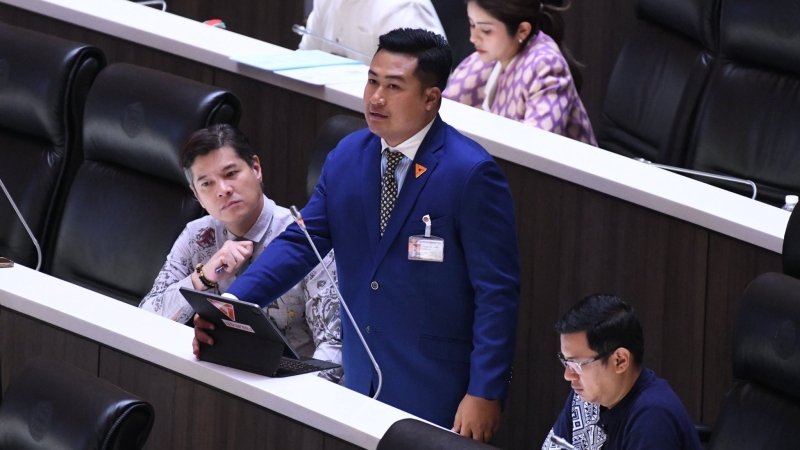
After presenting his address in Parliament, MP Chalermpong said in a post online that reducing the visa-free stay from 60 days to 30 days was “not enough” to resolve underlying issues, arguing that Thailand should prioritise quality over quantity in its tourism strategy.
“Visa measures are the first hurdle in screening tourists,” he said. “Accepting just anyone may cost more in the long run than the revenue figures being highlighted.”
His remarks follow a recent government decision to shorten visa-free stays to 30 days after feedback from tourism stakeholders. While supporting the move, MP Chalermpong said the policy should go further by returning to stricter pre-existing entry criteria.
Phuket, often used as a testing ground for national tourism policies, has borne the brunt of unintended consequences, he said, citing both visa-free schemes and cannabis liberalisation as factors attracting “low-quality tourists” and contributing to illegal activities.
He warned that some areas are already seeing foreign groups settling long-term, competing with local workers and placing pressure on resources.
“This is a new problem that must be monitored before it escalates,” he said. “Otherwise it will become increasingly difficult to resolve.”
MP Chalermpong added that maintaining Thailand’s reputation as a world-class destination depends on attracting visitors with higher spending power who stay longer and contribute more sustainably to the economy.
Alongside visa concerns, the MP criticised the lack of clear legislation governing cannabis, saying its widespread availability is affecting the experience of visitors and residents alike.
“Cannabis shops are still widespread in cities and along beaches, and the smell persists,” he said. “Families who encounter this may choose not to return, despite Thailand’s strong tourism potential.”
He called on the government to urgently regulate the sector, describing it as a “flagship policy” that has yet to be properly managed.
“The government must clean up and take responsibility for what it started, so it does not become a long-term burden on the people,” he said.
In a separate social media post, Chalermpong defended public criticism of tourism-related issues, citing reports of foreign tourists engaging in fights, behaving arrogantly, taking jobs from locals and causing environmental damage.
“These are not minor issues,” he wrote, blaming what he described as a “hands-off” approach by authorities.
“The country is facing clear problems that are not being addressed, yet those raising concerns are being criticised,” he added.
During his parliamentary address, Chalermpong also raised several local infrastructure and environmental issues affecting Phuket residents.
He called for urgent action to ease traffic congestion at the boundary of Chalong and Wichit by expediting construction of a proposed bridge across Khlong Mudong to improve connectivity between the two areas.
Water shortages were also highlighted, particularly at Klong Kata Reservoir, the main raw water source for Chalong, Rawai and Karon, which he said regularly runs low and causes hardship for residents. He proposed securing additional water sources and implementing long-term water management planning.
In addition, he raised concerns over untreated wastewater being discharged into Klong Mudong in Wichit, warning of impacts on public health, local fishermen and the mangrove ecosystem. He urged relevant agencies to install proper wastewater treatment systems before further environmental damage occurs.
“The problems of our fellow citizens must be resolved through parliamentary mechanisms,” Chalermpong told the House.