


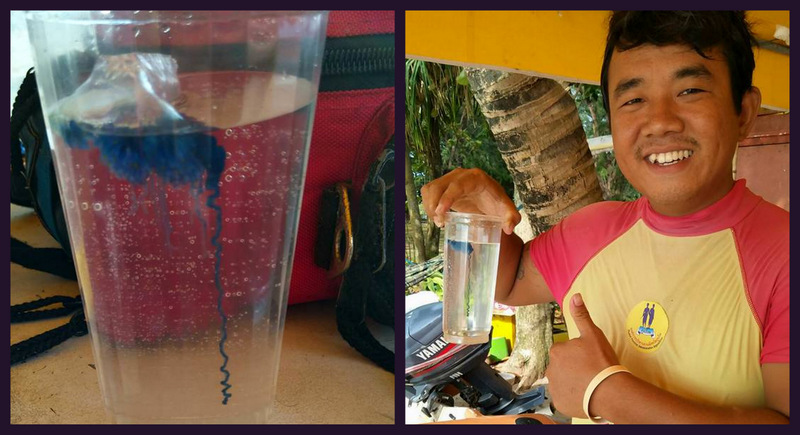
“Even we found just one, we still we need to warn all swimmers to be aware of them,” the Phuket Lifeguard Service posted on their Facebook page.
The island’s lifeguards last warned about Portuguese man-o-war washing ashore Phuket’s beaches in June, when the stinging siphonophores were found on Nai Thon Beach. (See story here.)
Portuguese man-o-war regularly return to Phuket during the southwest monsoon from May through October, with scores washing ashore last September. (See story here.)
In its update posted on July 20, the Tourism Authority of Thailand (TAT) noted: “Jellyfish warning for travellers swimming in Thailand. As the country is currently in a monsoon season, and rain wind and storms can often bring Box Jellyfish and other unexpected marine creatures closer to the shore.
“Therefore, the Tourism Authority of Thailand (TAT) would like to advise tourists to be extra careful, to remain aware and not take any risks by entering waters where signs have been posted.” (See notice here.)
According to the TAT notice:
Marine biologists’ advice is to:
- Keep looking all around when in the water and try to swim with a partner. A sting can often immobilise a person, making it difficult to swim back to shore alone.
- Consider wearing protective swimwear like a rash guard and swimming shoes.
- Beware of seemingly dead jellyfish on the beach. If they were recently beached, they can still sting.
If in contact accidentally with a Box Jellyfish or get stung, stay calm and try to remember to take these steps:
- Take the injured from the sea and keep them stay still in order to reduce the spread of poison.
- Do not wash or scrub the affected area with water or suntan creams, as this will merely aggravate the sting.
- Liberally apply vinegar to the affected area to reduce the toxic response. Hotels, beach restaurants and diving outfits around Thailand have been ordered to keep bottles of vinegar easily accessible as part of their First Aid preparation.
- Goat’s Foot Creeper, which only relieves the pain, should be applied after using vinegar.
- Use sand to cover the sting area and dry out any remaining tentacles.
- In case the heart stops beating and there is no pulse, CPR should be primarily done to the injured.
- Do seek medical care if experiencing any ongoing symptoms.