



The assurance came from none other than Surin Worakitthamrong, the Director-General of the PCD. No explanation was given as to why the issue required the national director’s direct attention.
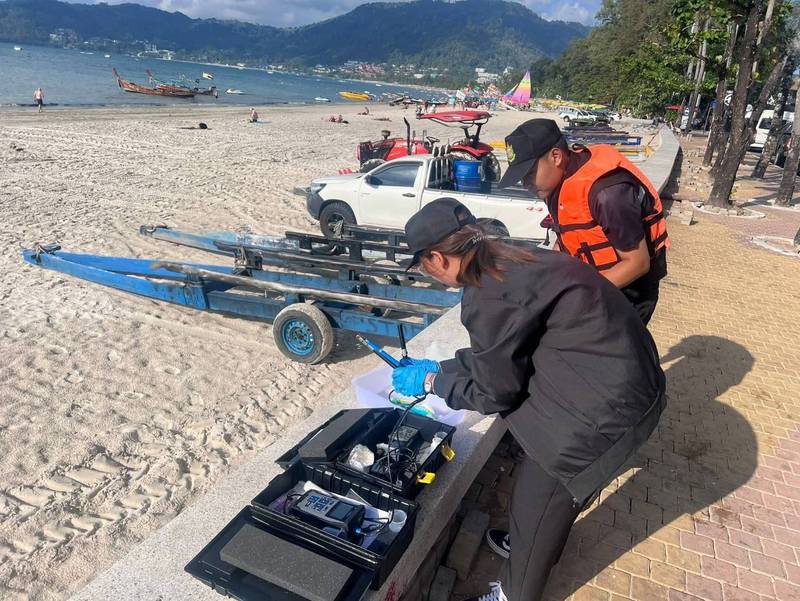
Mr Surin said the Environmental and Pollution Control Office Region 15 (Phuket) carried out field inspections in Patong Bay on Friday (Feb 6) after “reports” of green and red algae washing ashore.
Mr Surin did not explain why the Environmental and Pollution Control Office Region 15 (Phuket) office did not reveal the test results itself.
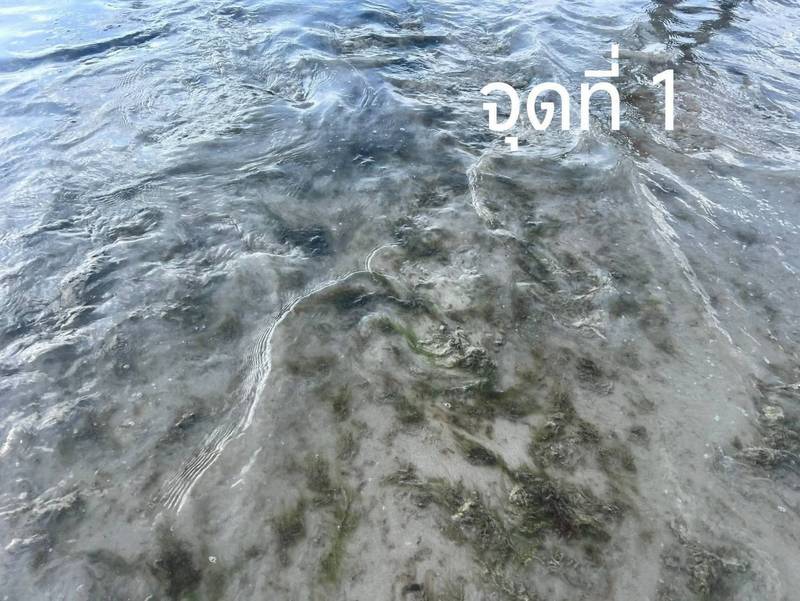
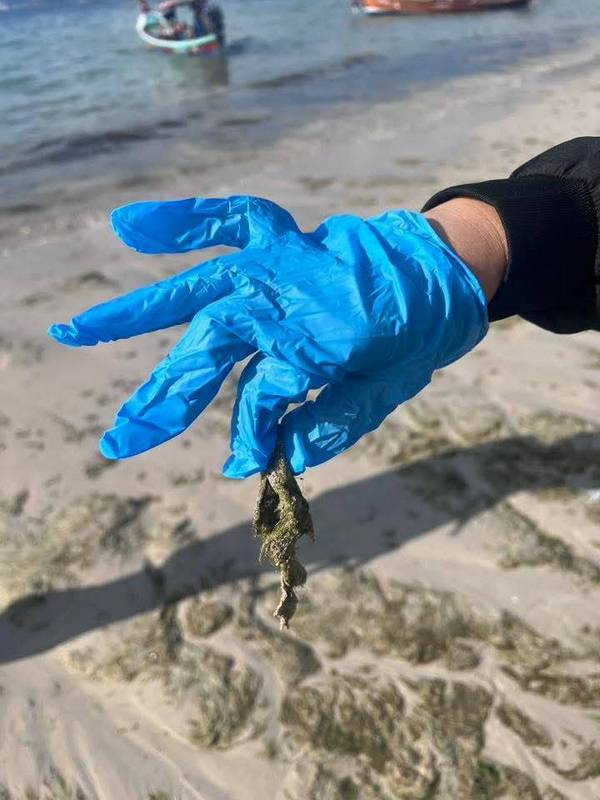
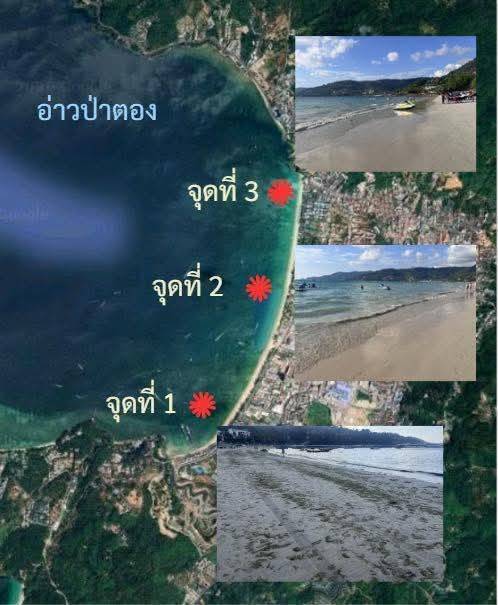
Just like tourists at Patong Beach last week, officials found a large amount of algae in the water and on the sand at the southern end of Patong Beach. Smaller amounts were observed in the water along the central and northern sections of the beach, with no algae found on the sand in those areas, Mr Surin said.
Preliminary field tests taken about 10 metres from shore at three locations showed seawater quality remained within national standards for Category 4 coastal waters, which are suitable for recreation, Mr Surin assured.
Readings recorded pH levels between 8.11-8.17 and dissolved oxygen levels between 7.48-7.62 milligrams per litre, above the minimum standard of 4.0mg/L. Total dissolved solids measured about 47.6-48.1g/L, Mr Surin said.
Mr Surin added that the results indicated Patong Bay’s coastal water quality was still safe for recreational activities, including swimming.
However, he acknowledged that algae washing ashore “could affect” the beach’s appearance and create unpleasant odours, impacting Patong’s tourism image.
Mr Surin pointed out that PCD data from 2025 shows Patong Bay recorded a Marine Water Quality Index (MWQI) score of 65, categorised as “fair”.
He said the PCD had coordinated with Patong Municipality, whose staff are collecting algae from the beach each morning.
Mr Surin said the main contributing factors to recurring algae blooms were elevated nitrate-nitrogen and phosphate-phosphorus levels, which provide nutrients for algae growth.
He did not explain where the nitrate-nitrogen and phosphate-phosphorus levels derived from.
The Environmental and Pollution Control Office Region 15 is continuing to work with local agencies on both short-term mitigation and longer-term prevention measures, Mr Surin assured.
The latest bloom follows similar clean-up operations carried out by Patong Municipality last week, when algae was found strewn along the Patong beachfront. Municipal officials previously said the algae posed no health risk and was removed to maintain cleanliness and prevent odours.
Former Patong Mayor Chalermsak Maneesri, now an adviser to Patong Mayor Lalita Maneesri, has attributed the recurring algae accumulation largely to tour boats anchoring close to shore. He said vessels using multi-jet stabilisation systems can churn algae from the seabed, which is then pushed onto the beach by water movement.
“When boats anchor further offshore or near the mouth of the bay, the amount of algae decreases noticeably,” Mr Chalermsak said, adding that similar improvements were seen previously when the Phuket Marine Office instructed operators to anchor further from the shoreline.
He said the issue had resurfaced after changes in leadership at the Phuket Marine Office, with boats again anchoring closer to Patong Beach, and called for renewed cooperation between port authorities and tour boat operators.
Past algae blooms at Patong Beach have also raised broader environmental concerns. In late 2023, slow water circulation in the concave Patong Bay combined with runoff from Pak Bang Canal, nutrient-rich water and strong sunlight were cited as factors creating conditions favourable for abnormal algae growth.
Mr Chalermsak said Patong Municipality currently treats about 20,000 cubic metres of wastewater per day, below the system’s capacity of 30,000 cubic metres, and maintained that wastewater treatment capacity was sufficient at present.
Officials have urged the public and tourists to remain confident that Patong Beach waters are safe for recreation, while efforts continue to manage algae accumulation and address longer-term environmental factors contributing to the recurring blooms.