


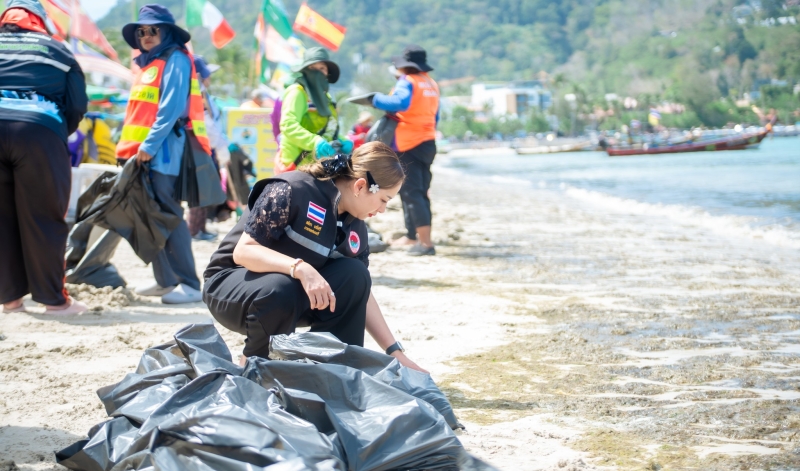


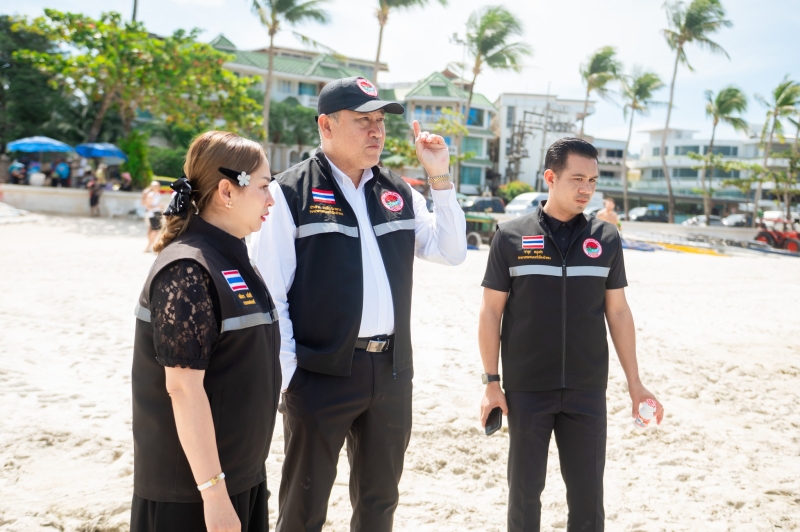
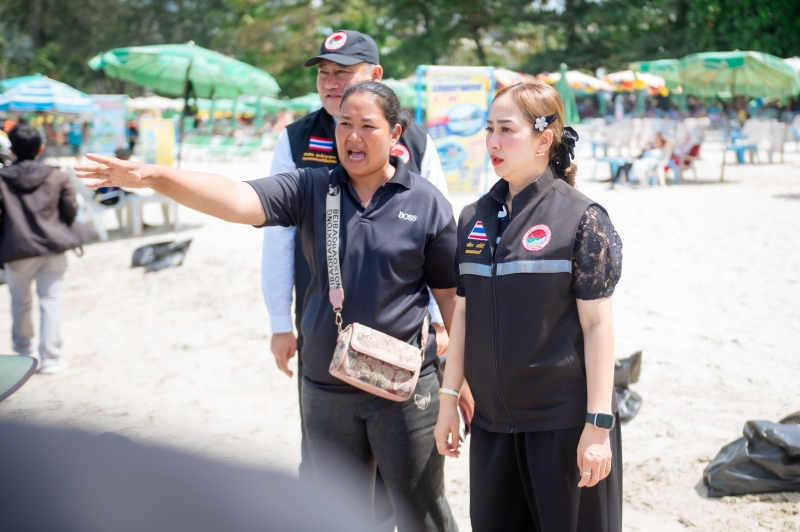
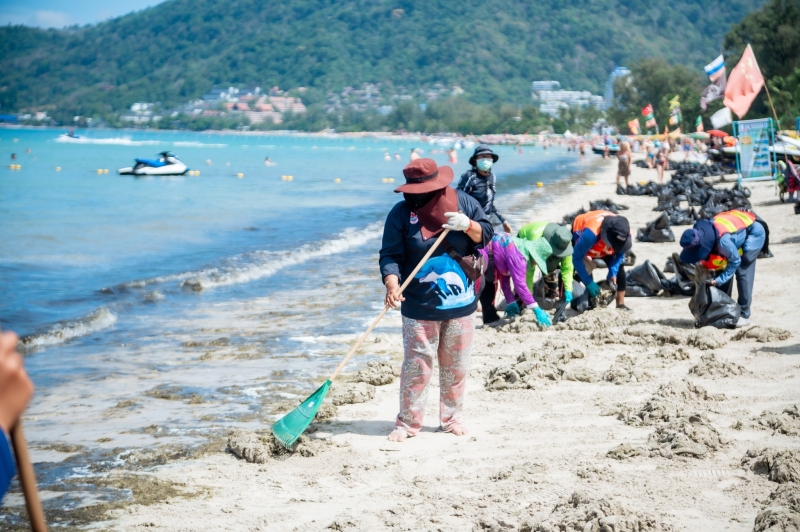
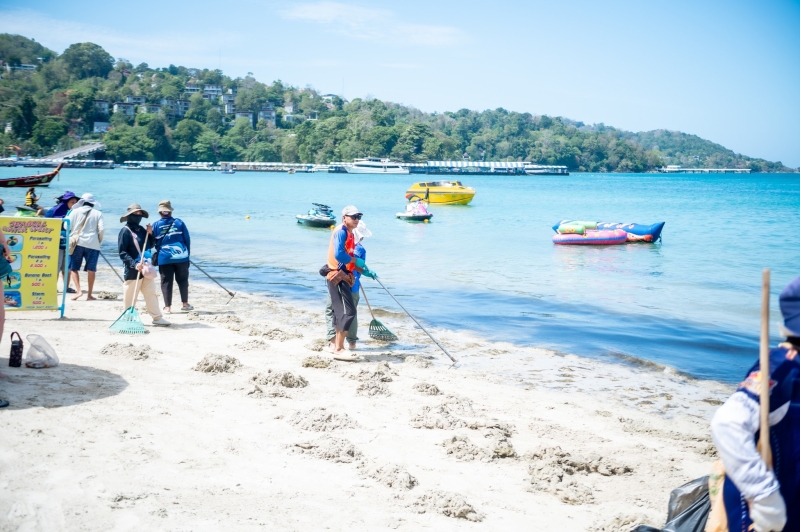
Patong Mayor Lalita Maneesri, along with sanitation staff from the Public Health and Environment Division at Patong Municipality on Thursday (Feb 5).
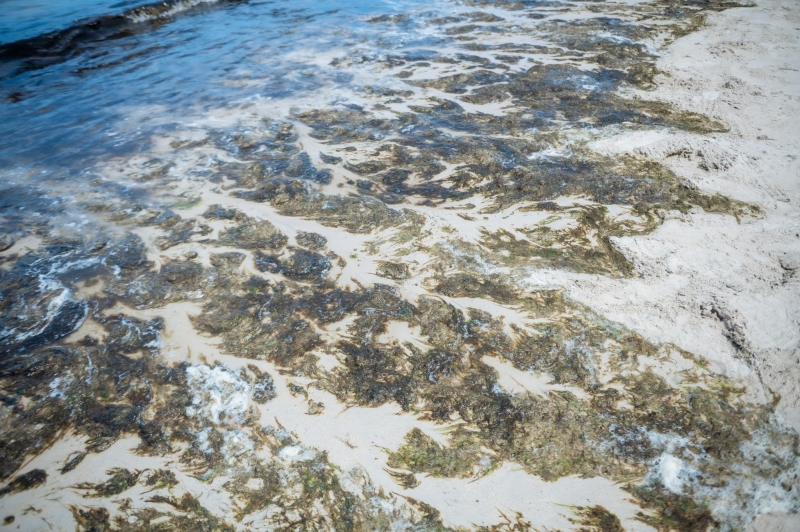
Municipal officials said in an online post, “The algae was a natural occurrence and posed no risk to humans, and was removed to maintain cleanliness and prevent unpleasant odours.”
Asked about the cause of the algae accumulation, former Patong Mayor Chalermsak Maneesri, Mayor Lalita’s brother, who also serves as her advisor, said the phenomenon was mainly linked to near-shore boat activity.
As Patong Mayor Lalita was not available for comment. Mr Chalermsak spoke on behalf of the municipality.
“The recurring appearance of algae is closely linked to tour boats anchoring near the shoreline, particularly vessels using multi-jet stabilisation systems,” Mr Chalermsak said.
“Many boats use four jet engines to maintain buoyancy while anchoring. When they stay close to the shore, the continuous water movement churns algae from the seabed, which is then pushed onto the beach,” he said.
Mr Chalermsak said he observes the situation almost daily and noted that algae tends to reappear shortly after boats depart the area.
“When boats anchor further offshore or near the mouth of the bay, the amount of algae decreases noticeably,” he said, adding that this had been observed previously when the Phuket Marine Office instructed operators to anchor further from the beach.
Mr Chalermsak said the problem has resurfaced following a change in Phuket Marine Office leadership, with boats again anchoring closer to the shore.
He said he has raised the issue with the Phuket Governor Nirat Phongsittithaworn and called for cooperation between port authorities and tour boat operators.
However, similar algae events at Patong Beach have previously raised broader environmental concerns, including wastewater management.
While Patong officials have attributed the current algae accumulation primarily to near-shore boat activity, similar incidents in the past have highlighted how local conditions can combine to trigger algae growth.
In late 2023, algae blooms at Patong Beach were linked to slow water circulation in the concave Patong Bay, allowing runoff from Pak Bang Canal to accumulate near the shoreline during periods of low wind and wave activity. At the time, what officials called "nutrient-rich water" combined with strong sunlight was reported to create conditions for abnormal algae growth.
Mr Chalermsak noted that Patong currently has sufficient wastewater treatment capacity, with daily wastewater volumes of about 20,000 cubic metres, below the municipal system’s capacity of 30,000 cubic metres per day.