


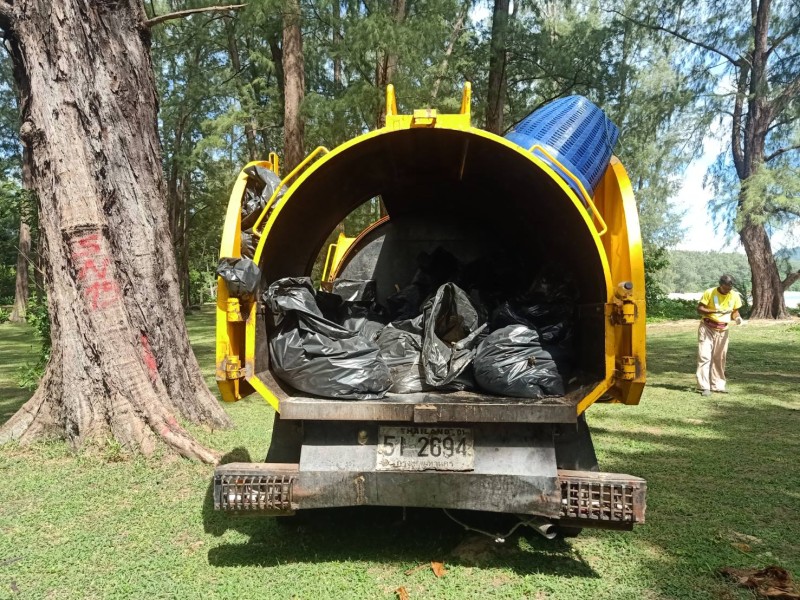
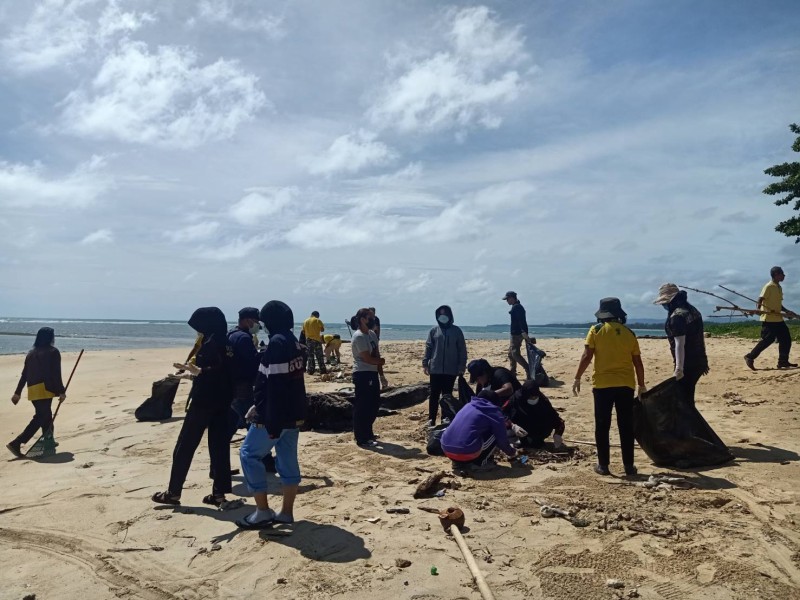
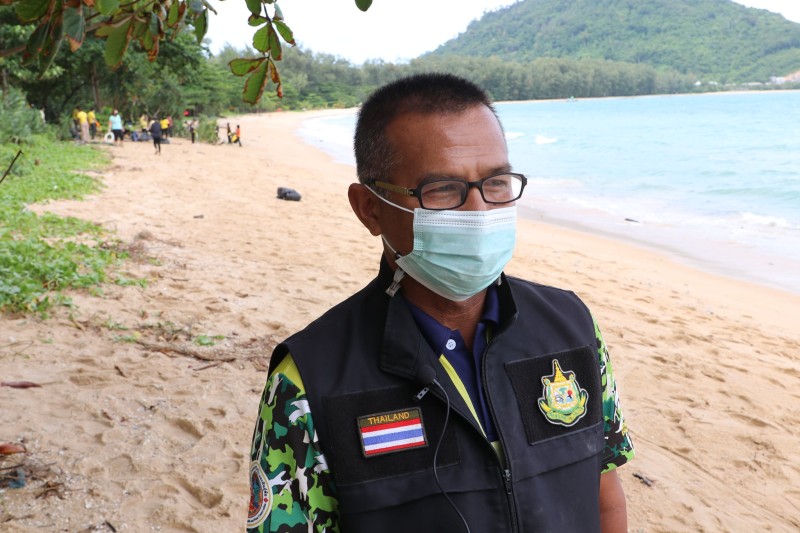
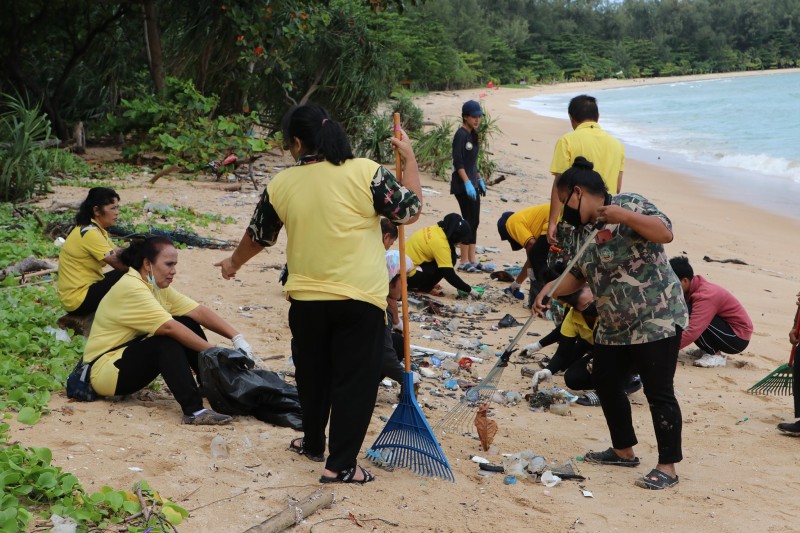
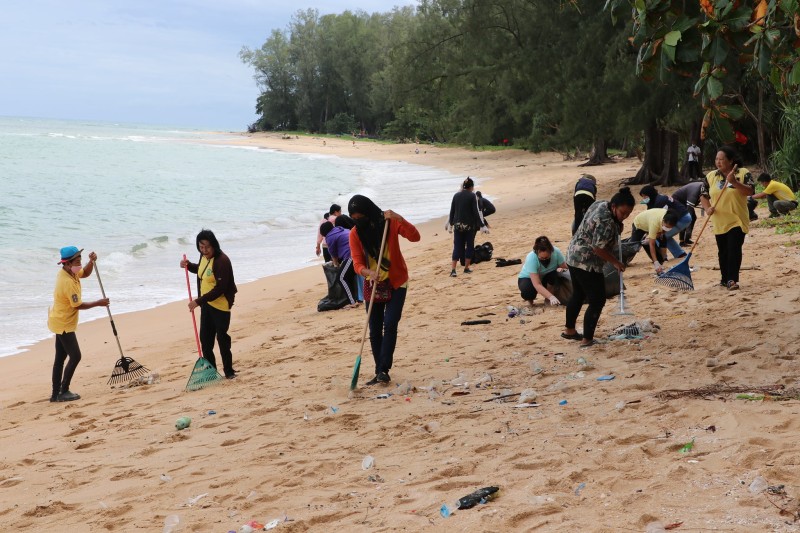
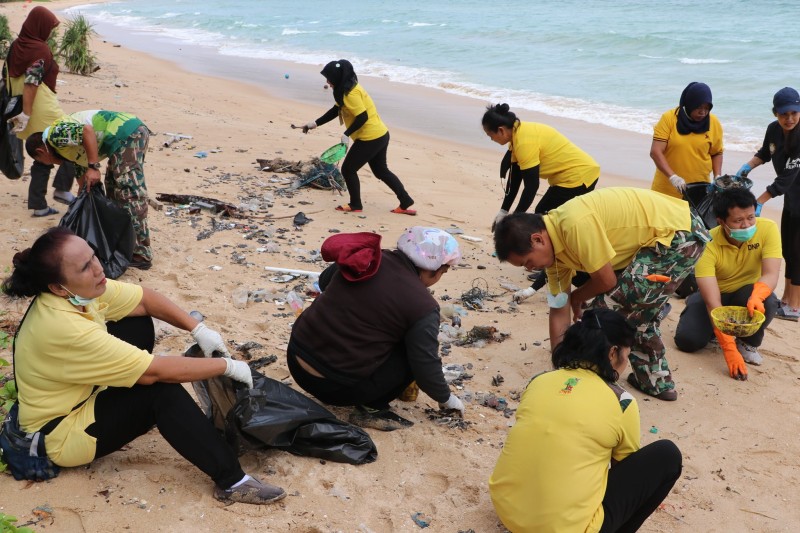
Local residents, including volunteers from the environmental conservation group Sustainable Mai Khao, along with national park officers and volunteers from Sakhu Tambon Administrative Organisation (OrBorTor) together cleaned about two kilometers of the beach Chief Pramote explained.
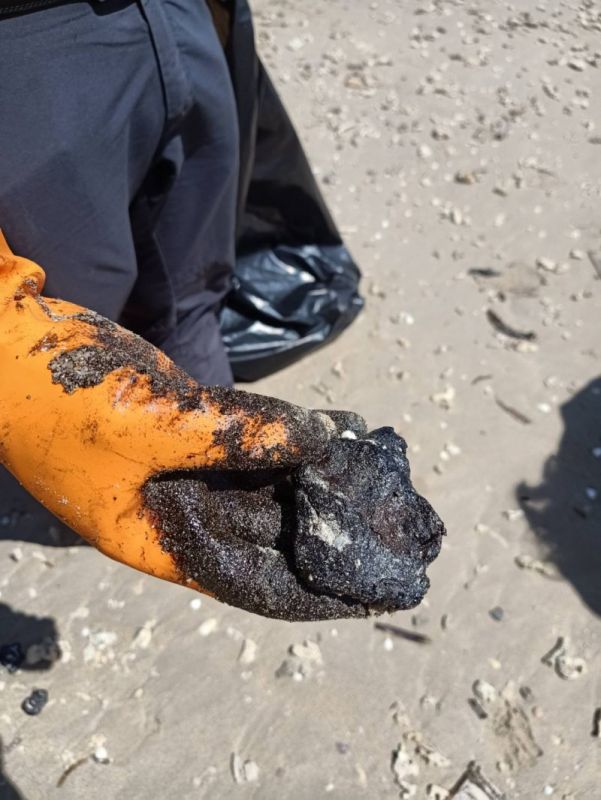
“On Sunday, we collected about 240kg of oil spills and tar balls on the beach,” he told the thai press yesterday (June 21).
“Today, we collected all of the tar balls in the morning, but some more tar balls kept coming ashore, so we need to collect them again,” he added.
Officers boarded a helicopter to assess the extent of the oil in the water up to two kilometres off Phuket’s west coast, Chief Pramote noted.
“We found no oil spill in the areas we inspected, but we cannot tell for the areas where we have not checked,” he said.
“The oil in the sea will certainly affect the natural resources, as before this we found a whale coming ashore with oil covering its body,” Chief Pramote said.
The sperm whale, measuring 4.5 metres long with scratches along its tail and body, was rescued from Bang Tao Beach last Thursday (June 17).
“We need to follow up the situation day by day until we collect all the oil,” Chief Pramote noted.
Dr Kongkiat Kittiwattanawong from the Phuket Marine Biological Centre (PMBC) explained yesterday that marine debris washing ashore is usual every year during the southwest monsoon.
“Phuket is likely to have some tar balls coming ashore,” he said.
“Some people link this phenomenon to Sri Lanka. However, we have checked the model for the tides and found that any oil spill [from the ‘X-Press Pearl’] should not affect the west coast of Thailand,” he added.