


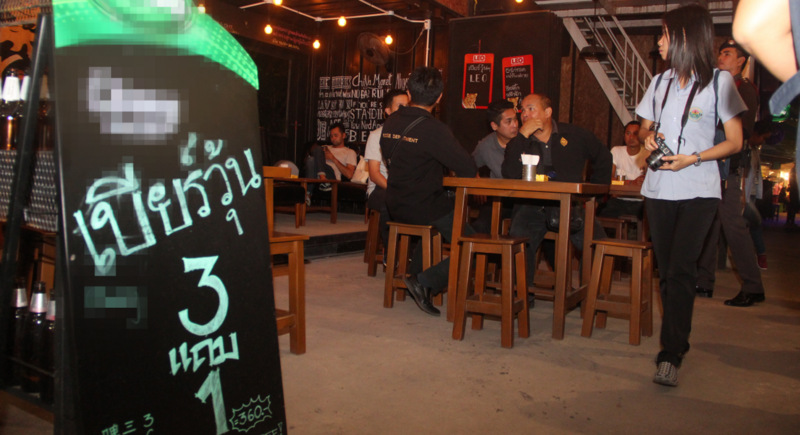
The crackdown this week has already seen one Super Cheap store south of Phuket Town and the bars at the popular Chillva Market in Samkong stand to have any licences to sell alcohol revoked as they are located too close to schools. (See story here.)
The campaign will now extend across the island, and include the bars and nightlife venues on Bangla Rd, Patong, confirmed Dr Prapa Nakara, who as Director of the PPHO’s Non-communicable Diseases division directly heads the enforcement of alcohol-related regulations on the island.
The PPHO launched the campaign softly Wednesday last week (Dec 20) by issuing a four-page “Request for Cooperation” to all business involved in the sale of alcohol on the island. The notices remind operators of the key provisions of the Alcohol Beverages Act 2008.
The provisions include the ban on “Happy Hours” and “two-for one” deals, and any promotion of alcohol to encourage people to drink. (See story here.)
However, the “Request for Cooperation”, also sent to every police station on the island calling for enforcement of the alcohol laws, remained as a friendly reminder only until yesterday (Dec 29), Dr Prapa said.
After Dec 29, the PPHO has been ordered to take legal action against any offenders caught breaking the law, she added.
“Also, any offenders caught will be reported to the Office of the Alcohol Control Committee in Bangkok,” Dr Prapa said.
However, the actual enforcement will be left to the police, Dr Prapa admitted.
“All of these provisions are for the local police to enforce. If the police do nothing, there is nothing the PPHO can do,” she said.
At the Chillva Market, health official Natpimon Na Nakorn pointed out that the operators were also operating in flagrant disregard of the alcohol promotion laws.
Ms Natpimon works our of the Ministry of Health’s Office of Prevention and Control of Disease Region 11 office in Nakhon Sri Thammarat, which also covers Phuket,
The illuminated signs installed at the front of bars were deemed illegal as they were understood to be “in a public area”. Even an inflated balloon floating above the market was deemed to be in breach of the law, Ms Natpimon noted.
The fact that the whole market was on private land was overshadowed by the fact that the general public had access to the areas where the signs were posted, she explained.
The damning aspects of promotion were the “buy 3 get 1 free” discount promotion, which is plainly illegal under the law, Ms Natpimon noted.
“Even (alcohol brand) logos with a message that promotes a promotion for alcohol is illegal,” she added.
Ms Natpimon noted that that the presence of such staff as “pretties”, who are hired to attend venues to highlight specific alcohol brands to potential customers, were legal, but they were not to solicit or serve customers.
“They can only wait for the client to ask them. The can explain the price of the alcohol,” Ms Natpimon said.
Challenges the PPHO officers are already facing include the similarity of soda and mineral water brands which use identical logos to the beers produced by the same manufacturer, Dr Prapa admitted.
“We have also encountered difficulties enforcing the law on venues that are owned by influential people,” she said.
As for the issue of beer gardens, Dr Prapa said the main issue was the level of public access to the area.
“If the promotion extends outside the private area, then it is illegal,” she said.