


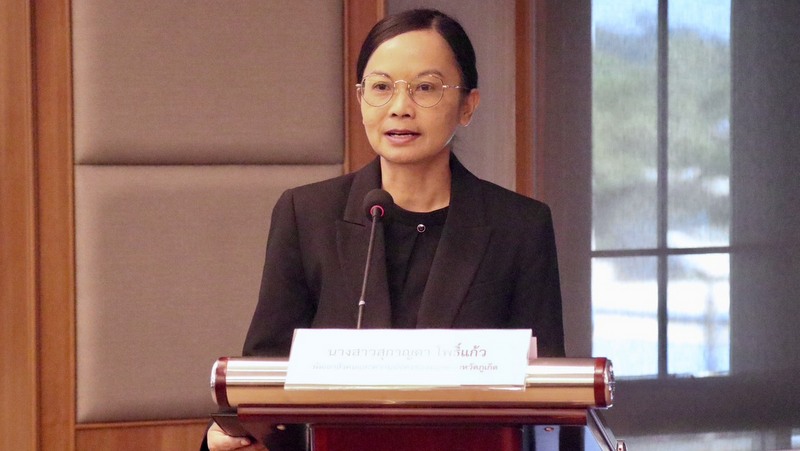



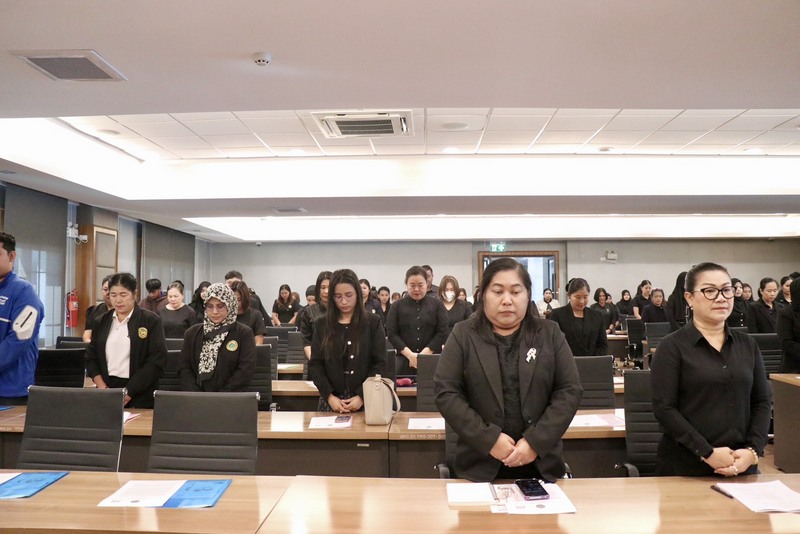
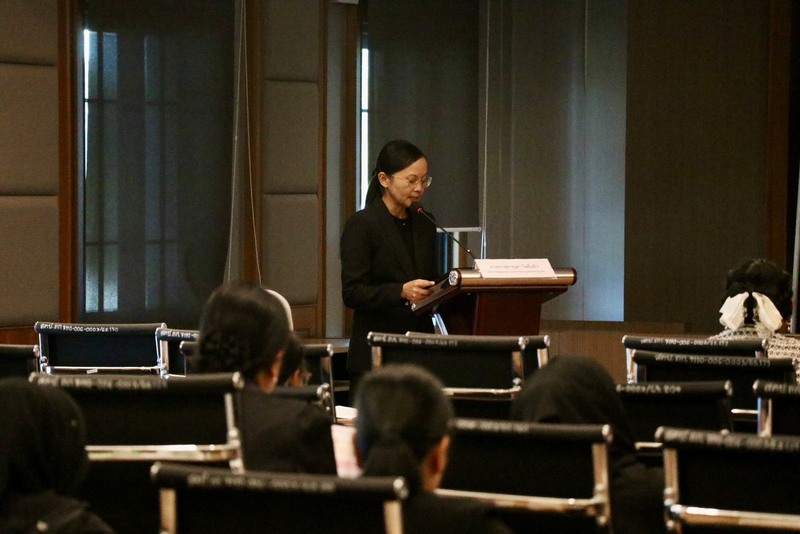

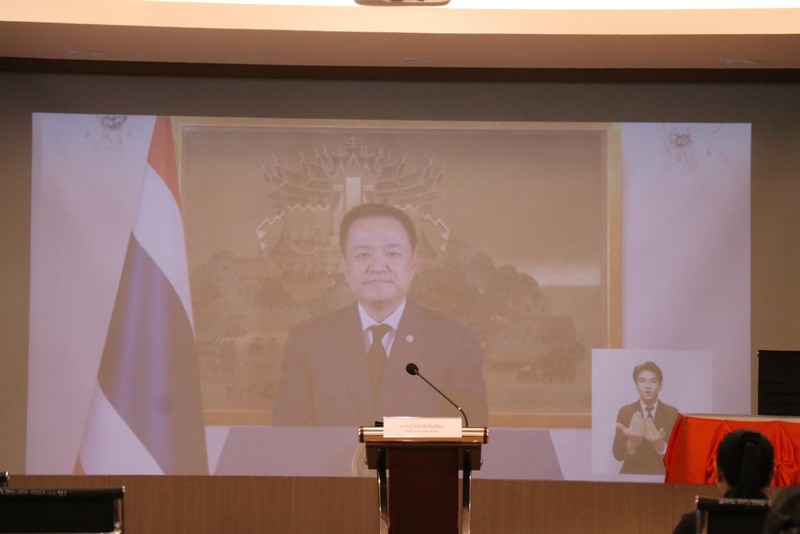
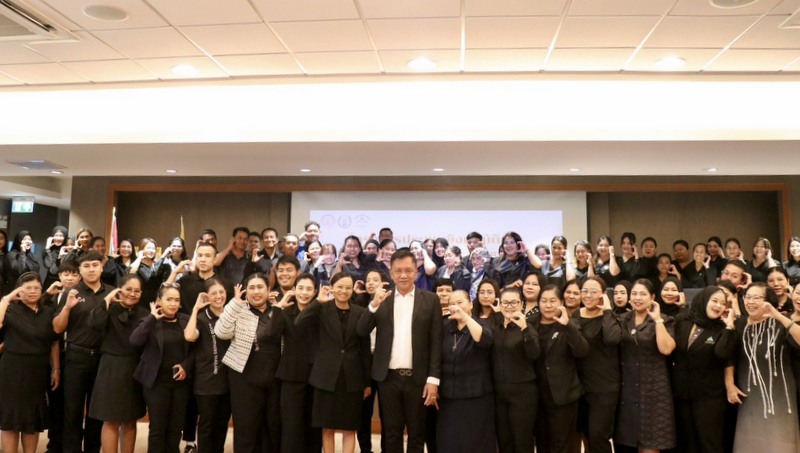
The initiative was underscored during a workshop held at the Phuket Administrative Court Office in Phuket Town last Friday (Dec 19). Phuket Vice Governor Suwit Phansengiam chaired the event under the theme ‘Ending Digital Violence for Women and Girls’.
The meeting was attended by key provincial social welfare officials, including Phuket Social Development and Human Security Office Director Sukanya Phokaew and representatives from the Good Shepherd Home Foundation.
Deputy Governor Suwit stressed that technology is increasingly linked to weakened family bonds and emotional wellbeing, as online media reduces direct communication between family members. This, he said, undermines family structures and heightens the risk of domestic conflict and violence.
The workshop, funded by the Good Shepherd Foundation Phuket Branch, brought together 135 participants, including representatives from local administrative organisations, multidisciplinary teams, schools, state agencies and private sector partners. The session focused on experience sharing, strengthening cooperation between agencies and building capacity to better respond to domestic violence, particularly cases involving digital influence.
Ms Sukanya reported that violence against children, women and family members continues to pose a serious threat to family and social stability. Citing data from the Department of Women and Family Affairs, she noted that Phuket recorded 62 domestic violence cases in fiscal 2025, ranking sixth highest in the country.
Anger was identified as the leading trigger, alongside contributing factors such as alcohol and drug abuse, jealousy, dominance issues, family conflict and financial hardship.
Authorities confirmed that all reported victims received support, including counselling, welfare protection, hospital coordination, legal assistance, home visits and ongoing follow-up care.
Mechanisms to address domestic violence have also been strengthened through Community Family Development Centres and Subdistrict Domestic Violence Prevention Operations Centres, now operating across all 18 areas of the province, said an official report of the meeting.
Participants also exchanged best practices from field work and discussed strategies to expand successful prevention models to other communities, with the aim of building stronger protective networks for women, children and families across Phuket, the report added.
NEW FOCUS
Speaking in connection with the International Day for the Elimination of Violence Against Women on Nov 25, Minister of Social Development and Human Security Akkhara Prompow underscored the government’s commitment to tackling both physical and digital violence against women, children and families, warning that rapid advances in technology risk fostering behaviour that undermines human dignity.
Mr Akkhara said people of all ages increasingly have free and constant access to digital information, and how they consume it depends heavily on their social environment, education and level of maturity. Without awareness and responsibility, he warned, technology can contribute to harmful behaviour and escalating social problems.
All forms of violence cause emotional stress and long-lasting psychological harm, he said, while also affecting family income, increasing debt burdens and impacting the wider socio-economic situation.
To help address these challenges, the Ministry of Social Development and Human Security (MSDHS) has launched its ‘MSDHS Close to You’ policy, a practical initiative focused on achieving concrete results under the goal of ‘Reduce Expenses, Generate Income, Restart Life’. Assistance is provided through MSDHS Restart Centres, which offer counselling and support for vulnerable groups and people facing social problems.
The government is also pressing ahead with the wider use of digital technology and artificial intelligence (AI) across state agencies to improve the efficiency, accessibility and transparency of public services, Minister attached to the Prime Minister’s Office Paradorn Prisnanantakul has confirmed.
Marking the same international day of awareness, Mr Paradorn said violence against women and children ‒ including sexual harassment ‒ remains a serious concern in many parts of the country. The aim, he said, is to ensure Thai society “does not remain indifferent” while improving coordination between agencies so victims receive timely protection and assistance.
A flagship development highlighted by the government is the upgraded digital system operated by the Office of the Permanent Secretary of the MSDHS, which integrates data and operations across agencies responsible for social welfare. The platform provides round-the-clock support for people in vulnerable situations and recently earned the Digital Government Awards 2025 in the department-level policy and coordination category from the Digital Government Development Agency.
Mr Paradorn noted that in the past, many people needing social assistance did not know which office to contact, faced fragmented information systems and often had to repeatedly explain their situation to multiple agencies. Travelling to government offices was especially difficult for the elderly, people with disabilities or those in crisis, while a lack of clear case tracking created anxiety over whether assistance would arrive in time.
The enhanced MSDHS digital platform is designed to address these issues directly. Its key features include a central 1300 hotline linking callers with multidisciplinary response teams and field units for urgent cases; a shared database (MSO-LOGBOOK) to reduce duplicate data entry; and emergency reporting via the MSDHS SMART system and ESS Help Me channel on LINE for five categories of crises — threats, confinement, risk of abuse, violent behaviour and unrest. Cases are automatically forwarded to the relevant agencies for rapid on-site response. An e-Tracking system also allows the public to monitor case progress themselves.
To sustain progress, Mr Paradorn said the government must continue developing digital skills among public officials, equipping them with the knowledge and capability to apply digital tools and AI in both policy-making and daily operations. The ultimate objective, he said, is to modernise state services, improve quality of life, and ensure assistance is faster, more accessible and more reliable for those who need it most.