


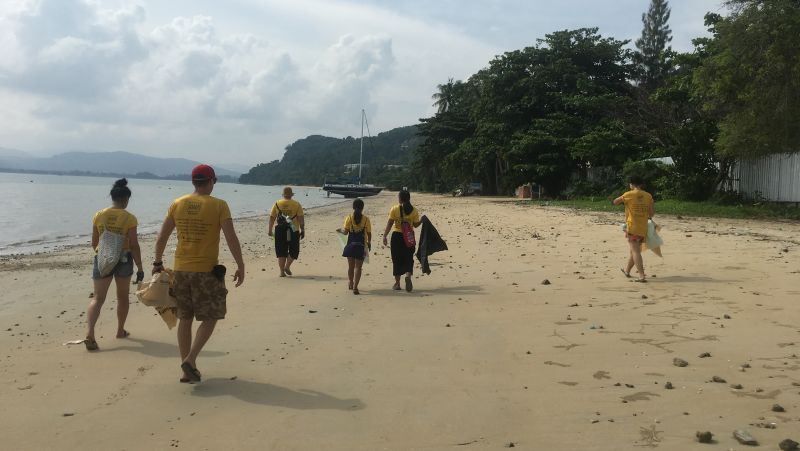
During monsoon season in Phuket, collected waste can be replaced in a matter of minutes. The never-ending supply of marine litter is a daunting task for a few clean-up groups to tackle.
Trash Hero, one of Phuket’s most recognised clean-up groups, has cleaned approximately 14,504 kilograms of plastic since its establishment in August 2016. That’s roughly 0.0000001% of the ocean’s plastic, or 0.000002% of the plastic that has entered the waters this year alone. For a local group on a small island, it’s an impressive feat; on a global scale, it’s just the tip of the iceberg.
In fact, those who have been here for years only report an increase in plastic pollution, with no improvement being made on smaller beaches. More popular hotspots such as Laguna have appeared cleaner as of late, but how much of that is due to their prevalent maintenance? The overall problem is this: most days, the health of these beaches and oceans can’t be accurately determined because litter is picked up almost as consistently as it washes ashore. Unfortunately, bettering the visuals most likely won’t better the issue itself.
In any case, beach cleaning isn’t a long-term fix. The energy, time and money it would cost for clean-ups big enough to make a direct impact is astronomical. It simply can’t be sustained, especially when plastic consumption rates are only increasing. By 2021, the amount of plastic bottles bought every minute is expected to rise from one hundred million to half a trillion.
As Kimberly Kriege, a former teacher who resides at Kamala Beach, said, “A better solution would be a regulation on single-use plastics in businesses. Pollution’s just gotten worse. The government needs to step up.”
So if beach clean-ups have almost no direct impact on the environment, why do we bother? “Because,” Susan Leong, Trash Hero Phuket manager, states, “it’s about the little things, and every bit helps. In the end, it’s about heart. We love Thailand, and we love the oceans. It’s the right thing to do. It’s not much, but it’s right.”
Susan also mentions the spreading of awareness, including Trash Hero’s work with schools on the island and the educational materials they provide them with. While these ventures might not make the biggest dent in the pollution crisis, the awareness they generate is invaluable.
Kamala Green Club (KGC), who organise weekly beach clean-ups using a rotating zone schedule with each zone represented by a business in the area, are on the same page. KGC coordinator, Roland Bleszynski, explains that, “By organising and motivating local stakeholders and community members to participate in these beach clean-ups, as well as other environmental initiatives, we set a positive example for others – whether they be tourists, other Kamala locals or simply just visitors.”
By forcing people to witness the consequences of their consumption and holding them accountable for their actions, beach clean-ups help to lower the consumption rate itself.
As Kimberly said, “When you see it firsthand, that is the biggest influence on how you might change your behaviour.” With less demand, less plastic is produced and less plastic winds up in the world’s waters.
Reduced amounts of marine litter also stem from reduced amounts of land litter, but the shores have clearly become our central focus. While the beach clean-up movement has picked up increasing momentum over the last few years, the work of Thai public school students, who participate in regular clean-ups and have done for some time, is hardly recognised as much as that of local beach groups.
Picking up land litter is a crucial step in breaking the plastic cycle. The beach is the reciprocal of everything we do; plastic will always find its way from land to ocean. By getting rid of plastic on land, it prevents those items from potentially harming sea creatures in the ocean before getting picked up on the beach.
However, in comparison with each other, the beach is the most logical spot to clear. Location-wise, it seems to garner more willingness from potential volunteers, and as Leong sad, “Everyone knows where the beach is. It’s easy, it’s accessible and it’s better than nothing”.
Indeed, Trash Hero has experienced a major growth in volunteer numbers since its first clean-up. Starting out with only two people at their weekly clean-ups on average, they now up to the dozens. Over 2,300 volunteers have taken part in total.
With such momentum comes the reassurance that the Trash Hero’s message, and that of other Phuket groups, is being heard: with heart, hope and hands, communities can be brought together.