


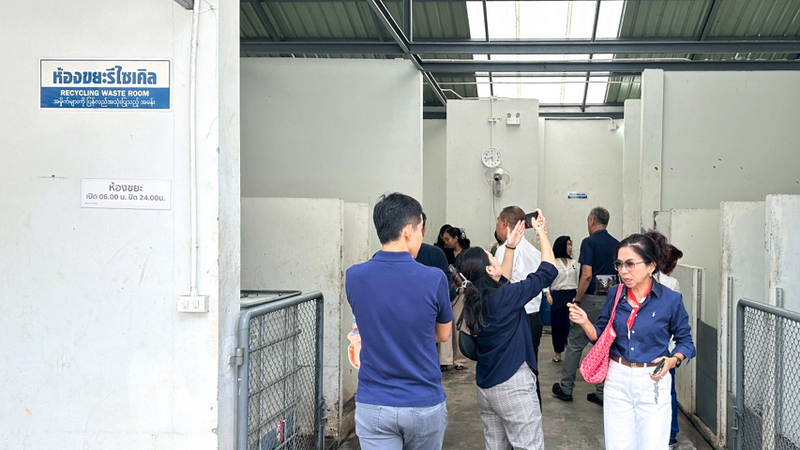
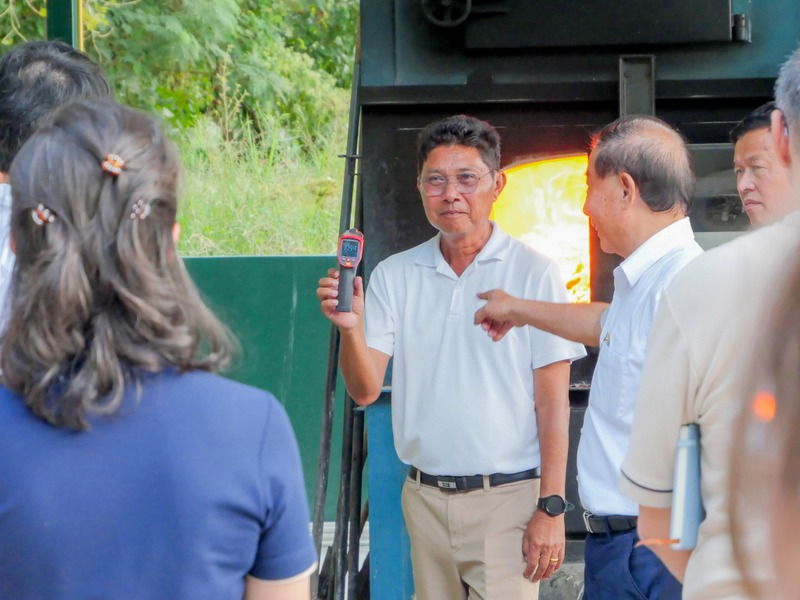
Governor Nirat Pongsitthaworn last week led a high-level delegation to The Racha Hotel on Koh Racha Yai, south of Phuket, to examine its integrated waste and wastewater management systems, marking a renewed push to address the province’s mounting rubbish problem at its source.
The visit followed a series of environmental protection activities on Racha Yai Island, including the placement of mooring buoys and coral reef protection buoys, as well as a beach cleanup at Plub Pla Beach to highlight the focus on safeguarding fragile marine and coastal ecosystems.
Governor Nirat was joined by Vice Admiral Veerudhom Muangchin, Commander of Royal Thai Navy Region 3 and Director of Thai Maritime Enforcement Command Center Region 3 (Thai MECC 3), along with senior provincial officials and representatives from relevant agencies.
The delegation was welcomed by Daniel Lim Teck Hock, Managing Director of The Racha Hotel, who guided officials through the resort’s waste management operations, which have been designed to function independently on the small tourist island.
During the visit, officials observed an on-site incinerator capable of disposing of approximately 800 kilogrammes of waste per day, alongside a biogas system that processes about 500kg of waste daily. The combined systems significantly reduce the amount of rubbish requiring external disposal, while limiting environmental impact.
Officials noted that the resort’s approach reflects a systematic, closed-loop waste management model suited to island environments, where space, transport capacity and ecological sensitivity present ongoing challenges.
The Racha Hotel has placed particular emphasis on collaborative environmental management on Koh Racha Yai, working closely with local administrative organisations, neighbouring hotels and restaurants to address wastewater and solid waste issues collectively. The integrated approach covers waste reduction at the source, intermediate processing, and final disposal.
Governor Nirat said the model demonstrated at The Racha Hotel could be adapted for use across Phuket, particularly in island communities and key tourist destinations.
“Phuket Province places serious priority on solving waste problems in all dimensions,” he said. “This includes reducing waste at the source, proper separation, effective disposal, and building cooperation from all sectors to support sustainable tourism development.”
He added that study visits such as this play a crucial role in exchanging practical knowledge that can be applied across the province to create balanced, environmentally friendly tourist areas over the long term.
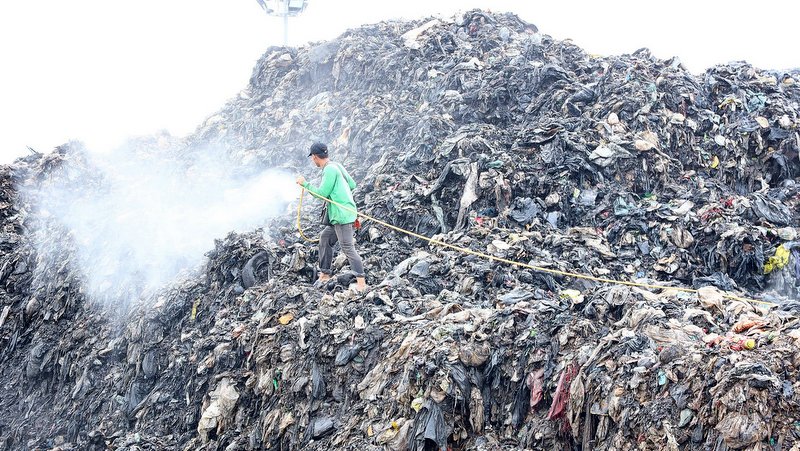
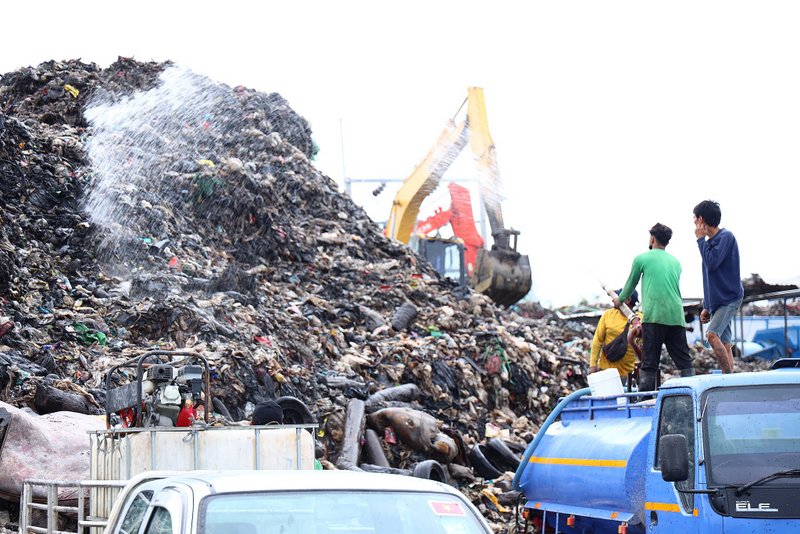
The urgency of Phuket’s waste challenge is difficult to overstate. Provincial officials report that more than 1,200 tonnes of rubbish are generated daily, driven by tourism, population growth and consumption patterns. The Phuket City municipal landfill at Saphan Hin currently holds an estimated 1.2 million tonnes of accumulated waste awaiting disposal.
Despite these volumes, Phuket City’s incinerators can process only about 500 tonnes per day, roughly 40% of the total daily waste generated. The remainder must be transported to landfills elsewhere in the province, many of which are nearing capacity.
Phuket Municipality has a registered population of about 72,000 residents, while the province as a whole has a recognised registered population of only about 450,000 ‒ despite estimates by some leading figures claiming that the island is currently home to nearly 2 million people. During peak tourism periods, the number of people on the island swells, dramatically increasing waste generation.
SEPARATION
According to the Pollution Control Department, only about 10% of Phuket’s waste is recycled, while approximately 60% consists of organic or wet waste, highlighting the importance of waste separation at the source.
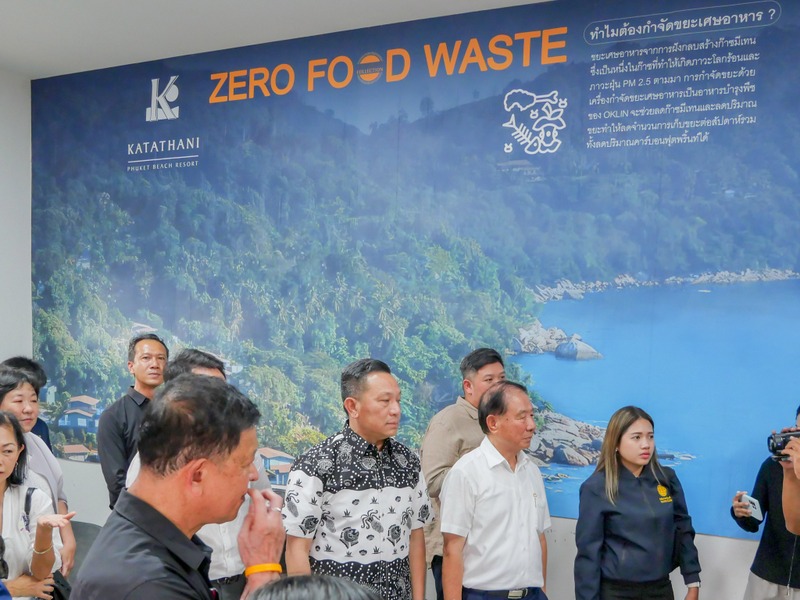
In a parallel effort, provincial officials and business representatives recently conducted a study visit to Katathani Phuket Beach Resort, regarded as a local benchmark for systematic waste and water management.
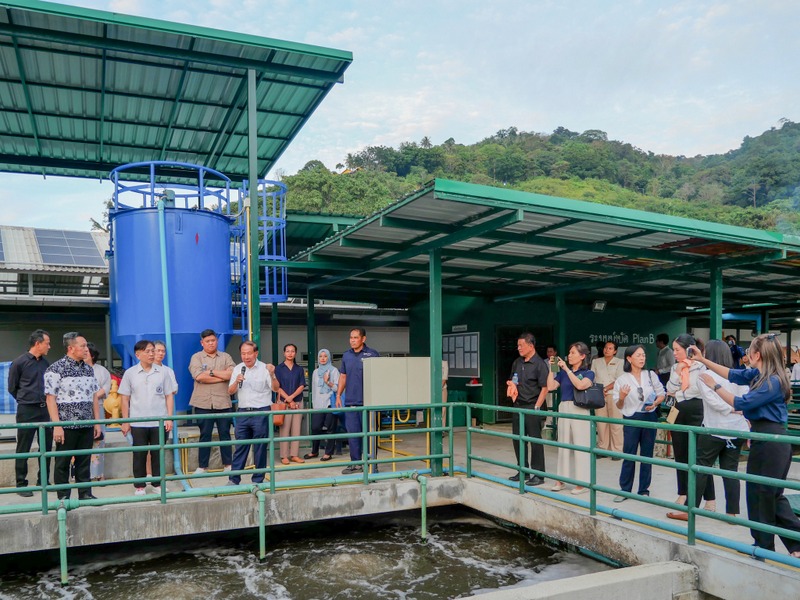
The resort operates a zero food waste system through on-site separation and treatment, significantly reducing the volume of waste requiring off-site disposal. Officials also examined Katathani’s water management operations, which include natural water sources, raw water supply systems, and a wastewater treatment facility comprising five treatment ponds.
Treated water is reused for irrigation within the resort grounds, while wastewater is fully treated before discharge into the sea. Sludge generated during the treatment process is further processed and converted into fertiliser.
Katathani Group CEO Sombat Atiset said the company has prioritised environmental management for nearly three decades.
“Our organic waste system can handle several tonnes per day without using fuel or heavy machinery,” Mr Sombat said. “Wastewater sludge is converted into fertiliser, meaning we rely very little on external disposal services.”
Governor Nirat said the province intends to draw on such models to strengthen waste management across Phuket, stressing that the problem cannot be solved by the government alone.
“Waste management is a major challenge that requires cooperation from all sectors,” he said. “Hotels, businesses, local communities and government agencies must work together.”
That message was reinforced last week with the launch of a wet waste separation initiative at Phuket Provincial Hall, part of a broader effort to promote waste management at the source.
The programme was formally introduced on Jan 16 during a meeting chaired by Phuket Provincial Office Head Narong On-in. Representatives from relevant government agencies were instructed to strictly separate wet or organic waste from other refuse and prevent mixing at the source.
Phuket Provincial Hall has been designated as a model site, with all departments required to manage wet waste in a concrete and systematic manner in line with provincial policy.
The governor called on officials to lead by example, stressing that sustained cooperation is essential to achieving meaningful reductions in waste volume.
The wet waste separation system is being implemented simultaneously across all departments starting January 19, with the Phuket Provincial Office tasked with monitoring progress and reporting directly to the governor.
A designated wet waste disposal point has also been established outside Phuket Provincial Hall, complete with clear signage and separate bins, serving both officials and members of the public while encouraging correct waste sorting.
Later the same day, Vice Governor Suwit Phansengiam chaired the first meeting of the provincial Working Group for Waste Management at Source for 2026. Attendees included heads of government departments, municipal officials, and Environmental and Pollution Control Office Region 15 Director Chanthira Duangsai.
The working group reviewed waste volumes at the Phuket Provincial Waste Disposal Center and discussed enforcement of waste transport regulations issued by the Ministry of Interior in 2024.
Discussions focused on expanding organic waste separation among local authorities, businesses, hotels, markets, housing estates and schools, promoting environmentally friendly packaging, discouraging foam use, ensuring garbage truck readiness, and strengthening community waste banks and environmental volunteer programmes.
Officials said pilot inspections will be carried out in Patong and Kathu municipalities, alongside workshops aimed at improving waste management efficiency province-wide.
Taken together, the measures signal a growing recognition that Phuket’s waste problem must be tackled at its roots ‒ not merely managed at the landfill, Governor Nirat said.
As provincial authorities turn to successful resort-led models and demand stronger participation from all sectors, the challenge ahead will be turning policy, pilot projects and good intentions into lasting change for Thailand’s most visited island, he added.