


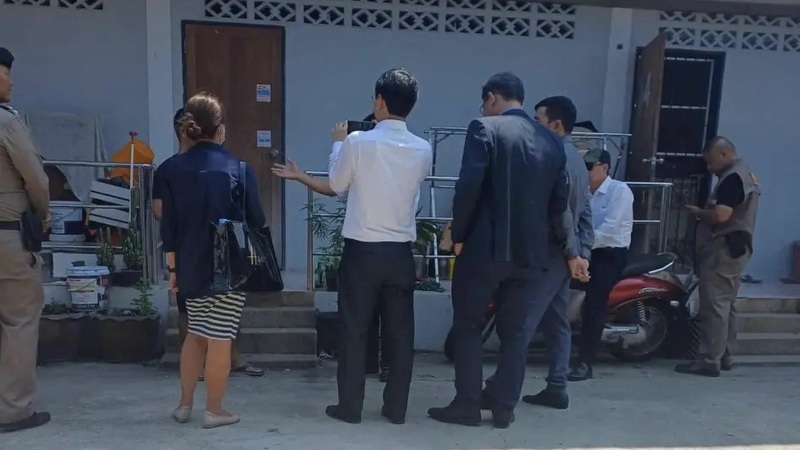
By facilitating Vietnamese cross-border abuses, known as transnational repression, Thai authorities are violating international refugee law protections.
Thai police have carried out several large-scale operations in 2025 detaining scores of Vietnamese nationals, many of whom are recognized by the United Nations as refugees and asylum seekers. Many of those arrested have reported encountering Vietnamese officials inside jails or immigration detention facilities and during check-in meetings with Thai immigration authorities.
“Vietnamese exiles are facing increased insecurity in Thailand,” said John Sifton, Asia advocacy director at HRW. “Thai authorities should immediately stop detaining refugees and stop cooperating with Vietnamese police seeking their return.”
Human Rights Watch interviewed 34 Vietnamese refugees and asylum seekers in Bangkok from July through October 2025, including seven people previously involved in human rights activism in Vietnam, three relatives of current political prisoners, as well as over 20 ethnic Montagnards and Hmong facing persecution in Vietnam for their religious beliefs or involvement in protests. Nearly all have been recognised as refugees by the UN refugee agency (UNHCR) or are registered with the UN as asylum seekers and are awaiting interviews to determine their status.
Most of the exiled Vietnamese interviewed said fears of arrest, abduction, or extradition to Vietnam have grown in the past two years due to increased visits by Vietnamese authorities to Thai immigration detention centers. They also cited the April 2023 abduction of dissident journalist Duong Van Thai, 42, a UNHCR-registered refugee who had fled Vietnam in 2019 and was awaiting resettlement to a third country. Unidentified men forcibly took him to Vietnam, and in late October 2024, after a closed one-day trial, a Vietnamese court sentenced him to 12 years in prison for publishing information “aimed at opposing the Socialist Republic of Vietnam.”
Exiles’ apprehension increased further after Thai authorities, assisted by Vietnamese security personnel, arrested the dissident Y Quynh Bdap in June 2024. The Vietnamese government has labeled Bdap’s human rights group, Montagnards Stand for Justice, as a “terrorist” group.
In 2025, Thai police have carried out multiple operations targeting Vietnamese exiles, including in February, March, April, July, and October. Many of those arrested are ethnic Montagnards or Hmong from Vietnam’s Central Highlands, most of whom are recognized by UNHCR as refugees or asylum seekers with applications in process. Several Montagnards and Hmong detained in February through April gave consistent accounts after their release of Vietnamese police in Thai facilities pressing them to agree to return to Vietnam and later harassing them during check-in sessions with Thai immigration authorities.
Many refugees said Vietnamese police had visited their relatives in Vietnam in the last year, telling them that the police had located their relatives in Thailand and were arranging to have them returned.
Several human rights groups in Thailand have interviewed detainees and released exiles who corroborate these findings and have sent private reports to UN officials with allegations about cases of abuse.
Thai police regularly detain UNHCR-recognised refugees – including from Vietnam, Cambodia, and Myanmar – and hold them until they pay a bail bond, which most refugees and immigration advocates consider to be bribes. HRW reported in July that Thai police routinely arrest and solicit bribes from Myanmar asylum seekers and migrants. Another HRW report documented Thai authorities assisting foreign governments to target refugees.
The Thai government is obligated to respect the international law principle of nonrefoulement, or non-return, which prohibits countries from returning anyone to a place where they would face a real risk of persecution, torture or other serious ill-treatment, a threat to life, or other comparable serious human rights violations. Refoulement is prohibited by the UN Convention Against Torture, to which Thailand is a party, as well as customary international law. The prohibition on refoulement is incorporated in Thailand’s 2023 Act on Prevention and Suppression of Torture and Enforced Disappearances.
Vietnam and Thailand appear to have agreed to cooperate more closely and exchange information about Vietnamese refugees, especially those in detention, since early 2024 when the two countries began negotiating an extradition treaty. In May 2025, Vietnamese Prime Minister Pham Minh Chinh and Thailand’s then-Prime Minister Paetongtarn Shinawatra signed a Comprehensive Agreement in which they “agreed to enhance legislative and judicial cooperation and committed to effectively implementing signed agreements between the two countries on preventing and combating crime, transferring sentenced persons, and cooperating in the enforcement of penal sentences.”
In July, several UN human rights experts sent letters to the governments of Vietnam and Thailand requesting information about many of these cases. The UN experts stated that “[t]here are concerns that the Government of Viet Nam may be exchanging information with the Government of Thailand to identify Vietnamese Montagnard refugees in Thailand for their possible forced repatriation to Viet Nam, including those recognized as refugees by the UNHCR and being considered for resettlement in third countries.”
The experts also expressed alarm about the reported incidents of “reprisals and intimidation” against exile human rights defenders in Thailand and “the undue restrictions” imposed on diaspora organizations, which they determined were “designed to further discourage cooperation with the United Nations” and prevent people from providing information to the UN.
Countries that have previously resettled Vietnamese refugees, such as Australia, Canada, Germany, and other European states, should consider increasing their resettlement of those at serious risk, HRW said. The US has all but suspended refugee resettlement programs, including for refugees in Thailand.
“Thailand is now cooperating and is complicit in Vietnam’s transnational repression of exiles in Thailand,” Sifton said. “Outside governments need to expedite resettlement of refugees at risk in Thailand and urge the government to prevent Vietnam’s interference in refugee cases.”