


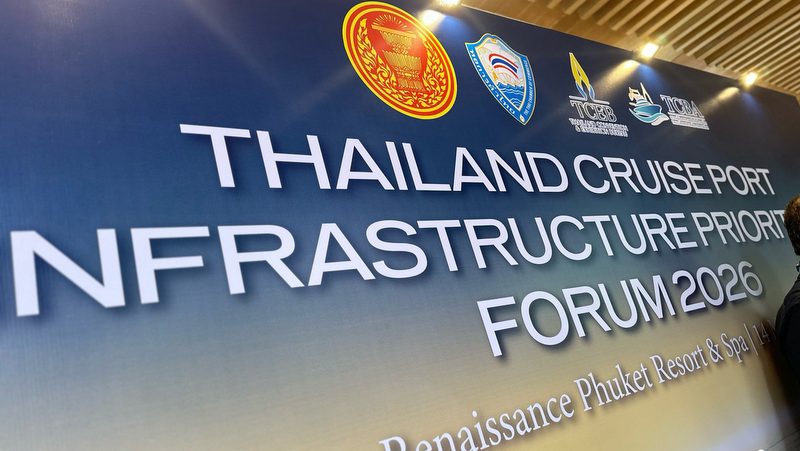
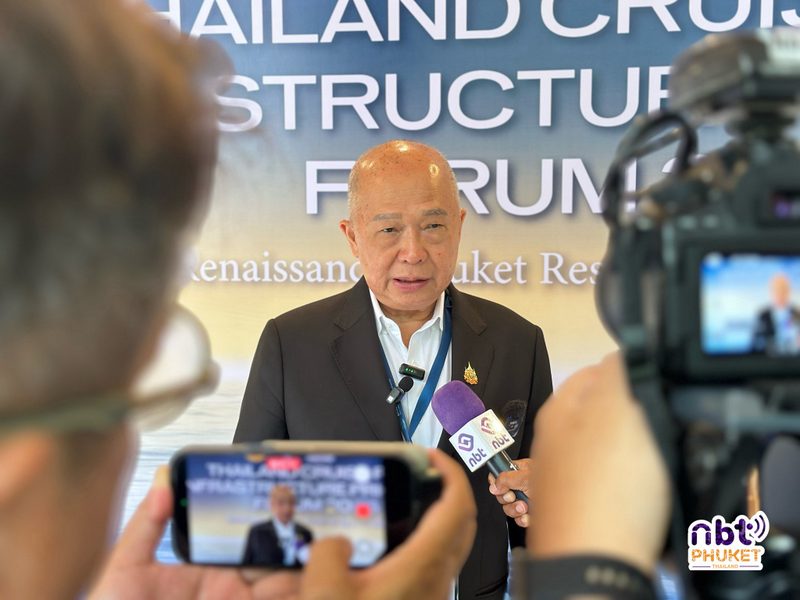
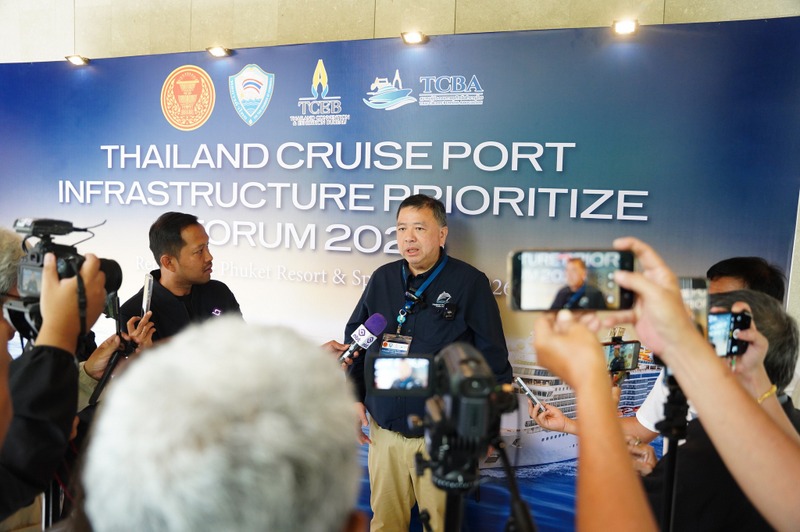
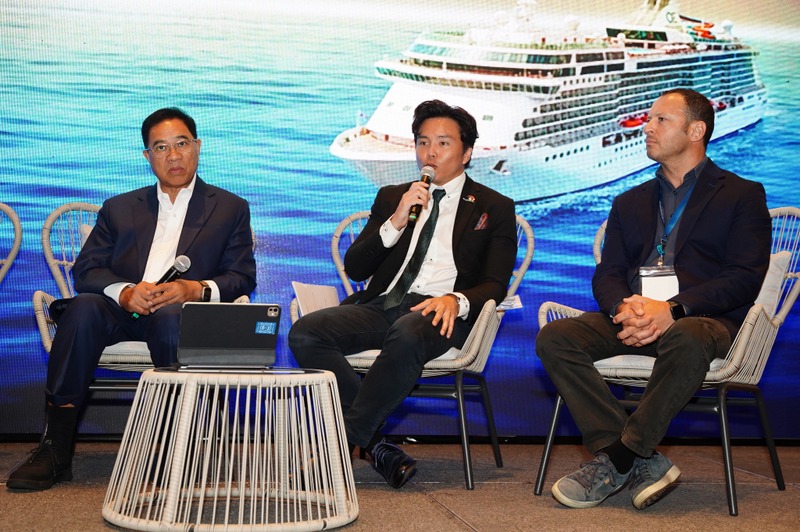
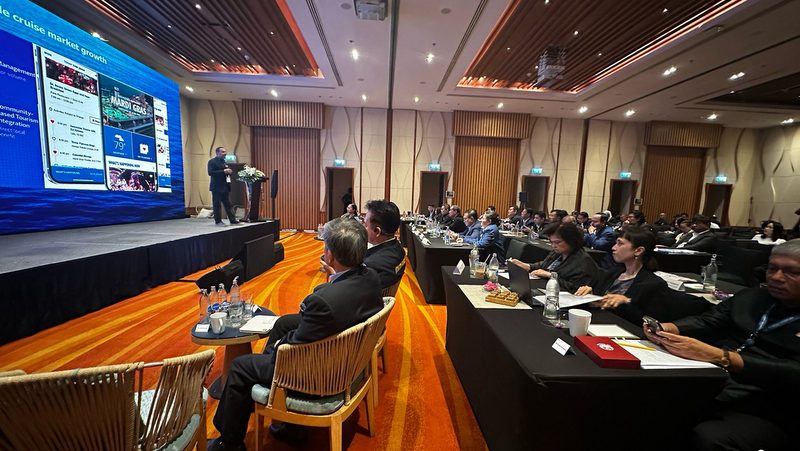
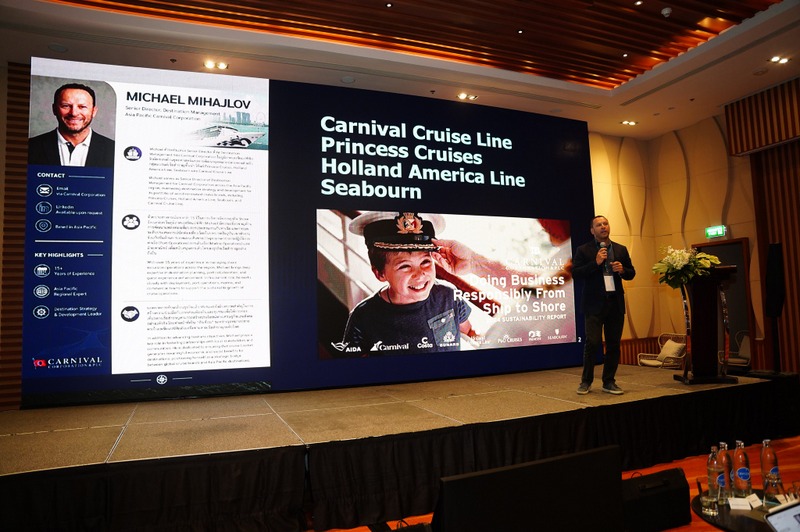
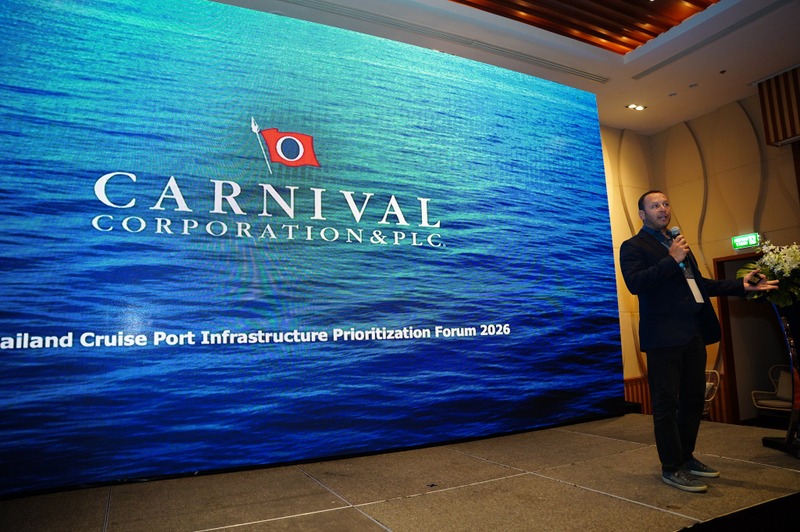
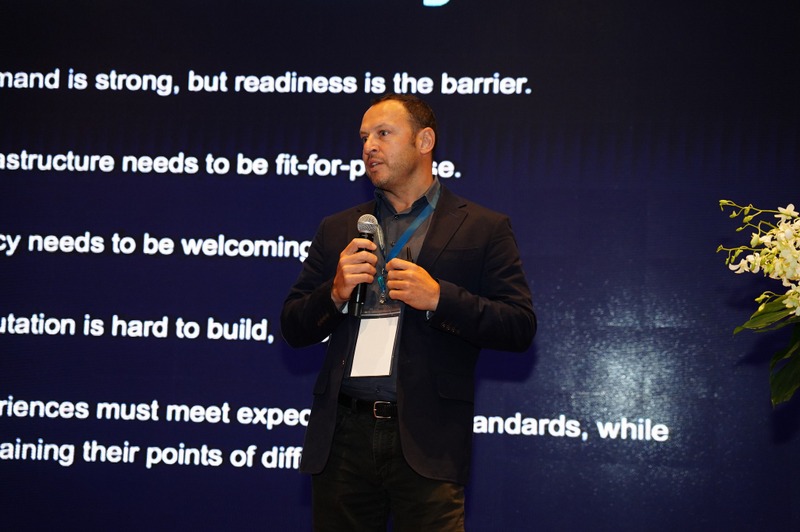
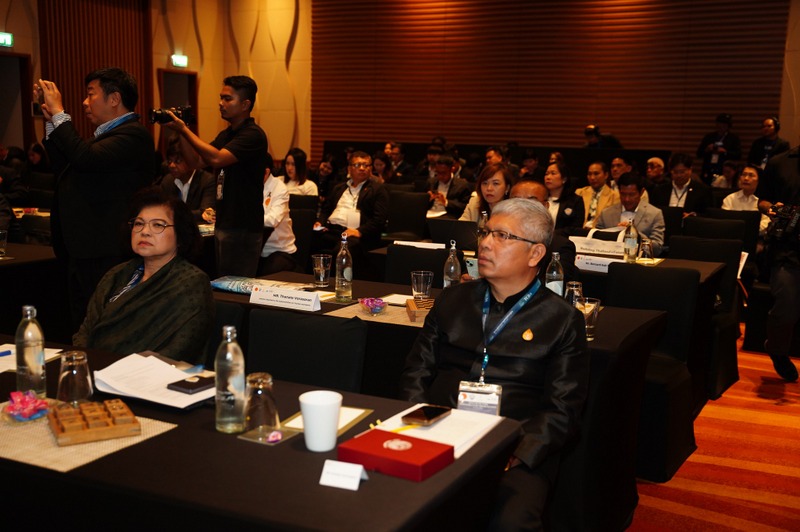
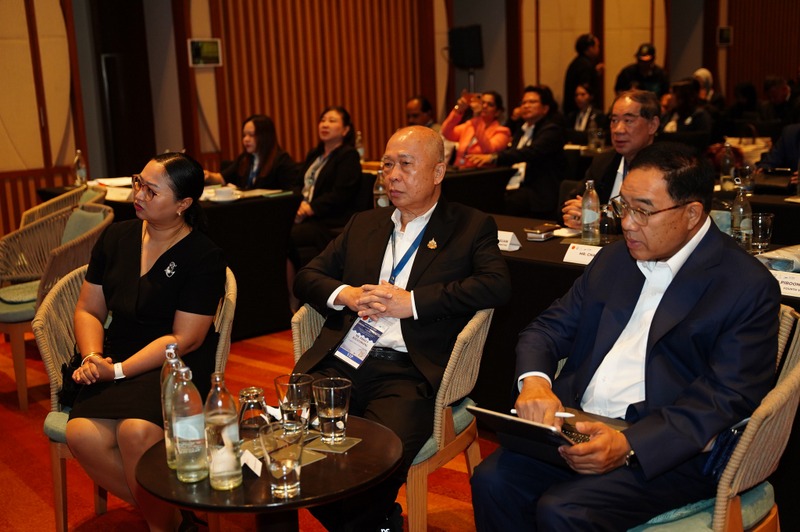
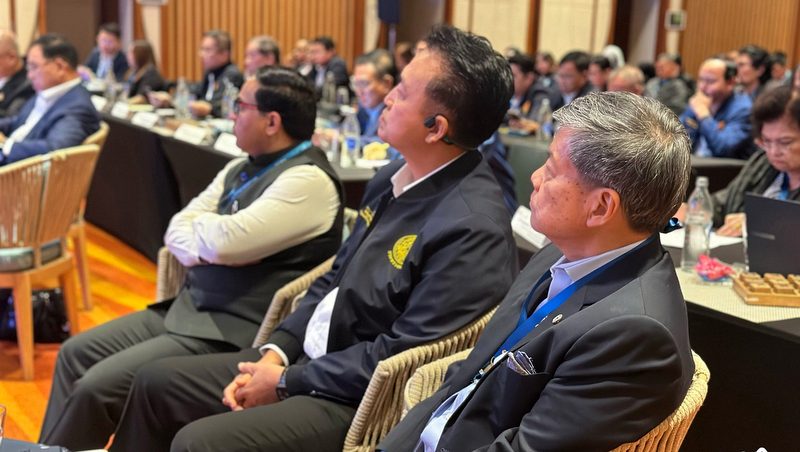
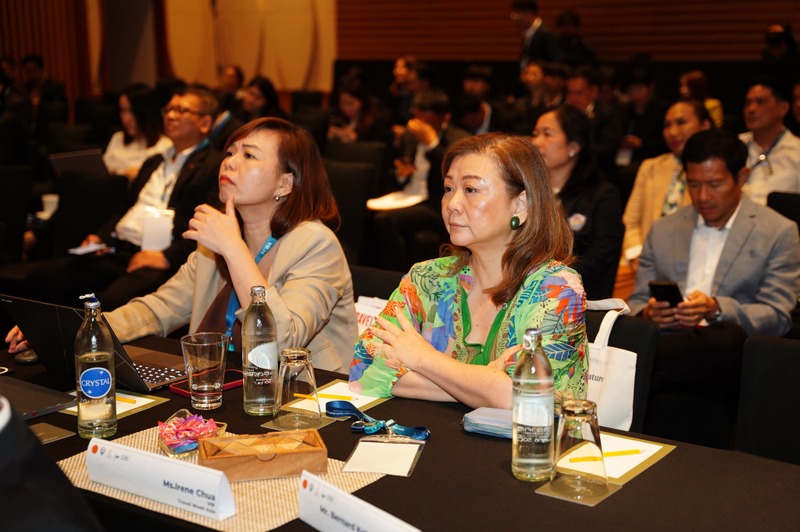
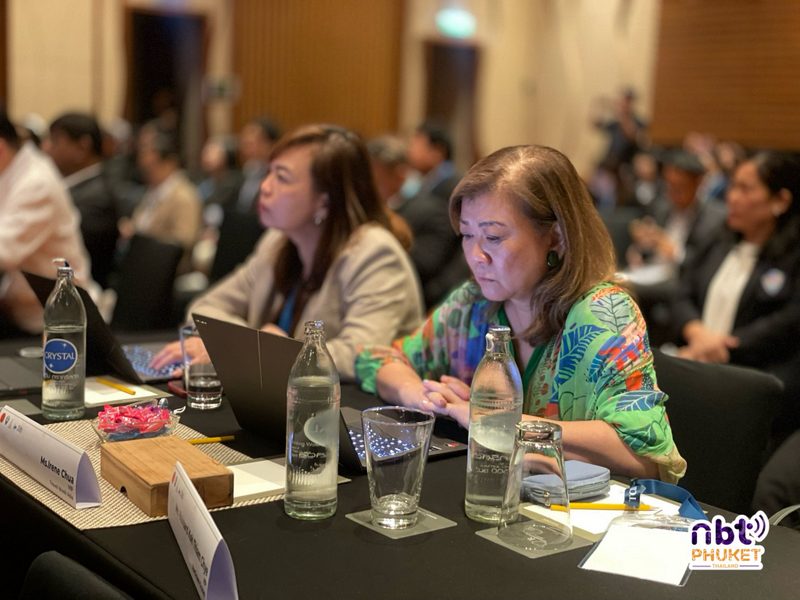
The strategy was presented during the Thailand Cruise Port Infrastructure Prioritization Forum 2026 held at the Renaissance Phuket Resort & Spa in Mai Khao, bringing together senior government officials, tourism executives, cruise industry representatives and private-sector leaders to map out the future of the country’s cruise tourism infrastructure.
The forum was organised by the Senate Committee on Tourism and Sports and chaired by committee chairman Pisut Rattanawong.
Among those attending were Thailand Convention and Exhibition Bureau (TCEB) Deputy Director Dr Suratchanu Thongmee, Songkhla Deputy Governor Chucheep Thammapetch, Prachuap Khiri Khan Deputy Governor Preeda Sukjai, Thai Chamber of Commerce Honorary President Klin Sarasin, Thai Cruise Business Association President Wattana Choksuvanich, Ministry of Transport Inspector General Puripat Teerakulphisut and Thalang District Chief Wilailak Ruangphol.
PHUKET KEY TO ‘TWO-COAST’ STRATEGY
Officials said the plan aims to connect the Gulf of Thailand and the Andaman Sea into a unified marine tourism network linking key ports including Phuket, Laem Chabang and Songkhla, while also developing emerging destinations such as Krabi, Satun, Ranong and Trat.
The strategy includes categorising ports according to their capabilities, with designated Home Ports, Ports of Call and Boutique or Expedition Ports intended for smaller luxury cruise vessels.
Speaking at the forum, Mr Pisut said Thailand was entering “a crucial period” in defining a new role in the global cruise industry.
He said the country aimed to move beyond simply being a tourist destination and become a strategic regional partner driving long-term cruise industry growth.
“The cooperation of all sectors will help strengthen competitiveness, create economic opportunities and support sustainable tourism growth,” he said.
SUSTAINABLE TOURISM FOCUS
Forum participants stressed that infrastructure development must be matched by environmental protection, upgraded tourist attractions and stronger community participation.
TCEB representatives also highlighted plans to integrate the cruise sector with Thailand’s MICE industry (meetings, incentives, conferences and exhibitions) positioning cruise ships as platforms for international business events and incentive travel.
An official report of the event said the forum would help create a national roadmap for cruise port development and identify investment priorities, public-private partnership opportunities and the lead agencies responsible for implementing the strategy.
The long-term goal is to establish Thailand as a regional cruise infrastructure hub capable of attracting high-spending international visitors while promoting sustainable tourism development nationwide, the report concluded.