


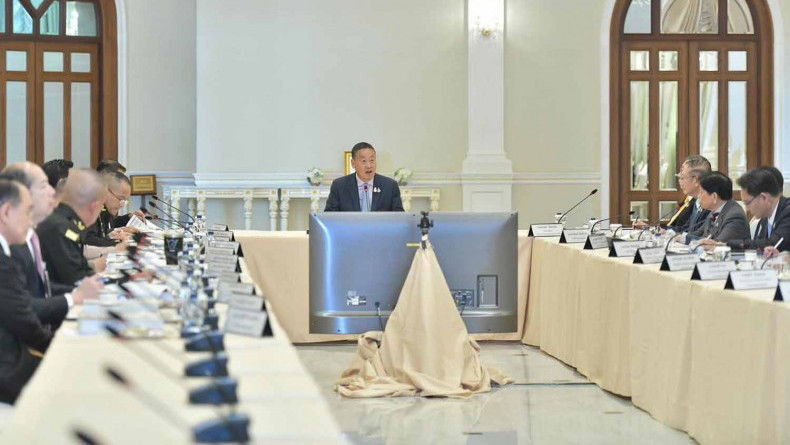
Mr Srettha told a national strategy committee meeting yesterday (Dec 27) he does not believe in planning too far ahead, especially for a national pathway that hinges on an outlook spanning 20 years, reports the Bangkok Post.
“These days it’s hard to even plan five years down the road,” he said at the meeting held at Government House which was also attended by House Speaker Wan Muhamad Noor Matha, Senate Speaker Pornpetch Wichitcholchai and senior officials, including the defence permanent secretary.
The existing strategy was implemented on Oct 8, 2018, under pevious prime minister Prayut Chan-o-cha and his administration. The strategy remains in effect until 2037 and is built on a vision of making the country secure, prosperous, sustainable and achieving developed country status. The strategy is guided by the sufficiency principle set out by the late King Rama IX.
Subsequent governments are bound by the strategy to lift people’s well-being, increase the country’s competitiveness through economic development and better income distribution, improve human resources, create social equality, maintain ecological diversity and environmental sustainability and achieve effective state management.
However, the junta-promoted charter’s 20-year national strategic plan is widely criticised as a tool to continue junta policies into the future. With a fast-changing world, the long-term plan is accused of being too rigid due to its enshrinement in law and prone to becoming outdated and blocking new development ideas.
Mr Srettha said the plan needs to change with time. New technology and trends dictate a rethinking of priorities in formulating government policies, he said.
“Take clean energy, for example. During my trips overseas, this is the very first issue people brought to the table for talks,” he said.
Also, the world’s geopolitical landscape is being reshaped by conflicts such as the growing trade friction between China and the US and the Russian invasion of Ukraine.
Mr Srettha stressed the need to fine-tune strategies to reflect the evolving environment. The key is to make them impervious to change so the country’s future does not move on a fixed course.
“We don’t want future generations in the next 20 years to be tied to the ideas of older people. They should be free to choose the direction in which to steer strategy.”