


The meeting, at Phuket Provincial Hall, gave local drivers a chance to put their side of the story.
Local drivers blamed illegal “black plate” operators and the authorities for taxi and tuk-tuk problems, while some officials blamed “influential people” and drivers in general.
The president of the Phuket Tuk-tuk Cooperative (PTC), Daroon Suksai, insisted that none of his members ever caused problems.
Private operators rented out their black-plate vehicles to drivers from other regions, Mr Daroon alleged. Unregistered tuk-tuks were everywhere, he said.
He added that he believed that this has caused a surplus of vehicles, ratcheting up competition and giving rise to the informal territorial zoning system agreed between legal operators’ groups.
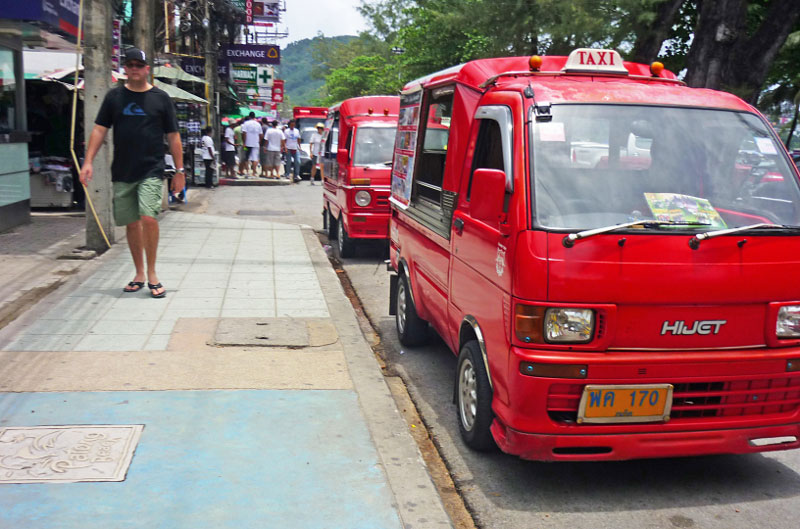
He reported that the island now has 10,000 legal and illegal tuk-tuks, taxis, limousines and minibuses. There are only about 1,000 registered tuk-tuks.
Addressing the issue of high fares, the president of the Phuket Limousine Cooperative (PLC), Nikom Panmee, blamed these on the high concession fees charged by Phuket International Airport (PIA).
The PLC, he said, currently pays around B1.7 million a month, including concession fees, tax and facility bills, just to be allowed to operate at the airport. That comes out at more than B9,400 for each of the PLC’s 180 members.
He added that the contract between the PLC and the airport stipulates an annual rise of 10 per cent in the concession fee.
A representative of the airport management said the charge was a policy set by Airports of Thailand (AoT), which owns the airport, and PIA management would have to discuss the matter with AoT.
A member of the Samakkee Tuk-tuk Cooperative of Rawai, Nui Khaoviset, told media that another component of the exorbitant fares was the high fee required by the Department of Land Transport (DLT) to obtain a legal tuk-tuk registration plate.
However, the head of the Advisory Department of the DLT, Wanta Pummararossukon, slammed this claim as utterly untrue. The registration fee is not high, he said.
But because the number of plates is limited, he said, some people use the plates to make money, selling them or renting them to others.
He cited a complaint received by police from an individual who said he had paid a fee of B500,000 to a local tuk-tuk cooperative for a registration plate.
Members of the cooperative claimed they had passed the B500,000 to the DLT. The individual, however, told police that he believed that the cooperative had kept the money; in the end he did not get his plate.
The Phuket News has been told that tuk-tuk registrations can change hands for as much as B800,000. Many drivers try to get plates simply for the profits to be earned from selling them onward.
The meeting ended with no clear solutions to Phuket’s transport woes. The issues aired are to be discussed further by the relevant authorities.