


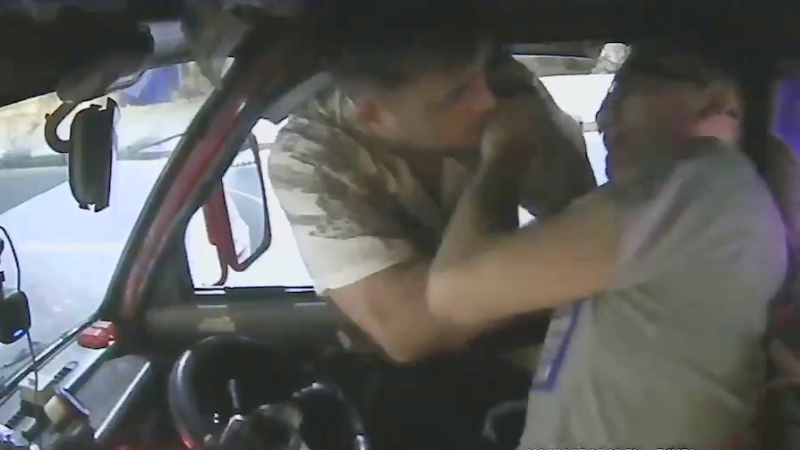
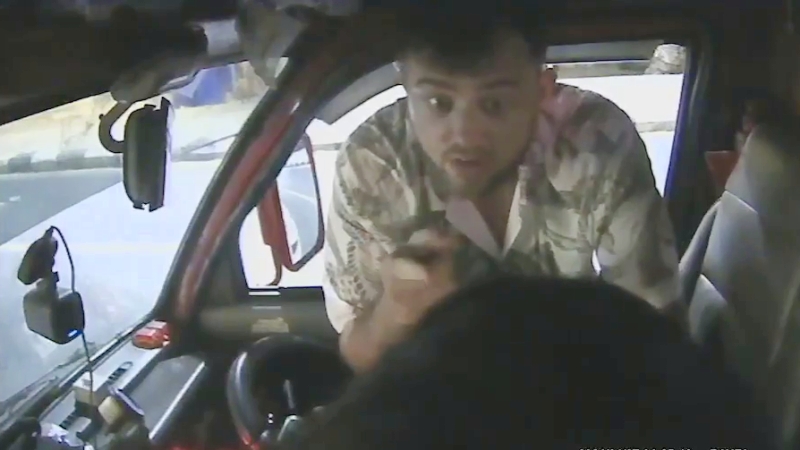
A video of the incident currently circulating on local social media channels shows the Englishman placing his hands around the throat of the driver and repeatedly saying, “Show me what I paid you with.”
The driver repeatedly refuses. The Englishman then slaps the driver in the face.
“You’re lucky you got a little slap,” the Englishman says before walking away.
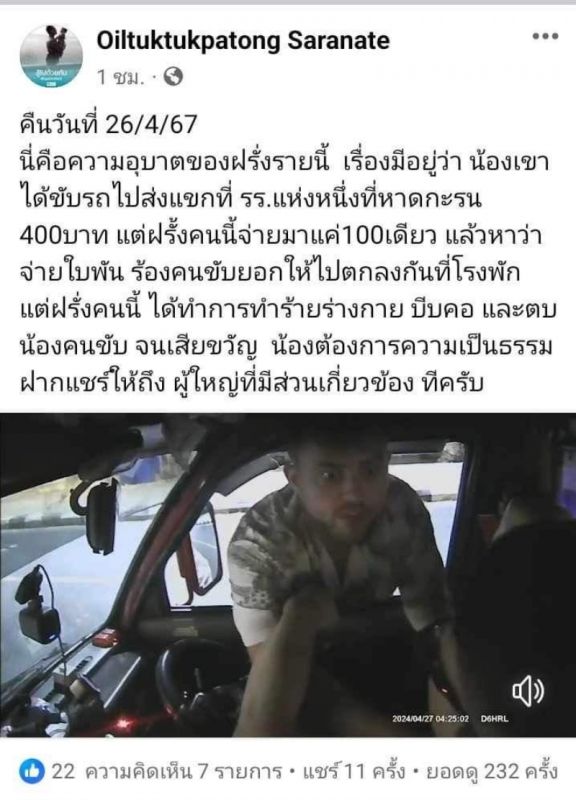
The video was originally posted on Facebook last Friday night (Apr 26) by “Oiltuktukpatong Saranate”, who claims the incident involved a “younger brother”.
“This is the vice of this foreigner. The story is that a younger brother drove the car to drop off guests at a hotel at Karon Beach for 400 baht, but this foreigner paid only 100 baht and then accused him of paying a thousand baht,” said the original post.
“The driver asked him to come to the police station to resolve the issue, but this foreigner did physical harm, strangled and slapped the younger driver until he panicked.
“The driver wants justice. Please share it,” the post concludes.
However, the original post made no mention whether tuk-tuk driver himself has filed a complaint with police.
While the video posted online is clearly from a camera fitted inside the van, the van driver is not named in the posts online showing the video.
Although the Englishman is seen with a beer bottle in hand, he does not appear to be drunk or out of control.
Posts of the video have evoked comments from people criticising the behaviour of the tourist, other comments question the behaviour of the driver.
Although the tourist in the video speaks with a clear English accent, one comment for some reason noted, “The more free visas the more crazy guests get.”
Others suggested that drivers leave the money handed to them in plain view, such as leaving it on the dashboard, before handing back the change.
The Phuket Land Transport Office (PLTO), which is the government office for regulating all public transport drivers in Phuket, has yet to recognise the incident.
The Karon Police and the Phuket Tourist POlice also have yet to publicly recognise the incident.