


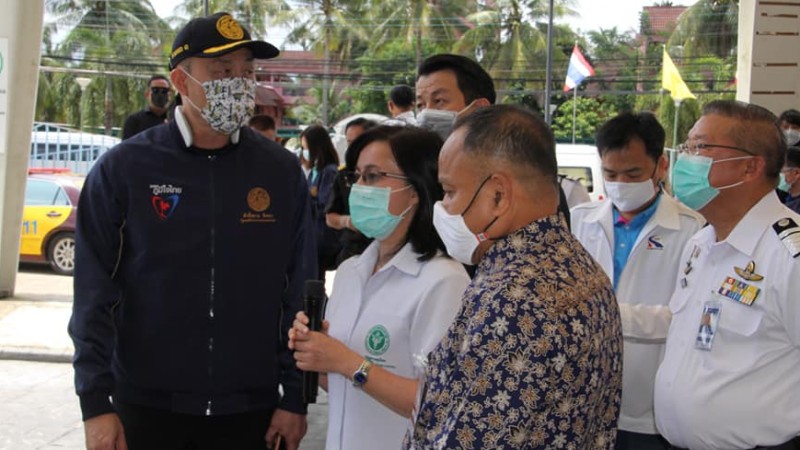
A report by the respected Thai-language business journal Thansettakij reported yesterday (Nov 6) that Mr Saksayam ordered the review following his update on the project delivered to the mobile Cabinet meeting in Phuket on Tuesday (Nov 2).
Mr Saksaym said the move to consider using electric buses followed observing other mass-transit systems in cities abroad, reported Thansettakij.
The move would greatly reduce the cost of launching a mass-transit system. In Phuket’s case, it could save up to B10bn, he said.
“You would not have to build a rail and signaling system, and local people will benefit from the lower fares as well,” he said.
“However, as time passes it would become less cost-effective as old buses will need to be replaced,” he noted.
Mr Saksayam explained that as the project was still in its development stage, the MRTA was not bound to develop specifically a rail system. A bus system could be launched instead, he said.
“Looking at the latest study results we found that only about 39,000 people a day would use the mass-transit system, which could be a bus system at first. Initially, it would be a special express bus format,” Mr Saksayam said.
The route would remain the same as the current plans for the light rail, Mr Saksayam noted.
The express bus network would be able to use the same central reservation area along Thepkrasattri Rd where the light-rail is planned to be built, he said.
“There should not be any problems. The MRTA has discussed with the Department of Highways about removing the central traffic island, reworking the road surface and the installation of barriers to keep the buses separate from general traffic,” he added.
“But what the MRTA has to consider further is creating stations for passengers to use. Is there a need for additional adjustments? Or can the same number of stations at the same locations be used? And can some places also be used for commercial use?
“In addition, it must be considered what kind of adjustments must be made where general traffic crosses the current route, such as whether a tunnel will be needed or whether money could be saved by having traffic lights manage the crossroads, which would allow the express bus to go first,” he added.
Mr Saksayam cautioned people from jumping to conclusions about whether or not a bus system will be launched instead. The concept is only under consideration, he pointed out.
“It should take a while to consider which format to choose instead of a tram system,” he said.
Of note, while reports of an electric bus system identical to that first posted by Thansettakij yesterday are now circulating online, the Ministry of Transport has yet to announce the move through any of its formal channels. Likewise, the MRTA has yet to announce that it is to look at the cost-saving manoeuvre.
The Public Relations Department also failed to note the option of electric buses is being investigated. In its report of Mr Saksayam’s visit to Phuket, the only news it had to report was that the budget had increased by B400 million, to B 35.201bn. The reason for the budget increase was not explained.