



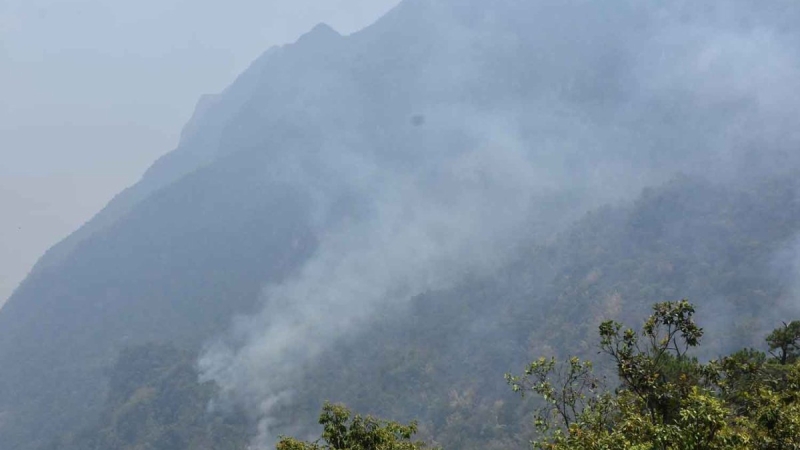
Air quality in Chiang Mai remained at crisis levels on Saturday, with thick haze blanketing the city and severely reducing visibility, reports the Bangkok Post.
At Chiang Mai University in Muang district, PM2.5 surged to 360 micrograms per cubic metre (µg/m³), far exceeding the safety standard of 37.5 µg/m³. The situation coincided with ongoing wildfires, with 27 hotspots still detected despite a slight decline.
Dr Atikun Limsukon, a respiratory and critical care specialist at the Faculty of Medicine, Chiang Mai University, said PM2.5 particles are small enough to penetrate deep into the lungs and enter the bloodstream, triggering inflammation and exacerbating existing lung conditions.
He cited a recent case involving a 19-year-old foreign tourist with no underlying illness who developed severe lung inflammation after visiting Pai in the neighbouring Mae Hong Son province and Chiang Mai.
Chronic patients in the area have also deteriorated rapidly, said Dr Atikun.
The Environmental and Pollution Control Office 1 in Chiang Mai reported PM2.5 levels across northern provinces remained dangerously high, with Pai recording an air quality index of 472, the highest in the country, for 42 consecutive days of severe impact. Pai also recorded PM2.5 levels of 222.8 µg/m³ over the past 24 hours.