





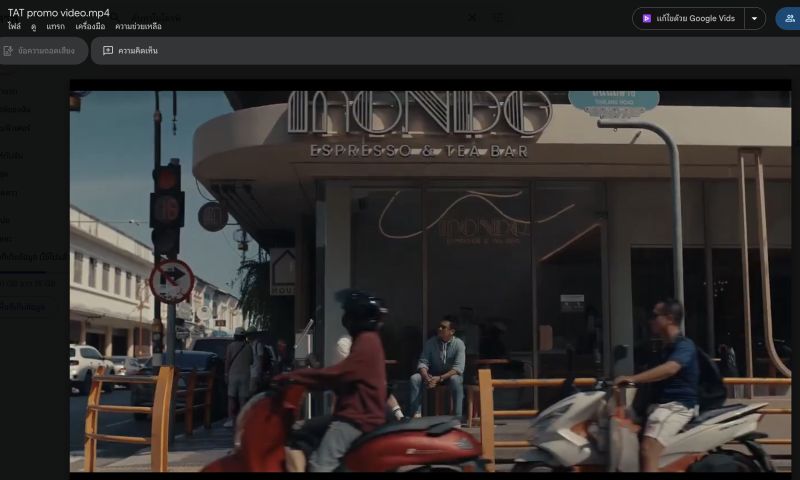

The clarification follows questions raised over a promotional video showing two men enjoying an evening out in Phuket Old Town.
One scene shows the pair seated at a rooftop bar overlooking the city while holding drinks. Another shows them dining at a restaurant table with food, wine glasses and a bottle of wine bearing the label of Italian wine producer Vietti.
The video forms part of a broader campaign promoting Phuket’s tourism, dining and nightlife experiences.
Thayakorn Kanthivivorn, a specialist with the Alcohol and Tobacco Control Division and acting secretary to Phuket Provincial Public Health Office (PPHO) Director Dusadee Kongtrakulsap, said authorities assess such content based on its overall purpose.
“Based on the video clip, it can be seen that the intention of the video is to promote tourism, not to promote shops, services or alcoholic beverages,” Mr Thayakorn said.
He explained that enforcement under the amended Alcohol Control Act considers whether content is intended to encourage the sale or consumption of alcoholic beverages.
Mr Thayakorn pointed to Section 32/3 of the Alcohol Control Act, Amendment No. 2, which took effect on Sept 9, 2025. The provision prohibits the use of alcohol brand names, trademarks or symbols in a manner that could be understood as advertising alcoholic beverages, including modified versions of alcohol branding used to promote other products.
Violations carry penalties of up to one year in prison, a fine of up to B500,000, or both.
However, Mr Thayakorn said authorities must consider the context and intent of the content when determining whether an offence has occurred.
“In this case, the video is only one part of a tourism promotion campaign. Therefore, it is considered acceptable and not a violation,” he said.
Mr Thayakorn acknowledged that the assessment differs from previous PPHO guidance regarding advertising for Heineken 0.0, which was deemed potentially problematic because it featured a recognised alcohol brand and imagery associated with drinking despite the product containing no alcohol.
The key distinction, he said, is that the TAT video promotes Phuket as a tourism destination rather than any alcoholic beverage or alcohol-related business.
In addition, Mr Thayakorn compared the issue to tourism videos that may incidentally show motorcycles in the background without riders wearing helmets, another aspect clearly seen in the video posted online by the TAT.
Authorities consider the primary focus of the content, Mr Thayakorn again said, noting that background elements not central to the production do not automatically mean the video is promoting unsafe behaviour.
He added that Chapter 4/1 of the amended law also requires authorities to consider the intent of the publisher when assessing potential violations.