



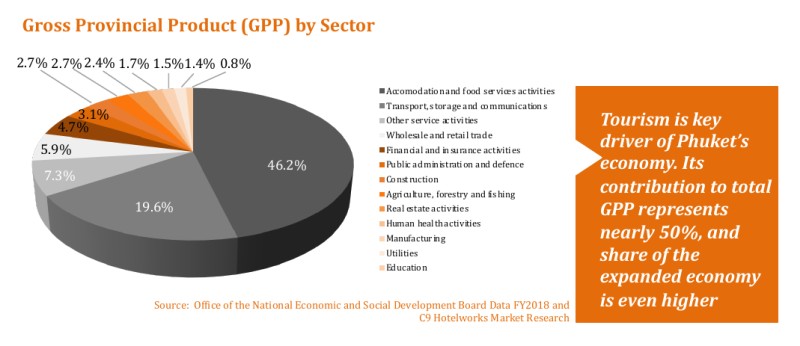
“Phuket’s economy heavily relies on tourism. In 2019, the accommodation and food services sectors made up nearly 50% to its total GPP. Due to the negative impact of the COVID-19 outbreak on tourism, the critical economic questions facing the island remain: is it too big to fail, and is it time to diversify industries?” posed C9 Hotelworks CEO and founder Bill Barnett in the release announcing the report’s release.
“With over 80,000 registered accommodation keys in Phuket, restoring overseas travel is a lever towards injecting cash flow into the tourism sector and stabilizing businesses.
“Looking beyond tourism, other key demand generators such as international schools and hospitals, real estate and the marine industry are key contributors to the island’s economic profile and have the opportunity to tap broader demand,” he added.
Some of the key demand sector metrics in the report were given as:
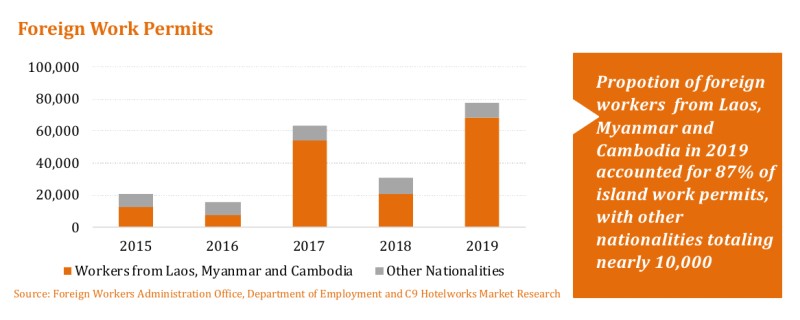
- Foreign Phuket province work permits, not related to construction tally 9,835
- Over 4,000 international school students
- A primary and secondary real estate sector valued at over B100 billion
“Phuket’s economy for the remainder of the year will rely primarily on the resilience of its tourism industry. In the longer term, the island’s immediate need of a comprehensive tourism master plan is a recurring challenge that must be addressed,” Mr Barnett noted.
“A rise in public private partnerships over the next two to three years is expected, which possibly could be tapped to fund infrastructure development,” he wrote.
The report give the “2019 Highlights” for Phuket as:
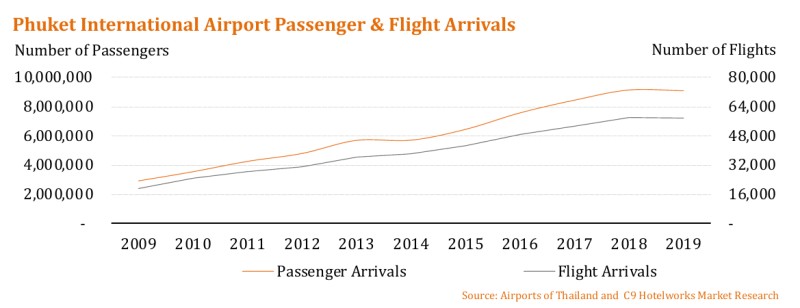
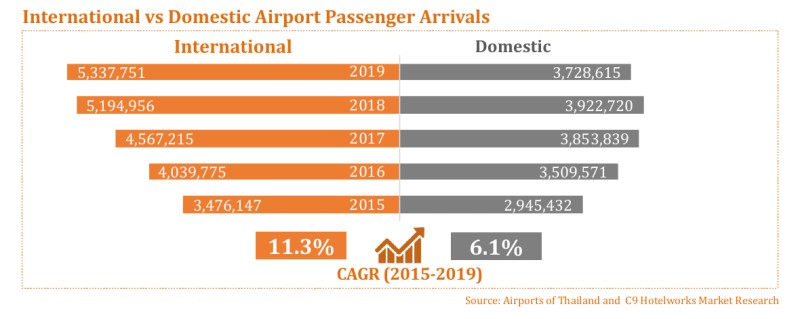
- Tourism growth for the island reflected a 4% y-o-y growth in total passenger arrivals at Phuket International Airport.
- Thai baht appreciation against key global currencies and the China economic slowdown along with the US trade war issue muted macro economic prospects.
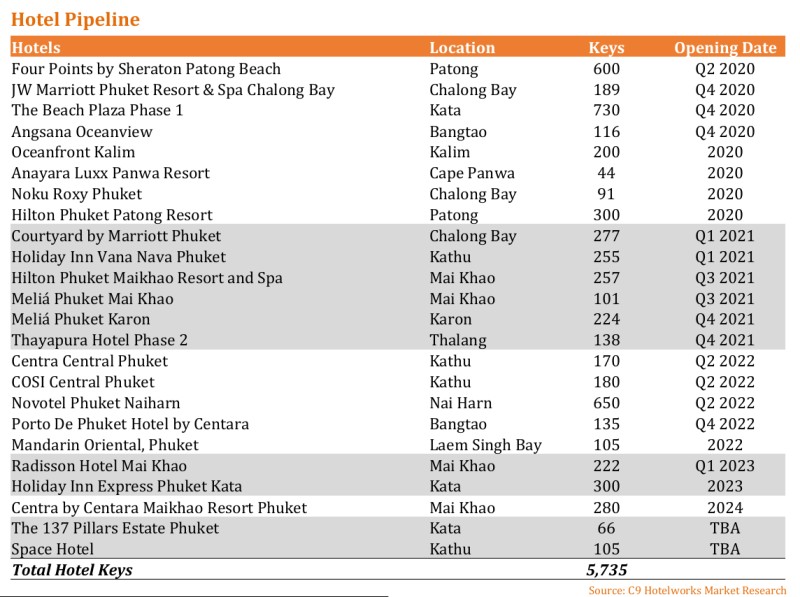
- Branded residences became a majority segment in Phuket’s hotel pipeline reflecting a surge in investment-oriented property buyers.
Mr Barnett’s “Forward Outlook” was given as:
- Long-haul tourism markets are not expected to return until next year. Tourism recovery will rely heavily on intra-Asia point to point travel.
- All eyes on Thailand’s central governments post-crisis economic plan and agenda on funding of Phuket’s significant planned transportation and infrastructure projects.
- Private sector is expected to lead island development and heavy influence of Bangkok groups redirecting investment to provinces.
The report itself notes that passenger arrivals at Phuket International Airport marked a sustained upward growth trajectory over the past 10 years from 2.8 million in 2009 to over 9mn in 2019.
“Direct flights are the main driver with a compound annual growth rate (CAGR) of 11.8% with international flight arrivals soaring by almost four fold during the same period. Since 2011, Mainland China surpassed Australia and maintained to be the dominant source market.
“India is the fastest-growing market, which surged by 239% last year and became the third-largest international source market,” the report added.
“Hotel supply generated a CAGR of 11% between 2013 and 2019. During the same period, the market-wide hotel occupancy rates of more than 70% have been maintained since 2013, indicating growing room night demand.
“Looking forward, with the further completion of planned infrastructure, hospitality developments, and tourism attractions, Phuket will be transformed and continue to magnify its destination awareness and attractiveness. Though with an escalating hotel supply, hotel rates will be challenged and diverse market segments and products are needed,” Mr Barnett noted in the report.
Download and read the full report here.