


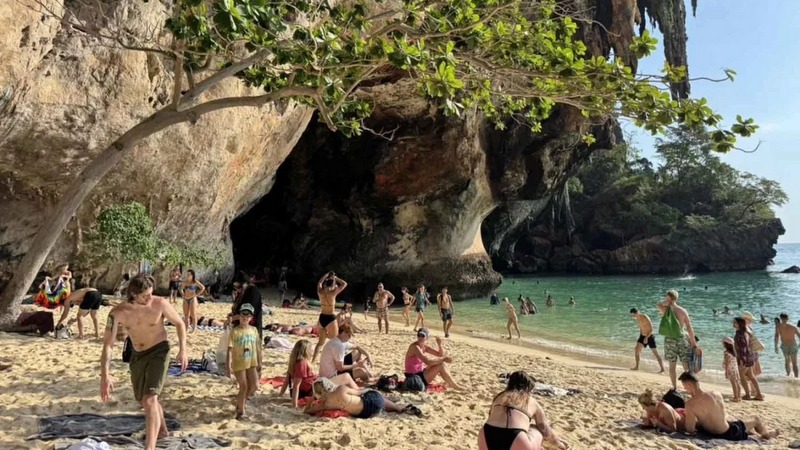
The Tourism Authority of Thailand downgraded its forecast for the year to only 33 million arrivals, ending the rising trend from 2021 to 2024, when numbers surged from 430,000 to 35.5mn, reports the Bangkok Post.
With a new government expected after the general election, tourism operators hope the industry will again become a priority, regaining its role as a key engine of the Thai economy.
FAILED ATTEMPTS
At the beginning of 2025, the government led by the Pheu Thai Party aimed to restore tourist arrivals to the same level as 2019, using the ‘Amazing Thailand Grand Tourism and Sports Year’ campaign to draw 39mn arrivals and generate B3.5 trillion.
However, several events prompted airlines to reduce capacity due to weak demand.
The most crucial was Chinese actor Wang Xing being lured from Thailand to a scam compound in Myanmar. This incident sent shockwaves throughout the Chinese market, which experienced a sharp plunge in bookings from the first quarter until the end of this year.
In March, an earthquake rocked Bangkok causing the State Audit Office building to collapse and further eroding the confidence of tourists who watched frightening scenes on viral video clips.
Even though the previous government attempted to make the nation a regional hub for festivals, such as the Maha Songkran World Water Festival and approving hosting of Asia’s first Tomorrow Land electronic music events between 2026 and 2030, there was a limited effect for the industry.
The ‘Tiew Thai Khon La Khrueng’ subsidy programme for locals was launched during the low season, but was heavily criticised for its unstable and inconvenient system, prompting several hotels to avoid participation.
Global tourism also slowed following sweeping new US tariffs and a continued trade war with China, while the Israel-Hamas conflict disrupted flights in the Middle East mid-year.
The outbreak of the Thailand-Cambodia border conflict in June proved to be the nail in the coffin for the eastern border provinces.
The removal of former premier Paetongtarn Shinawatra over leaked phone calls with Cambodian Senate President Samdech Hun Sen disrupted tourism stimulus measures, including free domestic flights for foreign tourists.
In addition, the controversial bill to legalise casinos in entertainment complexes was rejected.
STIFF COMPETITION
Thailand also faced stronger tourism competition from rivals Vietnam, Japan and China.
Chai Arunanondchai, president of the Tourism Council of Thailand, said 2025 was proof tourism is highly sensitive to uncontrollable factors.
Looking ahead to 2026, if no unexpected events occur, he said tourism should rebound to at least 35.5mn foreign arrivals, similar to the 2024 level, driven by more flights, events and marketing measures already prepared for next year.
Despite being under a caretaker government, Thailand should use all available means to restore border peace and mitigate the impact on flood-stricken provinces, said Mr Chai.
Tourism operators admitted they might have to wait for major stimulus projects until a new government is elected, causing Thailand to lose opportunities, he said.
The new government should prioritise tourism along with improving the economy to restore spending by local travellers, said Mr Chai. In addition, new policymakers should focus on infrastructure investments, including high-speed railways, new airports and man-made attractions, to enhance the nation’s competitiveness, he said.
According to a report by SiteMinder, a hotel guest acquisition and revenue platform, Thailand will remain among the top 10 preferred destinations in Asia-Pacific in 2026, alongside Singapore, India, Indonesia, China and Australia.
Supakrit Phansomboon, country manager for Thailand at SiteMinder, said the nation must continue to promote its strengths in food, hospitality and wellness tourism, while upgrading infrastructure to increase competitiveness.
Mr Supakrit said the tourism sector has already moved past the period of pent-up demand, when hotels could raise room rates by 20-30%.
Operators need to adopt dynamic pricing strategies that align with demand in each specific market and destination, he said.