


Operators in the travel industry in the Asia-Pacific region should prepare themselves to maximise business from voice searches online, one of Australia’s leading tourism strategists has cautioned.
Simply optimise your digital online presence by building reputation, trust, authority and relevance and the voice recognition algorithms of Google, Apple, Amazon and others will do the rest for you – mostly.
That was the recommendation by Bronwyn White, co-founder of MyTravelResearch.com, when she was addressing an audience of tourism marketers at the Tourism Marketing Rockstar Convention in Sydney last month.
Ms White explained that voice search and chatbots were the latest digital marketing outcomes of the artificial intelligence revolution currently transforming the travel industry by stealth.
Apple Siri, Google Now, Windows Cortana and Amazon Alexa are the leading voice activated chatbots helping consumers search without typing,” she said.
“They all use artificial intelligence algorithms to drive voice search. They also tap into user preferences, geographical location, and previous search history,” she added.
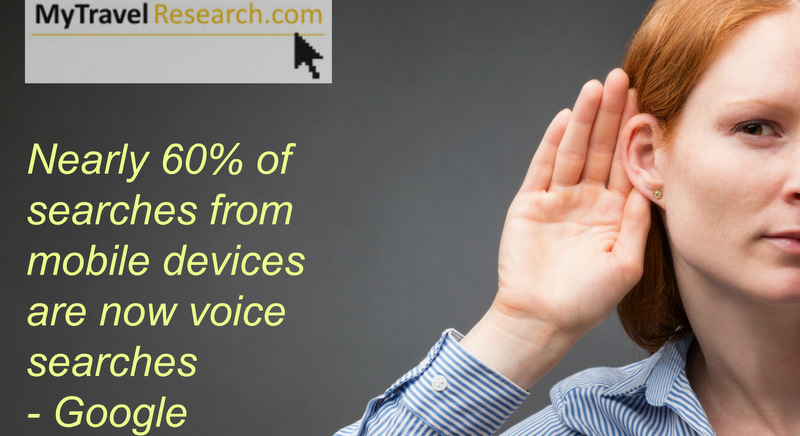
Ms White told the audience that nearly 60% of searches from mobile devices are now voice searches.
“Google reports that 55% of teens and 40% of adults use voice search daily on Google,” she pointed out.
Not surprisingly, research shows that people are more comfortable using voice search at home or in the office, not in public transportation, the gym or a public restroom.
However, young people under 24 are more comfortable using voice search in pubic places, Ms Whote said.
“It’s a foretaste of things to come,” Ms White pointed out. “We’re still at the start of the revolution.”
Ms White recommended that destinations, theme parks, hotels and restaurants and so on should tailor online content to satisfy FAQs by voice, which, unsurprisingly, tends to be more conversational than written search.
“For example, rather than type ‘weather Khao Lak’, we might now ask, “What is the weather going to be like in Khao Lak when I arrive next week?” Ms White told the convention in Sydney, adding that it is likely Google will already know something of your plans.
She told the audience that there were five ways tourism businesses should adapt their marketing:
• Optimise location data
• Fill out all relevant business categories for Google My Business (make it as complete as possible)
• Cultivate reviews (search engines and therefore digital voice assistants love them)
• Ensure your branding is focused (don’t try to be all things to all people)
• Publish great content and develop it with voice in mind.
“But it’s important not to panic,” Ms White reminded the marketers.
“To a great extent, if tourism businesses are optimised for mobile typed search, Google will deliver accurate search results via voice too – at least in the short term,” she said.
With 25 years experience in the travel and tourism industry in the areas of market research, sales and marketing, Bronwyn White along with Carolyn Childs co-founded MyTravelResearch.com, a market research and marketing firm specialising in the travel, tourism and aviation industries. Its specialty is providing insights that are actionable. Email carolyn@mytravelresearch.com or bronwyn@mytravelresearch.com