


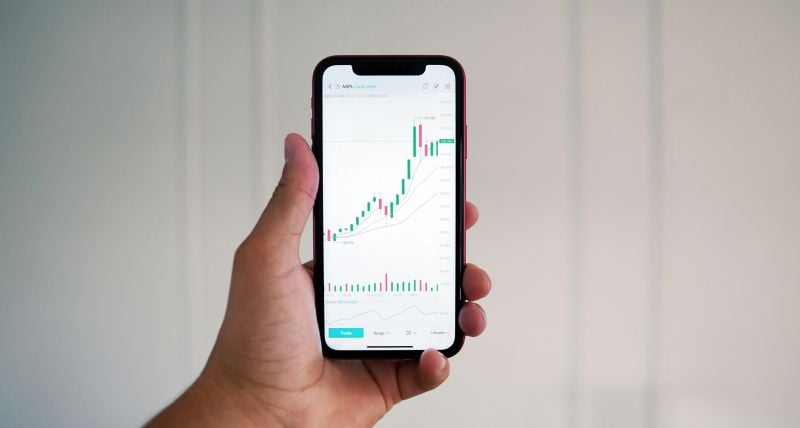
That is why your trading app layout matters more than many beginners realize. A good interface does not make trading risk free, but it can help you react faster, read price action more clearly, and avoid simple execution mistakes. For scalpers in Thailand, especially those trading around the Bangkok afternoon session and the London market open, every tap, chart, and button placement matters.
1. Keep Your Main Chart Clean
A clean chart gives your eyes room to think. Many Thai scalpers add too many indicators, colors, and extra panels until the screen starts looking like a night market signboard. It may feel professional, but it often slows down decision making.
Focus on the tools you actually use. If price action, support and resistance, moving averages, or volume are part of your strategy, keep them visible but simple. Remove anything that you do not check before entering a trade.
The goal is not to make the chart look impressive. The goal is to make it useful. When USD/THB starts moving after a dollar headline, you should be able to see the setup instantly without searching through visual clutter.
2. Place Buy and Sell Buttons Where Your Thumb Naturally Moves
Scalping on mobile is different from trading on a desktop. Your thumb becomes part of the execution system. If your buy and sell buttons are placed awkwardly, you may lose time or tap the wrong area during a fast move.
Thai traders who trade from phones during lunch breaks, commutes, or evening sessions should test button placement carefully. The best layout is the one where you can enter, modify, and close trades without shifting your grip too much.
Think of it like using a food delivery app in Bangkok traffic. If the key button is hidden three taps away, the whole process feels slow. In scalping, that delay can matter even more.
3. Use One Screen for Execution and One for Analysis
Trying to analyze and execute from the same crowded screen can create hesitation. A better setup is to keep one clean chart for entries and another screen or tab for broader analysis.
For example, a Thai trader may use one chart for a one minute or five minute scalping setup, while keeping a higher timeframe chart nearby to check the bigger direction. This helps avoid taking trades against a stronger move.
The idea is simple. Your execution screen should answer one question: should I enter now? Your analysis screen can handle the deeper work. When both jobs are mixed together, the interface becomes noisy.
4. Set Quick Access to Favorite Markets
Scalpers do not have time to search through long instrument lists. If you regularly trade USD/THB, XAU/USD, EUR/USD, GBP/USD, or oil, keep them in a short watchlist that opens immediately.
This is especially useful during active market windows. Thai traders often watch local baht sentiment in the daytime, then shift attention to global pairs when London opens and liquidity rises. A fast watchlist makes that switch smoother.
Your watchlist should feel like a trader’s control room, not a storage cabinet. Keep only the markets you actually trade. Too many symbols can distract you and make every small move look like an opportunity.
5. Customize Alerts for Price Levels That Matter
Alerts are useful only when they are selective. If your phone keeps buzzing for every minor price move, you will eventually ignore the alerts that matter. Scalpers need alerts that point to action, not noise.
Set alerts around important support, resistance, session highs, session lows, or breakout zones. A Thai trader watching gold during the London open may want alerts near key levels instead of staring at the screen for hours.
A good alert is like a tuk tuk horn in a busy street. It should get your attention at the right moment, not become background noise. Use alerts to bring you back to the chart when price reaches a meaningful area.
6. Save Templates for Different Market Conditions
Not every market behaves the same way. A quiet Asian session does not need the same setup as a volatile US news release. Saving different UI templates can help you shift quickly when conditions change.
You might use one template for calm range trading, another for breakout scalping, and another for news driven volatility. This helps Thai traders adapt when USD/THB is quiet in the morning but gold becomes active later in the day.
Templates also reduce emotional tinkering. Instead of changing indicators every time a trade fails, you can switch between planned layouts that already fit specific market conditions.
7. Keep Risk Controls Visible at All Times
Fast execution is dangerous if risk controls are hidden. Scalpers should keep lot size, stop loss, take profit, margin, and open exposure easy to see before placing trades.
This matters even more for traders using high frequency entries. A few oversized positions can damage an account quickly, especially during sudden spreads or sharp reversals. Thai traders who scalp around global news should never treat risk settings as an afterthought.
Your risk panel is like the brakes on a scooter. Speed is useful, but only if stopping is easy. A clean trading app UI should help you enter quickly, but it should also help you exit safely.
Conclusion
A faster scalping setup is not just about internet speed or market timing. It also depends on how well your trading interface supports your decisions. For Thai traders, especially those moving between baht related markets, gold, oil, and global forex pairs, a clean UI can make trading feel more controlled.
The best setup is simple, personal, and built around your actual behavior. Keep charts clean, buttons easy to reach, alerts selective, watchlists short, templates ready, and risk controls visible. When the market starts moving fast, your screen should not slow you down.