


In a previous article, I called muscle the organ of longevity. For good reason: muscle does far more than fill out a T-shirt or help you haul groceries. It helps regulate metabolism, steady blood sugar, support bone health, build resilience, and preserve independence as we age.
Most people fixate on the show muscles – the biceps, abs, and glutes. But one of the most important muscles for healthy aging is easy to miss: the gluteus medius.
The gluteus medius sits on the side of the hip, tucked beneath the larger gluteus maximus. It is not sexy. It will not earn compliments at the beach. But it may be one of the hardest-working muscles in your body. Think of it as your body’s suspension system.
Every time you walk, climb stairs, step off a curb, carry groceries, play golf, or balance on one leg to pull on your pants, the gluteus medius is on the job, stabilising the pelvis. Its key role is not to create movement. It is to control it. That matters.
Real strength
Most people think strength means lifting something heavy. But real strength also means resisting motion you do not want. Can your body stay stable when force hits it? Can your joints stay aligned while your limbs move through space? The gluteus medius is built for this kind of strength.
When this muscle is weak, the pelvis drops, the knee caves inward, and the connective tissues of the lower body wind up absorbing forces they were never meant to absorb. Biomechanists call these twisting forces torque – rotational stress on joints, tendons, ligaments and cartilage. And torque does not care whether you are 25 or 75. Over time, it can contribute to everything from runner’s knee and Achilles trouble to hip pain and low-back discomfort.
The gluteus medius acts like a brake, helping control these forces before they travel downstream and create trouble.
Researchers have linked poor hip abductor strength – which largely reflects gluteus medius function – to worse balance, altered gait, reduced physical function and higher fall risk. Falls may get framed as an aging issue, but nobody wants an unexpected meeting with the ground. Whether you are stepping off a curb while looking at your phone, navigating a slick floor, carrying a squirming toddler, or hiking uneven terrain, your ability to recover depends heavily on muscles like this one.
And it trains well – so the payoff is real, regardless of when you start.
Clinical studies show that targeted hip-abductor training can improve balance, walking efficiency, and lower-body function. In plain English: stronger side hips help people move better. Sometimes exercise science really is that straightforward.
Old-school
You do not need complicated equipment or trendy programming to train the gluteus medius. Some of the best exercises are old-school for a reason. Side-lying leg lifts still do an excellent job of isolating the muscle. Done slowly and with control, they require little more than a floor – and a willingness to look slightly ridiculous for a few minutes.
Lateral band walks – better known as “monster walks” – teach the gluteus medius to stabilise the pelvis while the body is in motion. Single-leg Romanian deadlifts add balance and coordination, forcing the entire lower body to work as a team.
But my personal favorite is still the step-up. The gluteus maximus helps drive the movement, while the gluteus medius works hard to keep the pelvis level. The result is strength, balance, coordination, and confidence in one shot. And yes, it also helps build the larger glute muscle – the aesthetic payoff many people are after.
One of the most humbling tests of glute medius strength is the side plank. Add a top-leg lift and you will find out fast whether your hips are as strong as you think. Plenty of otherwise fit adults collapse like a cheap lawn chair.
What these exercises share is simple: they train stability – and they are within reach for nearly everyone. This matters because life itself is unstable. The dog lunges on the leash. A grandchild darts toward the street. The trail turns uneven. The suitcase shifts in your hand. Aging well requires a body that can respond to those moments quickly and precisely.
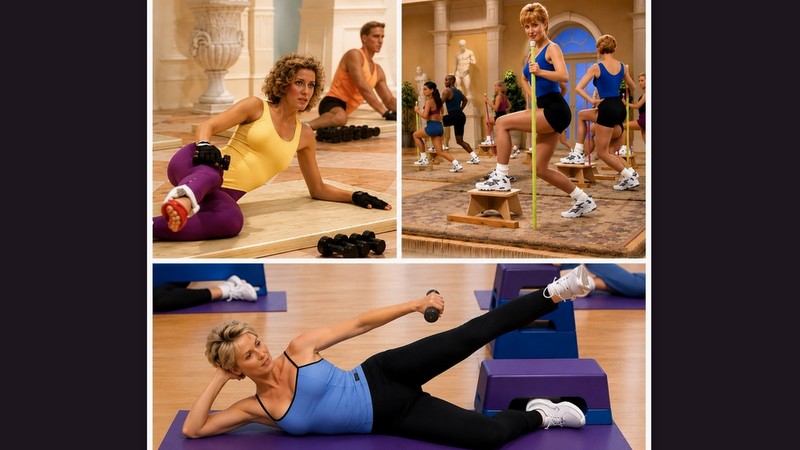
Those old photographs reminded me of something else: the wellness industry thrives on novelty. Human biology thrives on consistency.
The best exercise is rarely the newest. Usually, it is the one you will still be doing years from now because it is safe, effective, and sustainable.
The gluteus medius may never become Instagram famous. You cannot exactly show it off at the beach. But it can keep you balanced, protect your joints, save your connective tissue some grief, and help keep you from getting reacquainted with the ground.
Some exercises are still worth doing forty years later.
Libby Heath recently became the first Mayo Clinic certified wellness coach in Asia. She shares her insights and advice through her column ‘Wellthwise’ here in The Phuket News. Please note that if you have a condition that requires medical treatment, consult your doctor. Contact Libby at: BeWellthwise@gmail.com.