


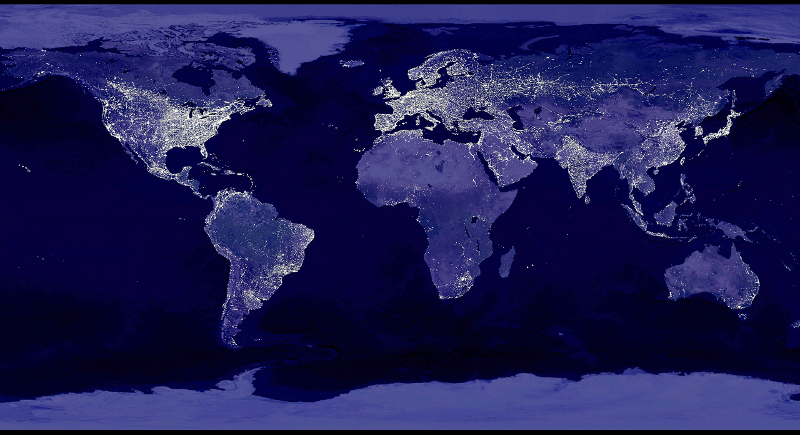
But is being “energy aware” for only one hour out of the year really such a noble cause?
In attempt to answer this, first we will look at how much energy we actually use throughout the year, then look at where this energy comes from.
Who?
According to figures from The Provincial Electricity Authority (PEA), roughly a quarter of Phuket’s energy is consumed by the residential sector, and approximately two-fifths by the commercial services sector (hotels, shops and offices). The remaining third of consumption is presumed to be used by the government, industrial and agricultural sectors.
How much?
In one decade, from 2004-2013, Phuket consumed no less than 15.8 billion kilowatt-hours (kWh) of electricity.
To put this into perspective, that’s enough electricity to comfortably power all of New York City’s five Burroughs – skyscrapers lights, homes and factories – for three months uninterrupted.
Keep in mind, New York City’s energy is used by its 8.4 million residents in addition to more than 54 million visitors annually – or electricity for approximately 62 million people per year.
Phuket on the other hand has an official population of less than 400,000, with an additional 800,000 to 1 million residents who live on the island, unofficially. Another several million more “visitors” use electricity here every year too.
An hour at a time
In 2013, the island consumed 2.17 billion kilowatt-hours (kWh) of electricity, and based on the annual consumption growth rate of 8.5pc (10-year mean), we can induce that the island will consume as much as 2.5 billion kWh this year, or 6.8 gigawatt-hours per day.
So even if the entirety of Phuket were to shut down completely for an entire hour, we would save 285,000 kW hours.
While this would be enough to power the Empire State Building for about two days, it remains doubtful whether most islanders can be bothered to shut their lights off come 8.30pm on March 28.
Energy Source
Now, let’s consider where all of Phuket’s electricity is coming from, and how it is produced.
Nearly all of Phuket’s electricity is imported and comes from carbon-emitting combustion processes, namely, the burning of fossil fuels – coal, natural gas, diesel fuel and petroleum – at plants in Krabi’s Khlong Neua district; Surat Thani’s Phun Pin district, Songkhla’s Chana district; as well as Nakhon Sri Thammarat’s Khanom district. Some of the electricity is even sourced from central Thailand and Myanmar via pipeline.
Related Story: Coal development plans in Krabi
and
Story about renewable energy solution for Krabi
The only significant production of electricity on the island comes from the 14-megawatt-capacity waste to energy plant at Saphan Hin (burning of garbage). There is also an alternative energy station overlooking Nai Harn beach with a few windmills and basic solar array – a nice land mark at best.
According to the Electricity Generating Authority of Thailand (EGAT), current supply of electricity to Phuket and the rest of the South is not enough!
To keep up with growing demand, EGAT insists we must become more dependent on the energy grid and build more fossil fuel burning power plants.
The most controversial of their plans is a B60 billion coal-fired power plant and seaport for unloading and transporting imported coal, in Krabi’s Khlong Neua district.
Many eco-activists and conservationists have made a strong stand against the projects, and for good reason.
Soon, huge coal freighters will be seen trawling through the rapidly degrading Phang Nga Bay, to deliver shipments of coal from afar as Australia and China.
And while this seems like a potential eco disaster, the truth is EGAT is not really the ones to point your fingers at.
We, the energy consumers in Phuket, are responsible – as an energy-hungry society who demands cheap electricity to power our grid-dependent conveniences – iPhones, air conditioners, ice machines, computers, tablets, swimming pool pumps, power tools, hot water heaters, LCD TVs, sound systems, lights, cameras, fans, all of this and then some.
In conclusion, to really show commitment to the planet, we, Phuket – along with the entire region, country and world – need to do a lot more than shut off some lights for an hour once a year.
Every hour is Earth Hour, and the truth is it is no longer necessary to be a slave to the fossil-fuel order! Like me, you too can be part of the solution, not just the problem.
Start by catching up on my recent Happy Habitat columns, available online, to read about how it is possible and practical to live comfortably off the grid in Phuket, using solar energy, for example.
Click here for the most recent one.
Watch this space!