


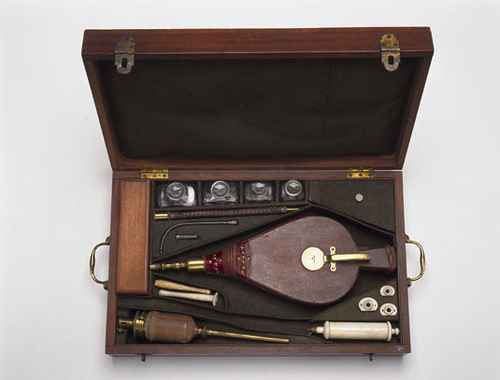


Rectal bellows:
These smoothly-finished instruments were used for the application of tobacco smoke enemas in the 18th century, a treatment said to promote respiration – or at the very least, a sharp intake of breath. Later developments of this popular treatment in the 19th century included electrified versions, featuring a heated nozzle element, which was touted as a cure for everything from headaches to back pain.
Phrenology machine:
Although it seems ridiculous now, the quack practice of phrenology – using measurements of the skull to diagnose all sorts of personal deficiencies – was once considered a miracle of medical science.It was supposed that the shape of the brain determined personality, talents and mental abilities – and machines were devised to measure the brain without cutting into the skull. This machine measured the dimensions of the skull and produced a printed tape that evaluated the character – or lack thereof – of the patient.
Self-propelled endoscope:
In news that seems to be straight out of the 1987 movie Innerspace, researchers in Japan have devised a miniature submarine that can swim through the human gut and send back photographs. The pill-sized self-propelled robot is an alternative to regular endoscopes for medical examinations, which are operated through a tube – either down the throat, or up the backside. But the Mermaid, as it’s known, can be swallowed – or inserted – and controlled remotely by a joystick.
Anti-masturbation yokes:
These eye-watering devices date from an era when too much masturbation was faulted as a general source of moral decline, because it robbed the male body of sperm and “vital energies.” In Victorian times excessive self-stimulation was considered a serious threat to physical and mental health, leading to weakness, madness, and even death. The objects shown were prescribed by doctors for male sufferers of excessive masturbation – something similar was available for women.
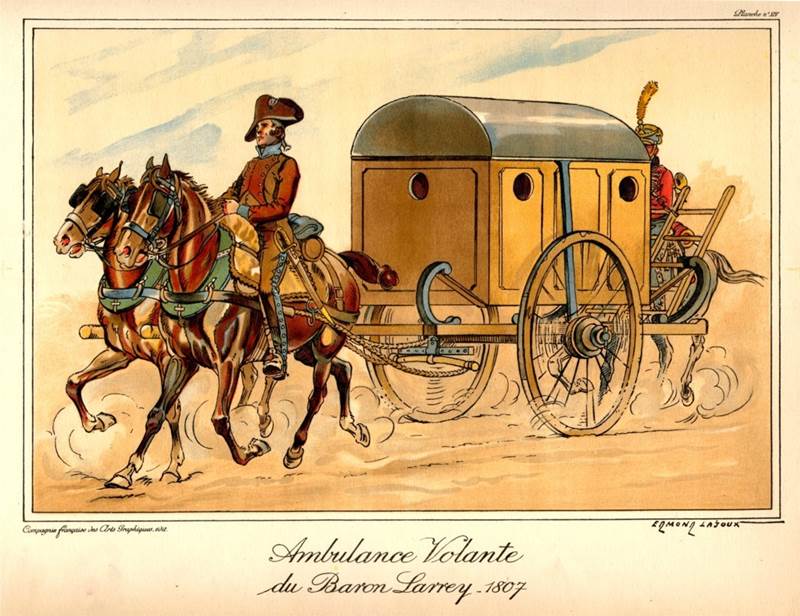
The ‘Flying Ambulance’:
This must have seemed strange at the time, but the horse-drawn “flying ambulance” designed by Napoleon’s surgeon-in-chief in the 1790s is the direct forerunner of the modern motor ambulance. Until the ambulance was developed, injured soldiers had to try to treat their own injuries in the field, or wait until the battle was finished – if they were lucky to live that long. But the flying ambulance, built on top of a gun carriage, let army medics carry out emergency surgery as it carried soldiers off the battlefield.