


Global property firm CBRE reported in their Hotel Trends Q2 2015, that Thailand saw strong demand for hotels from local and foreign buyers. With a weaker baht, the report claims that the tourism market continued to recover strongly with total arrivals up 30% on last year. Arrivals from China, the report said, are growing significantly and tourists from this market now account for 28% of total visitors.
Bangkok is benefiting in particular from more short-break and independent visitors from China. The report suggests strong increases in visitor arrivals have continued to push up occupancy in Bangkok to 70% in Q2 2015, a huge improvement on the 50% recorded in the same period last year. ADR and RevPAR grew slightly, the report stated.
“Thailand Travel Grows 30%” was the banner headline in TTR Weekly’s latest report, citing international tourist arrivals to Thailand improved 30.93%, January to July 2015, according to Ministry of Tourism and Sports data. The data showed the country attracted 17,504,204 international visits during the first seven months of 2015 up from 13,368,979 visits during the same period last year.
At the Tourism Trends in Thailand seminar held over the weekend, moderated by Assumption University’s Department of Hospitality and Tourism Management, expert opinion suggested inbound tourism arrivals would reach 30-31 million for 2015.
Despite the fallout from the recent Bangkok blast, the Tourism Council of Thailand (TCT) is also feeling bullish enough to revise up its expected forecast from 28.8 million to 30 million inbound tourists this year.
TCT president Ittirit Kinglake said 8.1 million international tourists are expected to visit in the fourth quarter, a rise of 9% from the same period last year. “The bomb blast at the Erawan Shrine in Bangkok, last month, hit the sector, but only for a short time. This will not affect the industry during the coming high season,” he said.
Reports show that since the downturn in Russian tourists due to the weakened ruble, the China market has edged even further ahead as the dominant tourist market in Thailand. Eight million Chinese visitors are expected this year.
Thailand lost about 1.3 million global tourists due to the Erawan Shrine blast but has bounced back quickly. Hong Kong for instance will withdraw its travel warning within three or four days.
The Tourism Authority of Thailand report on plans to invite celebrities from Hong Kong and mainland China to perform concerts in central Bangkok and to visit the Erawan Shine in order to promote confidence in the city.
Also supporting the reported growth in arrivals, the United Nations World Nation Tourism Organisation (UNWTO) reported that Asia and the Pacific recorded a 5% increase in international arrivals in the first half of the year. Destinations in Northeast Asia and Southeast Asia, both with +5% arrivals, was led by Japan with +47% through July and Thailand an impressive +30% through July 2015.
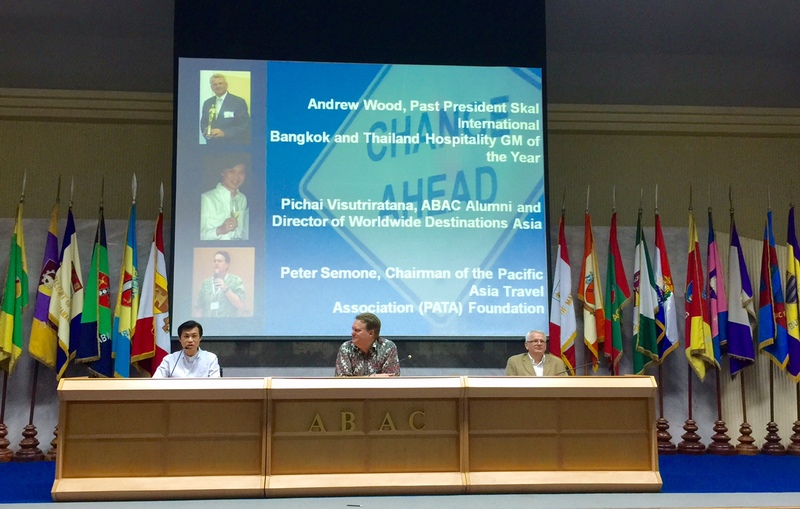
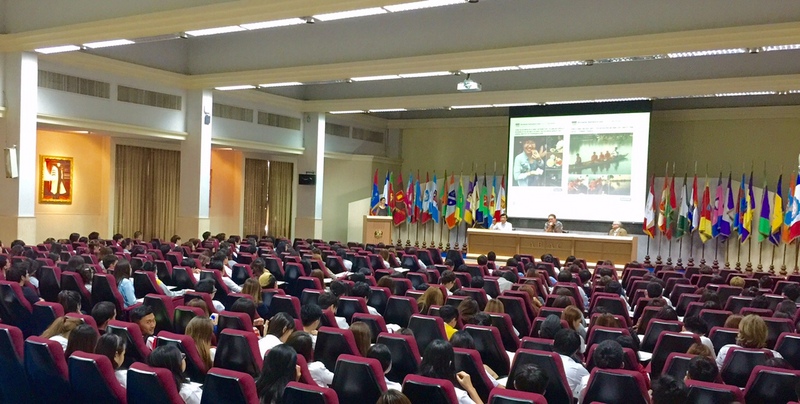
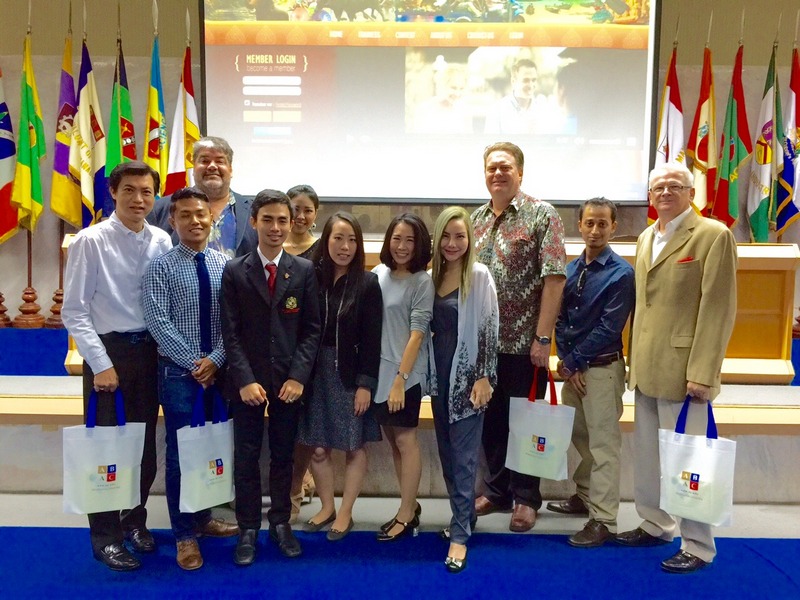
Meanwhile, the 2015 Tourism Trends in Thailand Seminar held on Saturday (Sept 12) at Assumption University’s Hua Mak campus was organised to support the “2015 Discover Thainess” travel campaign created by the Tourism Authority of Thailand (TAT).
Hundreds of future leaders attended the special seminar and participated in a lively panel discussion moderated by Assumption University’s Department of Hospitality and Tourism Management lecturer, Ajarn Supanida.
The distinguished panellists were Pichai Visutriratana, ABAC Alumni and Director of Worldwide Destinations Asia; Peter Semone, Chairman of the Pacific Asia Travel Association (PATA); and Andrew J Wood, Past President, Skal International Bangkok and Thailand, and Thailand Hospitality GM of the Year.
The “2015 Discover Thainess” travel campaign aims to highlight the charm of Thailand; the diversity of destinations; and the flavours, traditions, culture, and spirit of hospitality of the people.
Organised by senior lecturer Scott Michael Smith, the seminar was expanded to include an introduction of tourism organisations including the UNWTO, the World Travel and Tourism Council (WTTC), Skal International, and PATA.
Lecturer Scott Smith said, “We have studied tourism organisations and read about them in our textbooks. Now we are blessed to hear from real-life leaders within these organisations.”
– Andrew J Wood