



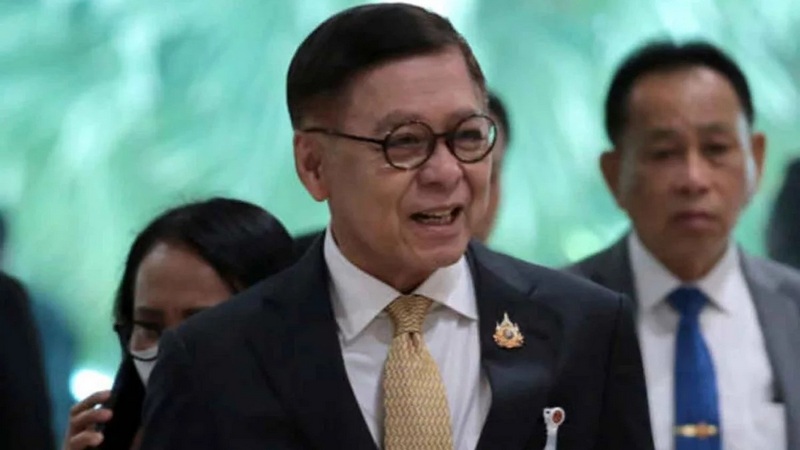
Mr Sihasak said he met ambassadors, foreign diplomats and Thai and international media on Monday to explain Thailand’s position and the need to defend its sovereignty against Cambodian military provocations, reports the Bangkok Post. He said Thailand has also been working to show that Cambodia has repeatedly denied responsibility, diverted attention and constructed misleading narratives - whether concerning current incidents, landmine issues or earlier disputes.
At the Meeting of States Parties to the Ottawa Convention in Geneva on Dec 5, Thailand presented evidence related to the latest explosions that killed and injured Thai soldiers. The findings confirmed the use of newly planted landmines, a claim supported not only by Thai investigations but also by ASEAN observers.
“When we showed the video clips, Cambodia became uncomfortable because our statements are backed by evidence,” he said.
Mr Sihasak added that Thailand’s diplomatic outreach is on the right track, as the global community now sees more clearly that Cambodia’s attempt to cast itself as a smaller country being invaded is misleading. “Small countries can also provoke and encroach for their own benefit,” he said.
He said Thailand will continue issuing formal communications to foreign governments.
Two Thai soldiers killed by Cambodian rockets
Mr Sihasak’s comments came after it was confirmed that two more Thai soldiers have been killed in the latest border clashes, raising the Thai death toll to three since Sunday.
The Royal Thai Army said that two soldiers protecting the northeastern frontier against Cambodian incursions died yesterday.
They were Pvt Vayu Kwansuea, who succumbed to rocket-shrapnel wounds incurred during combat in Surin; and Sgt Maj Chawakorn Dejkhunthod, who was killed by a rocket in Si Sa Ket.
The first Thai fatality occurred on Monday.
The border fighting between Thailand and Cambodia expanded to six out of the seven provinces adjoining Cambodia yesterday. Thai navy marines fought with Cambodian soldiers in Trat when moving to reclaim Thai territory long occupied by Cambodia. Of the seven, only Chanthaburi remained calm.
The latest series of clashes along the border began on Sunday.
990 schools closed
Meanwhile, almost 1,000 schools along the Thai-Cambodian border have been ordered closed as a precaution following renewed armed clashes, Education Minister Narumon Pinyosinwat said yesterday.
The closures increased from just over 600 on Monday to 990 by yesterday afternoon, according to the Office of the Basic Education Commission (Obec).
The ministry is now awaiting clearance from local security agencies before allowing schools to resume operations, reports the Bangkok Post. No structural damage to school buildings has been reported.
To support communities forced to evacuate, Obec has designated several schools in safe zones as temporary shelters.
Vocational education teams, previously deployed in the deep South, have been redirected to the border provinces to set up community kitchens and assist affected families.
Ms Narumon said contingency learning plans are ready, including take-home worksheets, limited on-site instruction when considered safe, and online learning when necessary.
Each school already operates its own digital platform, while Obec is preparing learning kits for children staying in shelters.
Prime Minister Anutin Charnvirakul instructed the ministry last month to prepare for emergencies, and those measures are now being activated, she added.
According to Higher Education, Science, Research and Innovation Minister Surasak Phancharoenworakul, rising tensions have also prompted the postponement of TGAT/TPAT2–5 university entrance exams in seven border provinces: Trat, Chanthaburi, Sa Kaeo, Buriram, Surin, Si Sa Ket, and Ubon Ratchathani.
The tests, scheduled for Dec 13–15, will be rescheduled for safety reasons, with a new timetable to be announced. In areas unaffected by border tensions or flooding in the deep South, exams will proceed as planned, he said.