


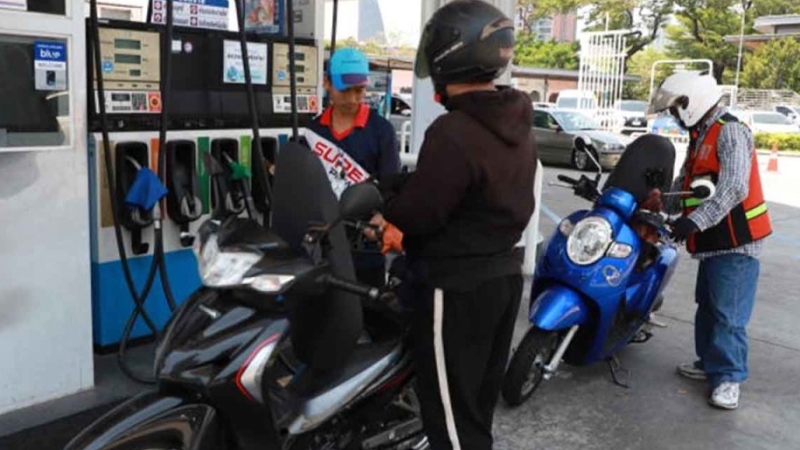
Deputy permanent secretary Veerapat Kiatfuengfoo said that as of Feb 23 Thailand had an in-country reserve of 4.92 billion litres of crude and refined oil, and this could meet demand for 38 days, reports the Bangkok Post.
In addition, 1.75bn litres of Thailand-bound crude were already enroute from and outside the Strait of Hormuz, and another 1.12bn litres from other sources were also being delivered to Thailand. This could meet demand in Thailand for an additional 23 days.
In total, Thai reserves could meet demand for 61 days, Mr Veerapat said.
Apart from crude oil, four ships were transporting liquefied natural gas to Thailand and two of them had already passed through the Strait of Hormuz. If the Iran war was prolonged, or escalated, the Ministry of Energy would take action to stabilise energy reserves and prevent an oil shortage, he said.
If the Strait of Hormuz were closed, that would affect 20% of global oil demand. At this stage, there was no impact on the reserve or on prices in Thailand, Mr Veerapat said.He was sure there would be enough oil, cooking gas and liquefied natural gas to meet local demand.
Meanwhile, the Labour and Foreign Affairs ministries have agreed to suspend the provision of Thai workers to risk areas in the Middle East.
At present, 77,495 Thai workers are under the supervision of Thai labour offices in Tel Aviv, Abu Dhabi and Riyadh, Labour Minister Treenuch Thienthong said.