


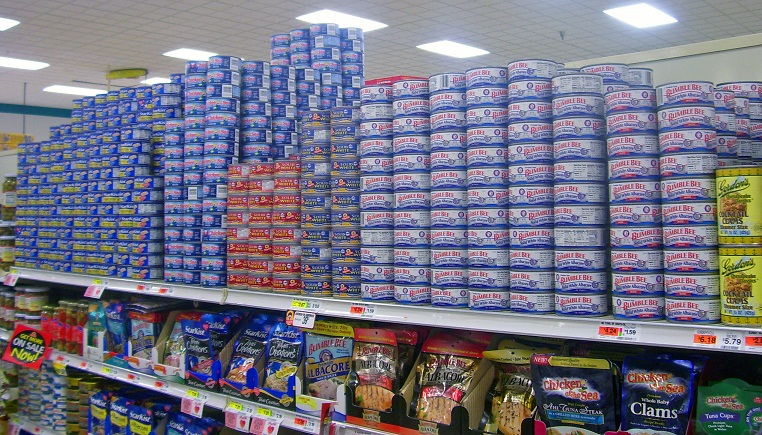
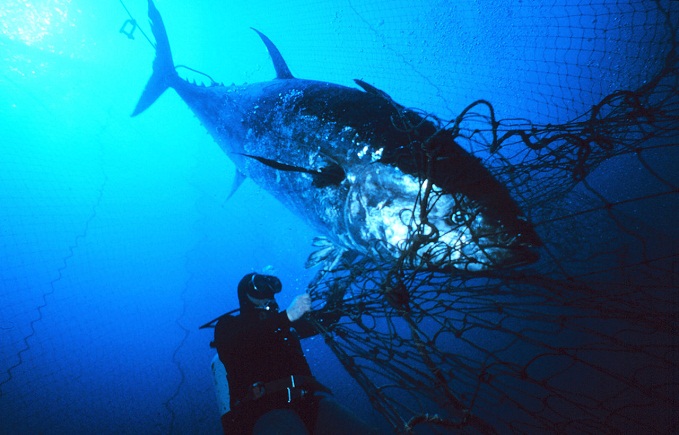
With its acquisition of Bumble Bee, Thai Union has also allegedly acquired a host of supply chain issues, which were outlined in an investor alert released by environmental watchdog organisation Greenpeace, last October.
The acquisition will make Thai Union, which also owns Chicken of the Sea, the largest supplier of canned tuna in the United States with an estimated 38 per cent of the US market share.
In response, Tara Buakamsri, Thailand Country Director for Greenpeace Southeast Asia said:
“Thai Union would like to project itself as a company with a strong commitment to conserve and protect the greater marine ecology, natural resources and environment. This purchase of Bumble Bee – which has links to illegal and destructive fishing, shark finning, and the human rights abuses associated with longline fishing – puts the onus on Thai Union to change things for the better on a global scale. We challenge them to do that.”
Bumble Bee, which was initially owned by Lions Capital, had helped to establish the International Seafood Sustainability Foundation (ISSF) in 2009.
The ISSF’s mission is “to undertake science-based initiatives for the long-term conservation and sustainable use of tuna stocks, reducing bycatch and promoting ecosystem health,” and has the objective, according to its website, to “Improve the sustainability of global tuna stocks by developing and implementing verifiable, science-based practices, commitments and international management measures … ”
The ISSF website includes comprehensive graphs, reports and data related to stock health of tuna and various other sealife, in the Pacific Ocean, as well as the Indian Ocean.
But such initiatives by the foundation may all just be part of an image campaign for the company, suggests Greenpeace, whose Oceans Campaign Director, John Hocevar commented in a statement: “By concentrating on misleading marketing, rather than real change to protect the health and sustainability of our oceans, Bumble Bee has been leading the North American tuna industry in the wrong direction.”
He continues, “Thai Union can reverse that course by transforming Bumble Bee into a company that demonstrates full product traceability, while providing sustainable and socially responsible fish. Greenpeace will be watching closely to see how Thai Union resolves the sustainability problems it is inheriting with the purchase of Bumble Bee.”
Greenpeace has also focused on Bumble Bee’s alleged use of sonar-equipped fish aggregating devices, or FADs, to attract fish, which the environmental watch group claims is an irresponsible and unsustainable practice.
The company has retorted that it has been around for more than a century, and thus has no incentive or gain to “fish out the oceans”, but that it supports open research for establishing the best fishing practices, with the least amount of impact on global stocks.
Commenting on the acquisition in a statement, Chris Lischewski, President and CEO of Bumble Bee Seafoods said. “I have always believed that Bumble Bee and Thai Union share a strong vision for innovation, operational excellence, sustainability and value for our consumers, making this combination good news for customers, consumers and the industry as a whole.
“Importantly, we commit to uphold the indispensable role as one of the world’s leaders in providing responsibly harvested and processed seafood.”
With a workforce of more than 1,300 people, Bumble Bee produces and sells canned, pouched and frozen seafood products across the United States and Canada.
TUF is regarded as the world’s largest producer of shelf-stable tuna products with annual sales exceeding B100 billion (US$ 3.66 billion) and a global workforce of over 35,000 people
Global tuna production is estimated to be at around 4.2 million tonnes annually.