


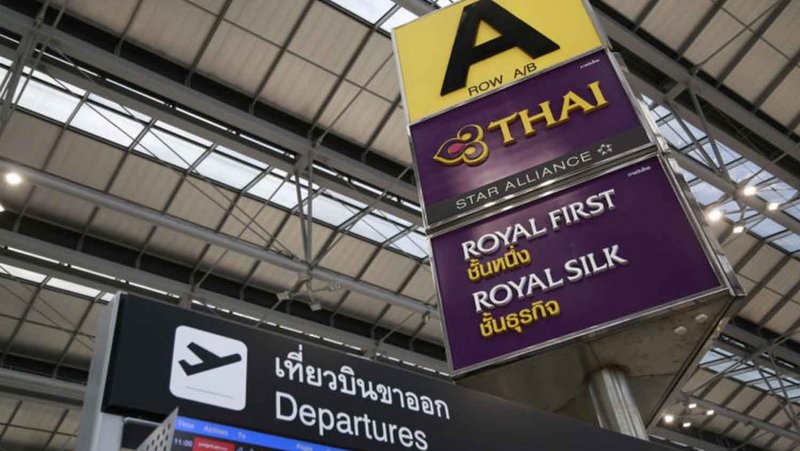
Though airspace closures remain in effect for several Gulf countries, resulting in widespread flight cancellations and disruptions to major aviation hubs in that region, THAI is expected to face limited direct operational disruption as the airline has no exposure to Middle Eastern routes, said Thanapol Jiratanakij, aviation analyst at CGS International Securities (Thailand).
"In fact, we think there could be some marginal positive implications on the demand side as capacity disruptions among Gulf carriers may tighten supply on certain long-haul routes, particularly Asia-Europe," said Mr Thanapol.
That could support higher passenger yields on THAI’s Europe routes over the next 3-6 months, which accounted for 42% of the carrier’s total revenue passenger kilometres last year, he said, reports the Bangkok Post.
THAI expects a net addition of 22 aircraft from its fleet size of 80 at the end of last year. According to management’s guidance, most aircraft deliveries are scheduled for the second half of this year.
CGS expects THAI’s available seat kilometres to increase by 6% year-on-year in fiscal 2026, primarily driven by the delivery of new aircraft as part of its fleet expansion, said Mr Thanapol.
Maybank Securities also sees potential upside for THAI as its flights to Europe typically do not bypass the Middle East.
"The gain stems from future adjustment of fares for European routes after a strong surge this month, as demand from European tourists wanting to travel to Thailand directly should increase due to safety concerns at Middle East hubs," said Maybank analyst Boonyakorn Amornsank.
"Management noted an operating margin of roughly 15% is the optimal level, which we expect THAI to achieve as long as competition from Middle East airlines does not come back quickly after the tension."
PASSING ON COSTS
Both brokerages noted THAI remains susceptible to higher jet fuel prices, given that fuel accounted for 32-40% of its operating expenses in fiscal 2025.
Following the escalation of the Middle East conflict, Maybank now projects jet fuel prices to average US$110 per barrel in 2026, compared with $87 last year and its previous forecast of $85.
THAI hedged fuel for around 50% of its usage in the first six months of 2026 and 30% for the latter half, which should help mitigate cost pressures.
"While we believe the recent spike may be overdone, we see a high likelihood that jet fuel prices will remain materially above 2025 levels over the next three to six months," said Mr Thanapol.
CGS projects THAI to raise ticket prices in response to higher fuel costs, while limited capacity from Gulf carriers due to airspace closures should reduce competitive pressure on Europe routes.
"Travellers may indicate a stronger preference for direct flights," he said.
"We believe THAI should be able to pass on the majority of its cost increases through higher ticket prices."