


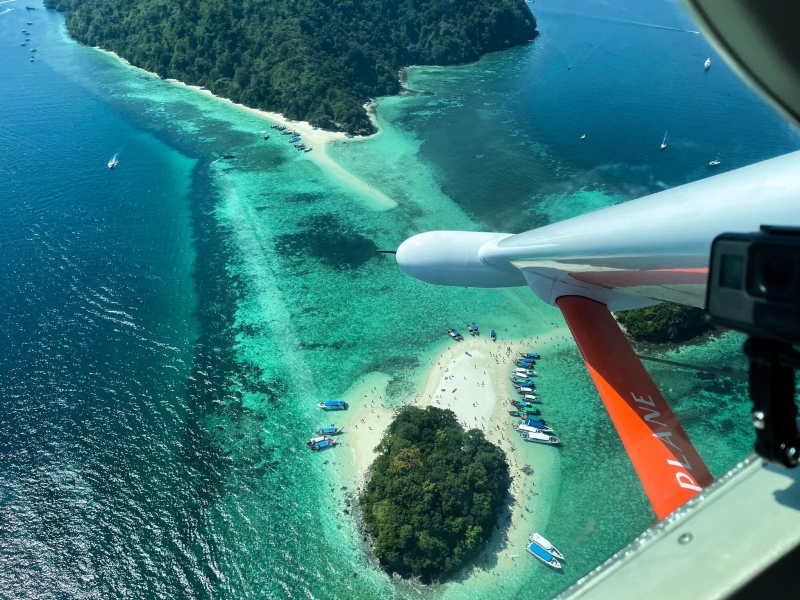
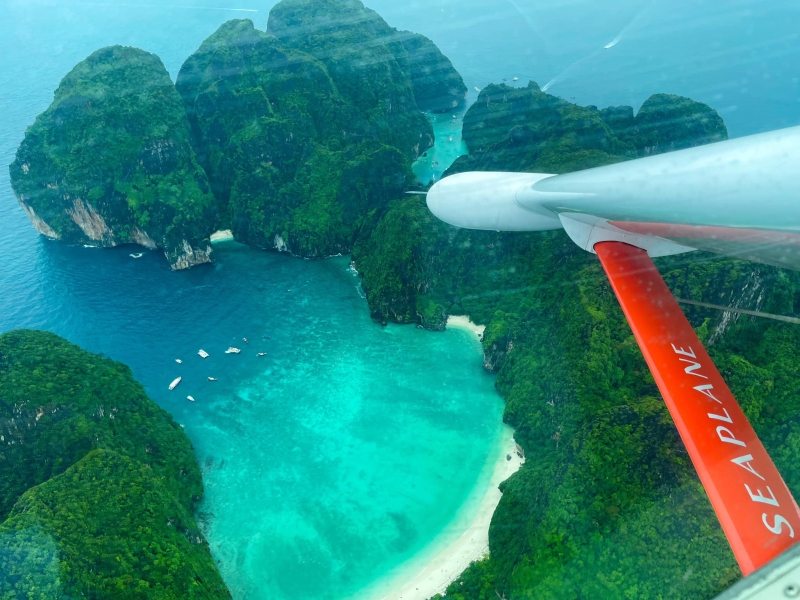
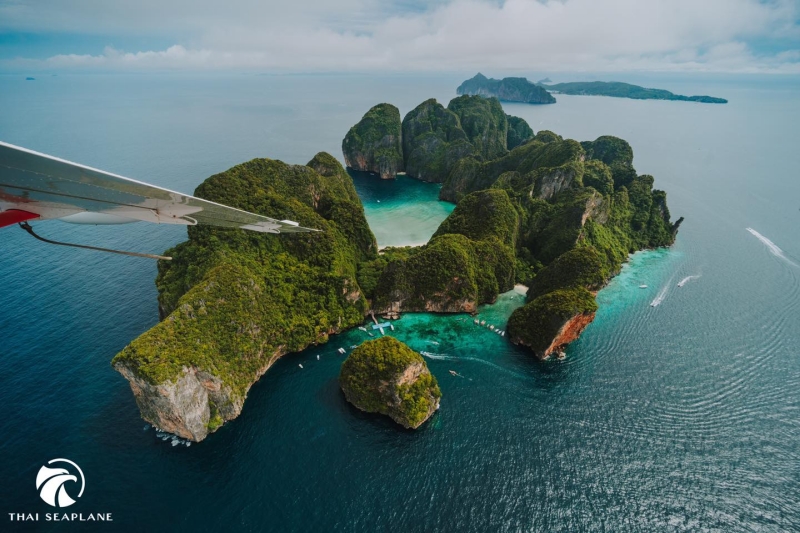
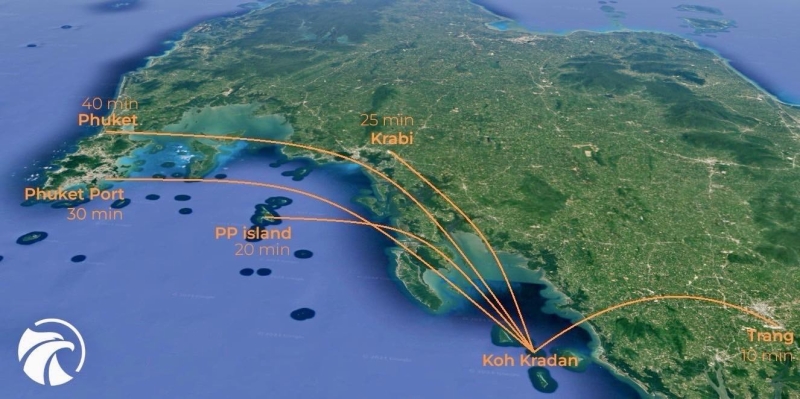
Mr Kasinpoj told The Phuket News the initiative aims to make Phuket the regional hub for seaplane travel across the Andaman Sea, offering short, direct flights between the island and key destinations such as the Similan Islands, Krabi and Koh Lipe.
“Phuket will serve as the main gateway,” Mr Kasinpoj told The Phuket News. “Passengers will be able to land here and connect directly to nearby islands. We aim to reduce travel time, strengthen tourism, and create new opportunities for the local community.”
The company is currently awaiting final operational approval from the Civil Aviation Authority of Thailand (CAAT) and the new Phuket Governor, following advice from Vice Governor Samawit Suphanphai to allow time for review. The seaplane operator is also coordinating with the Aeronautical Radio of Thailand (Aerothai) on the testing phase.
If approved, Thai Seaplane will initially bring in five aircraft, expanding to a fleet of 30 within five years, Mr Kasinpoj said.
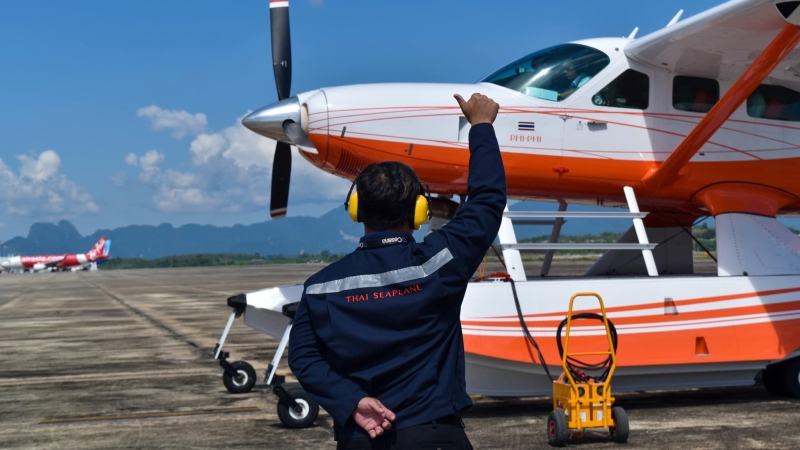
“Each aircraft can carry up to 10 passengers, with retractable wheels allowing them to take off and land on both land and water,” he added.
The company’s first seaplane, registered ‘HS-TSP’, is now stationed in Phuket. The chosen hub site will be off Koh Taphao Yai, off Phuket’s east coast, selected for its calm, deep water and proximity to Phuket Town.
The water-based ‘runway’ requires only 600 metres of surface and a depth of 30-50cm, which Mr Kasinpoj said makes operations “less disruptive than traditional boats or ferries”.
He highlighted the time savings compared to existing routes:
* Phuket Airport to the Deep Sea Port: 10 minutes
* Phuket to Koh Kradan: 25 minutes (instead of 5–6 hours by boat)
* Phuket to Koh Lipe: 40 minutes
* Phuket to Krabi: 15 minutes
* Phuket to Koh Phi Phi: 10 minutes, with an estimated fare of about B4,000 (US$120) per trip.
The service will initially connect Phuket and Trang under a controlled testing ‘Sandbox’ programme hoped to launch next month, allowing Aerothai to monitor environmental effects, including engine noise, oil residue, and coral impact. If results show no negative effects, commercial operations could begin by mid-2026, Mr Kasinpoj explained.
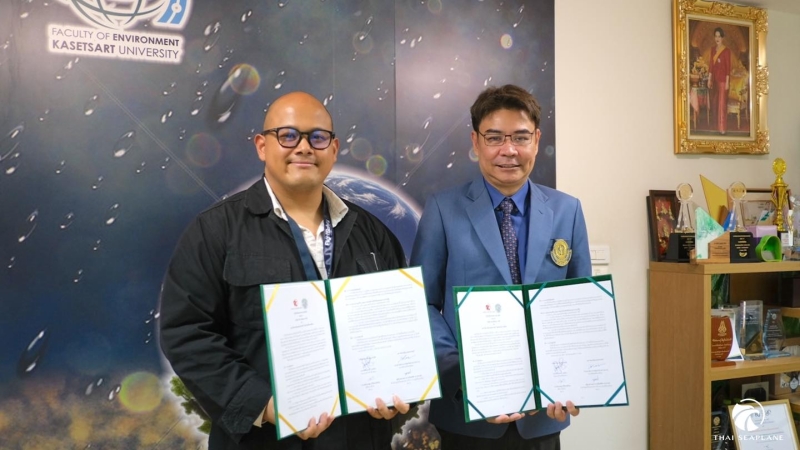
Thai Seaplane has commissioned the Faculty of Environment at Kasetsart University to conduct a comprehensive environmental impact assessment (EIA. The study covers marine ecosystems, air and water quality, and the potential effects on coral reefs and marine mammals such as dugongs.
“To mitigate impacts, our engines and propellers are mounted above the fuselage, preventing collisions with marine life,” Mr Kasinpoj explained. “Unlike speedboats, seaplanes don’t produce underwater vortexes that damage coral reefs.”
The company also plans to transition to sustainable aviation fuel (SAF) and recycled oils in the near future to lower its carbon footprint.
All EIA results and community feedback will be made public once the report is finalised. “We’re committed to transparency and ensuring safety and sustainability,” said Mr Kasinpoj.
Beyond tourism, the company aims to strengthen Phuket’s aviation workforce. Thai Seaplane has partnered with Thalang Technical College to provide scholarships and mechanic training, preparing local youth for aviation-related jobs. Each aircraft will require about six pilots and a full team of mechanics and ground crew, creating long-term employment opportunities for residents.
“We want Phuket’s young people to build their futures here, not have to leave the island,” Mr Kasinpoj said. “Our goal is to grow a Thai-led aviation sector that connects communities and opens the skies to new possibilities.”
Thai Seaplane currently has five pilots, including two licensed Thai seaplane pilots ‒ the first in the country ‒ trained in Germany and the Maldives with Trans Maldivian Airways (TMA), the world’s largest seaplane operator. Future Thai captains will be trained under a mentorship model, with one foreign captain training up to five local pilots at a time.
The project, entirely privately financed, will also support emergency medical transport and strategic operations in addition to tourism.
Over the next three years, the company expects to expand routes to cover the entire southern region, with Phase 3 connecting the Andaman Coast to the Gulf of Thailand.
“This project is about more than transport,” Mr Kasinpoj said. “It’s about positioning Phuket as the leader in sustainable aviation, where air and sea meet ‒ connecting people, protecting nature, and strengthening the region’s economy.”