


The agency’s administrator, Charles Bolden, said at the Kennedy Space Center in Florida that NASA has made strides in the journey toward Mars – where a human mission is planned for 2024 – with a “near-flawless” flight test of its new Orion deep space vehicle.
The US$18.5 billion proposal for NASA is half-billion-dollars more than last year’s. Bolden also touched on a new mission in the works for Jupiter, but gave few details.
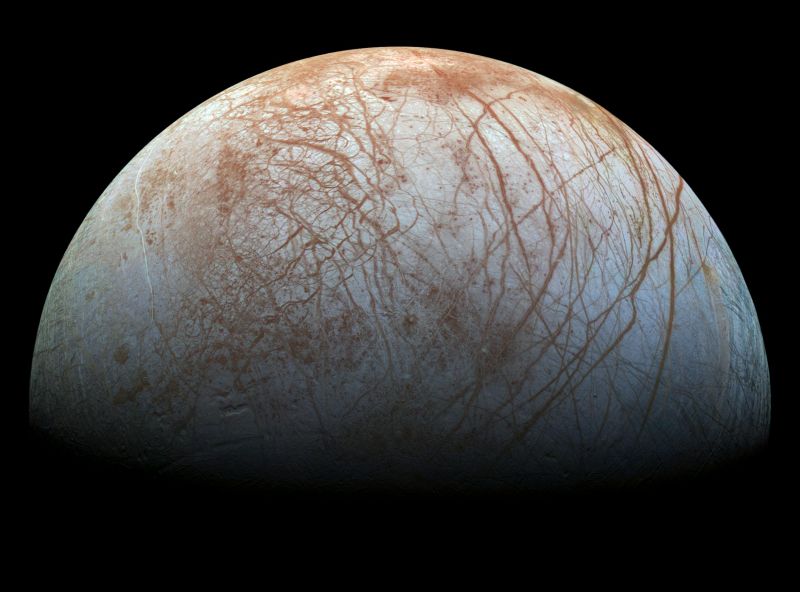
“Looking to the future, we’re planning a mission to explore Jupiter’s fascinating moon Europa, selecting instruments this spring and moving toward the next phase of our work.”
One interesting feature of Europa is that, underneath it’s icy surface, there is an ocean of salty water that astrobiologists surmise is 10 times deeper than earth’s oceans.
According to astrobiologist Kevin Hand, its distance from the sun should mean that Europa’s liquid is frozen though, because of the strong tidal tug from Jupiter, all the mechanical energy allows heat to build-up and permits liquid to exist.
“That tidal energy may also allow that ocean to interact with rocks on Europa’s sea floor and may give rise to things like hydro-thermal vents which could help provide not just the building blocks for life but also the energy for life,” Hand said in a recent video.
In 2011, NASA sent a solar-powered spacecraft called Juno on a five-year journey to Jupiter. Juno, which arrives back on land July 2016, was launched two weeks after the final space shuttle mission returned to Earth and the 30-year program was shuttered for good.
The European Space Agency already has an unmanned spacecraft in the works to explore Jupiter’s icy moons, including Europa.