


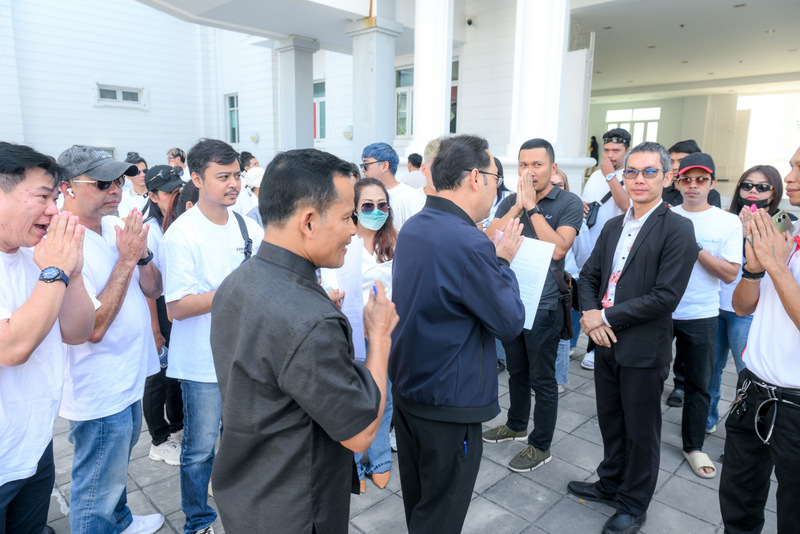
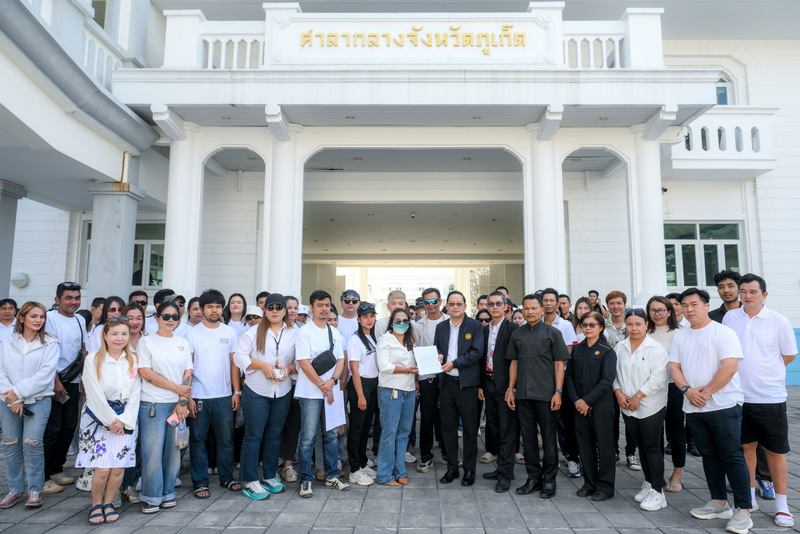
The appeal comes as provincial authorities intensify enforcement against unlicensed “black plate” vehicles operating through ride-hailing apps, ordering platforms to block illegal vehicles and tightening controls across the island.
Platforms say they are in limbo, with the Phuket Land Transport Office (PLTO) and the Governor’s Office yet to announce whether R.Y.18 public vehicle registration will be reopened, despite ongoing talks with provincial officials and national regulators.
A representative of one major ride-hailing platform told The Phuket News that operators remain ready to comply but have received no formal guidance following recent meetings with the province.
“At this stage, the Phuket Transport Office and governor still keep R.Y.18 registration closed. The platform is waiting for clarity from the government regarding related measures,” she said.
Without a decision, platforms say they cannot plan future operations or onboard new drivers legally ‒ even as enforcement against illegal vehicles is stepped up.
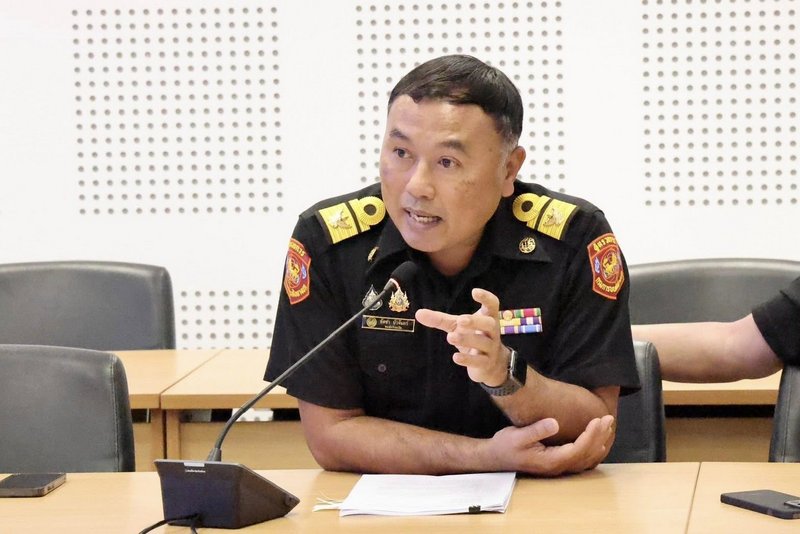
Provincial officials this month called ride-hailing platforms in for talks at Phuket Provincial Hall, chaired by Governor Nirat and attended by Phuket Provincial Palad (Chief Administration Officer) Rungruang Thimabut, PLTO Chief Adcha Buachan and representatives of relevant agencies.
Authorities ordered platforms to remove unregistered vehicles from their systems and to ensure that only legally registered public transport vehicles are permitted to accept jobs in Phuket, in line with Department of Land Transport (DLT) regulations and guidelines issued by the Electronic Transactions Development Agency (ETDA) governing digital platform businesses.
ETDA has instructed platforms to block private cars and motorcycles not registered for public transport use, and to prohibit vehicles registered in other provinces from operating through apps in Phuket. Platforms have also been ordered to submit monthly reports on job allocation and service usage in Phuket from January 2026 to support ongoing monitoring.
Officials say the measures are intended to restore order to the transport sector, protect lawful operators and ensure passenger safety as tourism demand continues to rise.
However, platforms warn Phuket is enforcing stricter conditions than other provinces, creating additional barriers for drivers trying to comply with the law.
In particular, restrictions preventing private or ‘black plate’ vehicles from converting to legal ride-hailing vehicles are sharply limiting the pool of drivers able to operate legally.
The platform representative said many ride-hailing drivers in Phuket work full-time and rely on app-based transport as their primary source of income.
“If stricter screening or limitations continue, a large number of drivers will be directly affected,” she said. “This is especially critical in tourism provinces like Phuket, where demand for transport remains high.”
Several ride-hailing platforms have jointly submitted formal requests for government cooperation to temporarily reopen R.Y.18 public vehicle registration to allow drivers to transition into legal operation.
Platforms say discussions are continuing with multiple agencies, including the Digital Economy Promotion Agency (depa), but acknowledge the issue spans several authorities, including the DLT and the Ministry of Transport, making coordination slow.
Regarding drivers currently unable to register, the platform said internal discussions on support measures are ongoing but no concrete assistance has yet been finalised.
“While no conclusion has been reached, we confirm that support measures for drivers will be implemented in the future,” she said. “We are urging the government to recognise the importance of ride-hailing to Phuket’s economy and to adjust regulations to reflect current usage and demand.”
The dispute follows a major island-wide crackdown on illegal taxi operations earlier this month, during which 162 illegal taxi drivers were arrested in a four-day enforcement operation between Jan 13-16.
The operation saw 11 checkpoints set up across Phuket, including in Phuket Old Town, Patong, Kathu, Chalong, Wichit, Kamala, Tha Chatchai, Karon, Sakhu, Thalang and Cherng Talay, with a major checkpoint also established at Phuket International Airport under Sakhu Police.
Officials have also banned taxis and ride-hailing vehicles registered outside Phuket from operating in the province, as part of efforts to suppress illegal transport services and reduce conflict between traditional taxi operators and app-based drivers.
Provincial officials have yet to announce any timeline for reopening R.Y.18 registration or detail what support measures will be offered to drivers currently locked out of legal operation.
With tourism demand rising and enforcement tightening, app-based drivers warn the continued registration freeze is shrinking the supply of legal vehicles ‒ even as authorities move to eliminate illegal ones ‒ raising the risk of transport shortages, longer wait times and higher fares for passengers across Phuket.
CHEQUERED PAST
This is not the first time Phuket officials – led by the Phuket Land Transport Office (PLTO) under chief Adcha Buachan – have moved to block new taxi drivers from operating in the province, or restricted legally registered vehicles from working in Phuket, without clearly setting out the legal basis for doing so.
In early 2023, the PLTO moved to bar ‘green plate’ taxis registered in other provinces from operating in Phuket, with affected drivers publicly challenging the office to explain which law they had breached. At the time, drivers said PLTO officers were unable to clearly identify the specific legal provision being enforced.
That enforcement drive led to months of arrests and fines against drivers who were legally registered elsewhere in Thailand. The campaign later faded out without any formal public explanation as to why enforcement eased.
A similar pattern emerged in December 2023, when the PLTO abruptly suspended the registration of private vehicles for use as taxi-app services following protests by traditional taxi groups at Phuket Provincial Hall. The suspension was announced on the same day as the protest, with officials stating there were already “sufficient” vehicles to meet demand.
The registration freeze was later lifted in mid-2024 after intervention by national-level politicians, with the PLTO publicly acknowledging that people have a constitutional right to pursue an occupation and that blanket restrictions on new registrations were not legally sustainable.
However, the PLTO has never publicly clarified when or under what legal authority the original bans and registration suspensions were imposed, nor why enforcement was later relaxed or reversed.
Critics and driver groups have repeatedly accused officials of inconsistent and selective enforcement, arguing that sudden bans and crackdowns have tended to follow pressure from entrenched local taxi interests, while long-term regulatory solutions and transparent policy frameworks have failed to materialise.
DOWN THE ROAD
As Phuket’s tourism high season drives on, the island is facing a growing contradiction: authorities are moving aggressively to wipe out illegal ride-hailing vehicles, while the legal pipeline for new drivers remains closed.
Without a clear decision on reopening R.Y.18 registration ‒ and without a transparent, province-wide framework that balances safety, fairness and real-world demand ‒ drivers warn enforcement alone will not fix Phuket’s transport bottleneck.
For passengers, the outcome is already being felt: fewer legal cars on the road, longer waits, higher fares ‒ and a transport system once again caught between regulation and reality.