


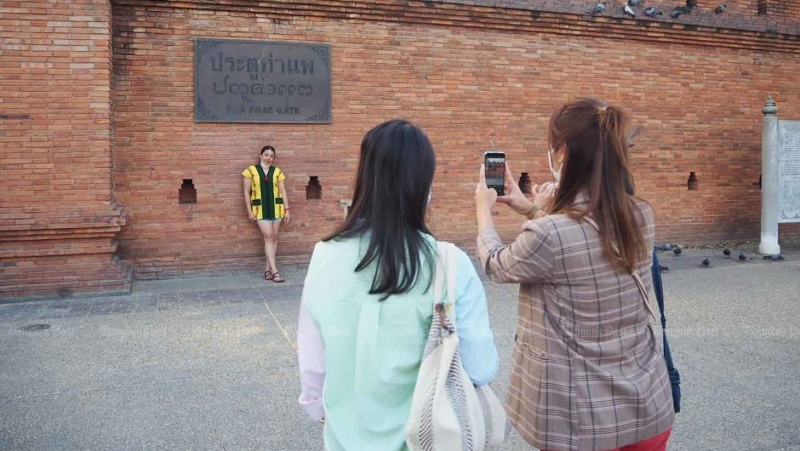
TAT Governor Yuthasak Supasorn said Thailand needs to turn crisis into opportunity and use tourism to help transform the country after the outbreak, reports the Bangkok Post.
He said the goal is to achieve B2.4 trillion in tourism receipts, or 80% of 2019 levels, by 2023. However, this sum is not the priority as the industry shifts to inclusive segments, said Mr Yuthasak.
The target segments consist of: wealthy travellers, retirees, remote workers, skilled professionals, millennials and active seniors.
He expects the new trends to be wellness and responsible tourism.
“Marketing plans have to serve the demand in each segment, ensuring high-quality and unique travel experiences instead of using the same product catalogue,” Mr Yuthasak said.
Tourism revenue for 2022 is set to hit B1.28trn, with at least B626 billion from a minimum of 10mn international arrivals spending an average of B62,580 per person, said the TAT.
The agency wants to stimulate 160mn domestic trips contributing B656bn for the local economy with average spending of B4,100 per person.
SERVING UP EXPERIENCES
The strategy for the short-haul market is to coordinate with new partners, including airlines like Thai Vietjet, with which TAT plans to sign a memorandum of understanding next month. Another potential partner for TAT is Air Busan.
The agency wants to stimulate demand from millennials who care about the environment, said Thanet Phetsuwan, TAT deputy governor of marketing for Asia and South Pacific.
Emerging trends could be mined, he said, such as the popularity of so-called “Thai Boy Love TV dramas” in South Korea. Another trend is educational tourism, particularly in the Chinese market, as Thailand still sees 500-700 arrivals per day via business visas and student visas, despite strict border rules in China.
Fans of Boy Love TV dramas form part of the LGBTQIA+ community in South Korea and constitute a potential segment, said Mr Thanet.
He said soft power from influencers and media such as Boy Love TV series (Y series) could include collaborations between Thai actors or Korean producers to inspire tourists to visit Thailand.
Films have swayed tourist markets in the past, with the popularity of Lost in Thailand leading to an avalanche of Chinese visitors.
In addition, the agency wants to focus its marketing plans on areas with potential such as Mongolia and Busan, South Korea.
Mr Thanet said the number of Mongolian tourists via Test & Go last November was impressive, with roughly 3,000 tourists from charter flights. Their average spending was around B70,000 per trip.
He said the Laos-China high-speed train also offers opportunities for cross-border tourism, and TAT’s Kunming office is preparing to encourage more Chinese business travellers and tourists to visit Thailand through this route.
To capitalise on the rise of remote working trends, TAT introduced the “Amazing Thailand Workplace Paradise” campaign to attract this group, especially from long-haul markets.
Siripakorn Cheawsamoot, TAT deputy governor for marketing communications, said this year’s campaign emphasises experiences under “Amazing New Chapters: From A-to-Z Thailand has it all”, based on the 26 letters of the Roman alphabet. For example, the letter Q stands for “Quest of Dining” as tourists can visit restaurants recognised by the Michelin Guide in several provinces.
DOMESTIC COLOUR
Mr Siripakorn said focusing on experiences can also be applied to the domestic market as local tourists continue to play a vital role in the industry, along with stimulus from We Travel Together, a hotel subsidy scheme.
Thapanee Kiatphaibool, TAT deputy governor for domestic marketing, said product offerings would range from abundant nature to gastronomy and "Thainess".
She said colours and themes will be used to identify and create recognition for each region. For example, the North has a cold tone of navy blue with the theme of “North Nostalgia”, while crimson representing liveliness is used for the central region under the “Chic Central” theme, said Ms Thapanee.
The agency’s domestic campaign for this year starts with the Thailand Tourism Festival 2022 from Feb 18-22 at Lumpini Park, intended to spur domestic trips.