


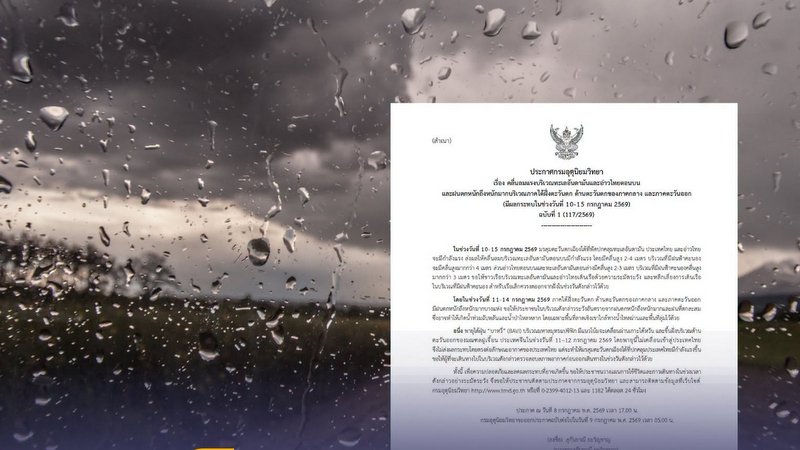
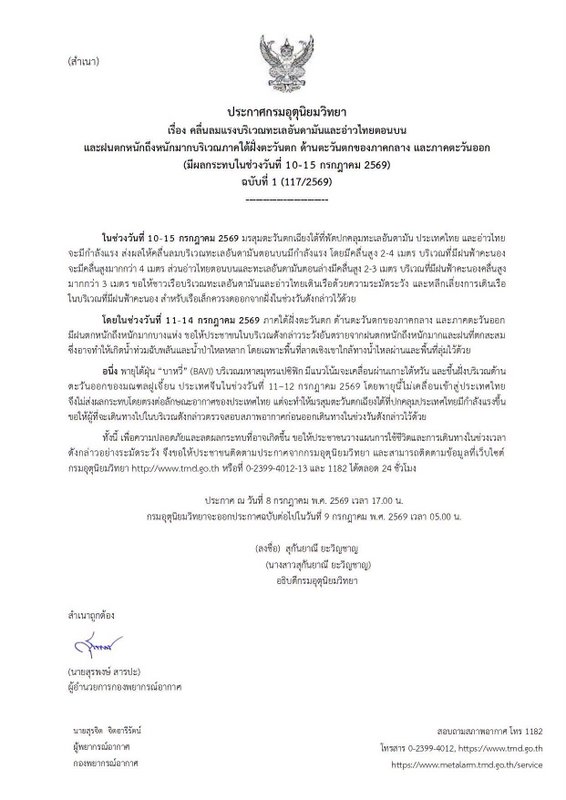


According to the department’s first warning notice, a strengthened southwest monsoon over the Andaman Sea, Thailand and the Gulf of Thailand will bring hazardous marine conditions throughout the period.
Wave heights in the upper Andaman Sea are forecast to reach two to four metres, rising above four metres in areas affected by thunderstorms. In the lower Andaman Sea and the upper Gulf of Thailand, waves are expected to reach two to three metres, exceeding three metres during thunderstorms.
The Meteorological Department has advised all vessels in the Andaman Sea and Gulf of Thailand to navigate with caution and avoid sailing through storm areas. Small boats have been urged to remain ashore until conditions improve.
Heavy rain is forecast to develop from tomorrow (July 11) and next Tuesday (July 14), with the west coast of Southern Thailand, including Phuket and neighbouring provinces, expected to receive heavy rainfall. Some areas in eastern Thailand are forecast to experience heavy to very heavy rain.
Officials warned that prolonged rainfall could trigger flash floods and landslides, particularly in hillside communities, areas near waterways and low-lying locations.
The department also noted that Typhoon Bavi, currently in the Pacific Ocean, is forecast to pass through Taiwan before making landfall on the eastern coast of Fujian Province, China, sometime tomorrow through Sunday (July 11-12).
Although the storm is not expected to enter Thailand or directly affect the country’s weather, it is expected to strengthen the southwest monsoon, contributing to rougher seas and increased rainfall.
The Meteorological Department has urged residents and visitors to monitor weather forecasts and plan travel carefully during the warning period.
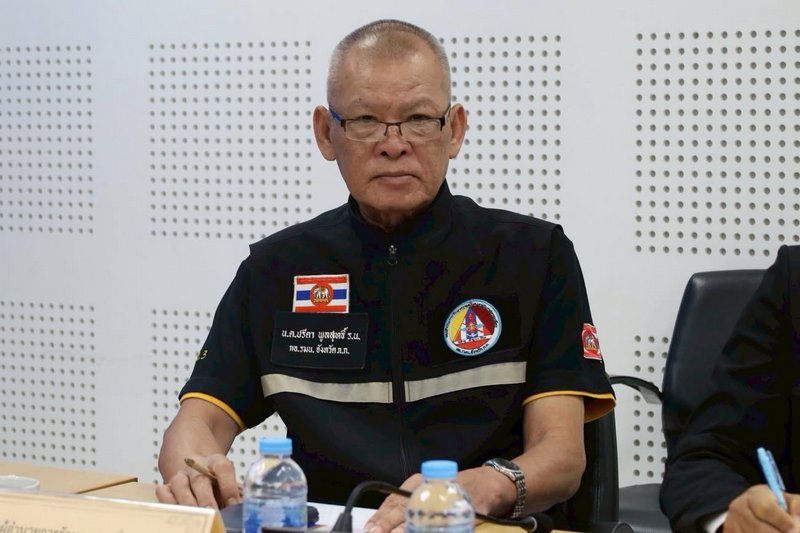
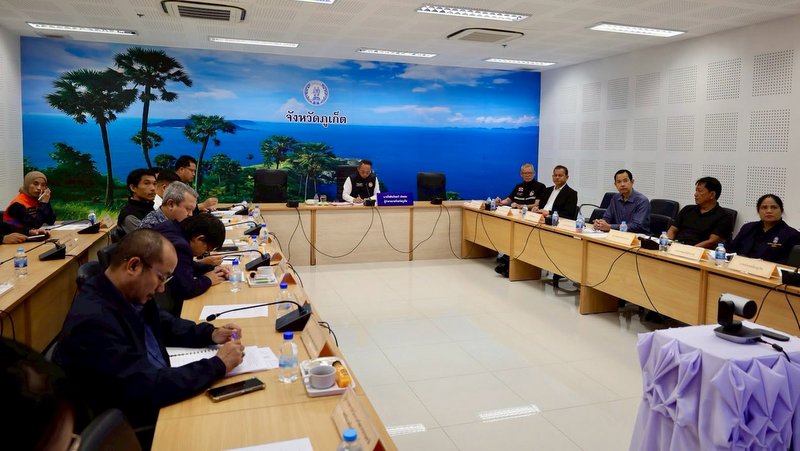
Meanwhile, Phuket Governor Chotinrin Kerdsum chaired a provincial meeting yesterday to review drought preparedness despite the Meteorological Department forecasting several days of heavy rain and rough seas across the region.
Officials said Phuket’s three main reservoirs currently hold more than 22.13 million cubic metres of water – more than enough to maintain the province’s water supply, not including the rain to come – while the governor also ordered a feasibility study into using Khlong Saneh Pho as an additional raw water source to meet future demand.