


The UTCC’s Centre for Economic and Business Forecasting last week projected that money circulated during the festival would reach B129bn this year, a 3.7% drop from 2025 and a 4.6% decrease compared with the pre-pandemic figure in 2019, reports the Bangkok Post.
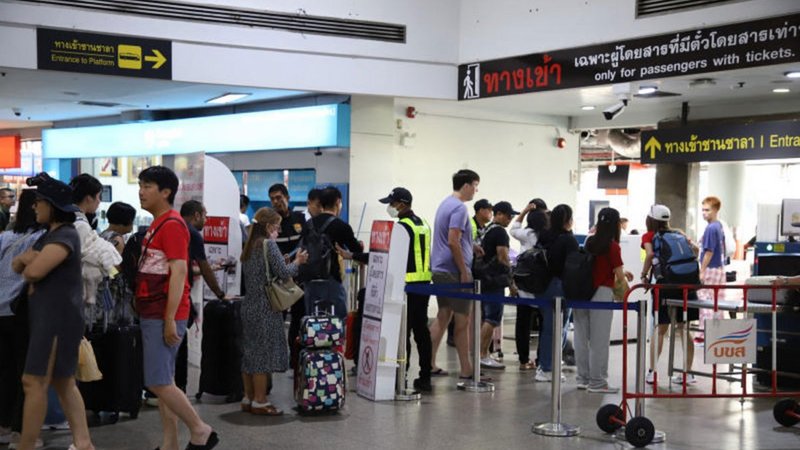
A survey indicated that Thais plan to spend less during the upcoming festive season. While 67% of respondents intend to travel during Songkran, the majority indicated a preference to travel within their own province.
The survey found that nearly half of tourism operators expect revenue generated during the holiday to decline compared with last year, with Songkran 2026 anticipated to be less vibrant than in 2025.
The prior projection was made when diesel prices were around 40 baht per litre.
With current prices exceeding B48 per litre, Thanavath Phonvichai, president of the UTCC, said projected festival spending now stands at B120-125bn.
“People will go out and enjoy Songkran, but they will be more cautious with their spending,” he added.
In a separate survey, the UTCC revealed that the consumer confidence index declined to 51.8 in March, from 53.7 the previous month, the lowest level since October 2025. Consumers remain concerned about the war in the Middle East and its effects, such as rising energy prices and living costs.
Moreover, agricultural prices remain low, particularly for rice and animal feed corn, further weakening consumers’ purchasing power.
The Thai Chamber of Commerce Confidence Index stood at 43.3 in March, down from 44.5 in February.
Business operators are concerned about rising energy prices, increasing logistics costs, higher fertiliser prices, and the slow pace of economic recovery.
Nonetheless, both consumers and business operators have expressed sentiment that the country’s political situation is stabilising following the establishment of the new cabinet. The development is seen as paving the way for clearer economic policies and more effective stimulus measures.
SURGING COSTS
Soaring fuel costs are rippling across Thailand just days before the Songkran festival, pushing up food prices, squeezing small vendors, raising costs for farmers and transport operators, and dampening travel sentiment in key tourism centres, Bangkok Post noted in a separate report.
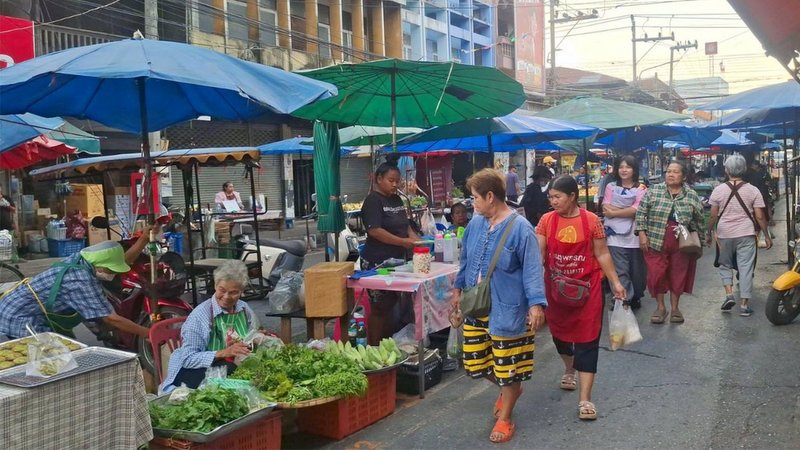
At a fresh market in Sikhiu district of Nakhon Ratchasima, vendors said higher fuel prices have driven up transport costs, forcing price increases and reducing customer traffic. One vegetable seller said she sources produce from the province’s Muang district and transports it by a diesel-powered pickup, adding that fuel now consumes most of her daily earnings, leaving little profit.
To stay afloat, she has raised prices slightly, with coriander bought at 120 baht per kilogramme now selling for B130-140. If fuel prices continue to climb, she said, she may suspend sales.
Consumers are also feeling the pinch. A shopper at the same market said egg prices have surged, with a tray of 30 large eggs rising from about B100 baht to B125-145. Meanwhile, prices for individual eggs are now B6-7 each. She said rising living costs and a weak economy are forcing households to cut spending, which could dampen Songkran celebrations.
In Hat Yai city of Songkhla, hotel operators reported that bookings for the upcoming Songkran period were slower than in previous years.
The Hat Yai–Songkhla Hotel Association said some rooms are still available for Apr 11-12, when hotels would typically be fully booked. Operators cited uncertainty and high fuel costs as factors discouraging travel, particularly among domestic tourists. Merchants in the city’s commercial district said they had ordered fewer festival-related goods, anticipating lower visitor numbers.
In Chiang Rai, farmers and rice harvester operators said soaring diesel prices are driving up off-season costs. One operator said diesel has risen to over B50 per litre from just above 30 baht, pushing harvesting fees to B650-700 per rai from about B500. Farmers are bearing most of the increase while rice prices remain low, raising concerns ahead of the main planting season in June.
Transport services have also been affected. At a motorcycle taxi stand in Chainat province, most drivers have stopped operating due to high gasoline prices, leaving only one rider in service. The singular operator said fares have risen 20–30%, with the first 5km now costing B30-40, up from B20-30.
Meanwhile, authorities in Chanthaburi said public transport fares would remain unchanged during Songkran despite rising fuel costs, while safety inspections are being intensified and additional services prepared.
In Yala’s Betong district, motorists rushed to refuel after a B2.14-per-litre diesel price cut, though residents said the reduction offers only limited relief after earlier sharp increases. Operators warned that fuel costs continue to drive up prices across the economy and urged further government action to stabilise them.