


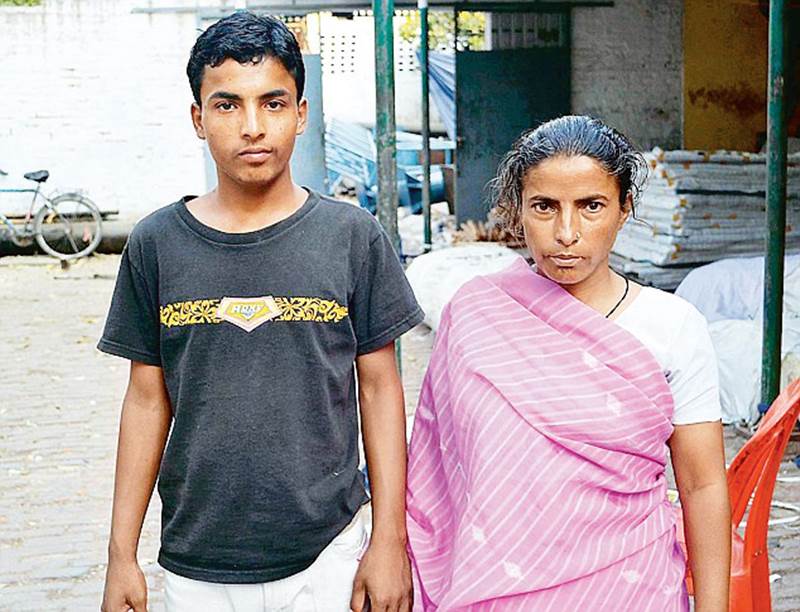
The mother, Vijaya Kumari, was arrested in 1993 after being accused of the murder of a neighbour in her village in India’s Uttar Pradesh state.
She was pregnant when arrested, and gave birth to a son named Kanhaiya while she was held in a Lucknow jail.
Vijaya was granted bailed in 1996 – but her husband refused to post the required US$180 bond (B5,435) for her release, and so she stayed in prison.
Her son Kanhaiya lived with his mother in the prison until he was six years old, and was then sent to a government-run home
He’s now grown up and works in a garment factory – and has saved every spare rupee for years to rescue his mother.
Some 19 years after his mother was first jailed, Kanhaiya paid the bail money at the Allahbad High Court to set her free late last year.
“I worked very, very hard to get the money for the release of my mother,” he said when re-united with his mother. “I’m very happy now.”
The case has caused a scandal in India and has prompted authorities to take action for thousands of other people languishing in Indian jails without having been convicted of any crime.
India’s courts are famously slow and inefficient, with cases typically backed for decades. The criminal justice system depends heavily on confessions, which makes it difficult for courts to secure convictions.
It’s estimated the conviction rate for serious crimes is as low as 4 per cent of the cases that come before India’s courts.