


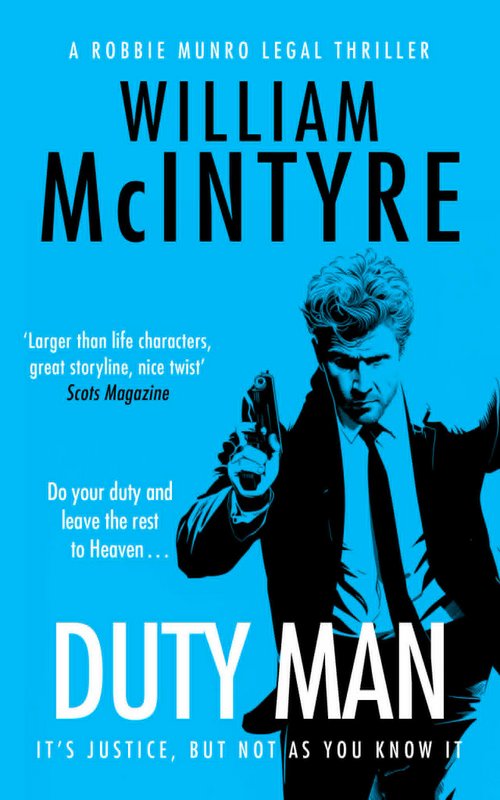
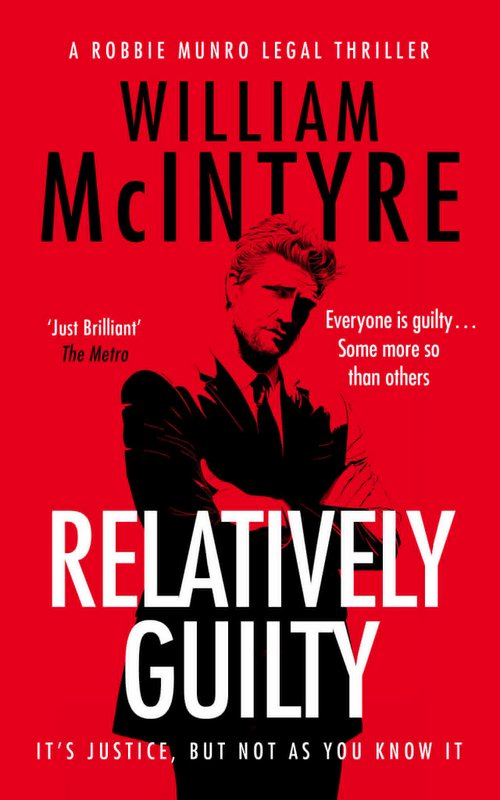
Decades working as a defence lawyer in the Scottish court system meant he had so many stories that colleagues, perhaps weary of hearing them, encouraged him to turn them into fiction. To McIntyre, it made perfect sense if only because there was ‘no time-consuming research required’.
And so he set out to write ‘fictionalised accounts of court life’, featuring Scottish criminal defence lawyer Robbie Munro.
Sixteen years and as many books later, McIntyre’s oeuvre occupies a niche within a niche that competes with kings of the courtroom drama Scott Turow and John Grisham. But instead of battles fought in a fictional county in Illinois or in America’s deep south, McIntyre not only takes us to Scotland, but to towns many Scots (this one included) might struggle to find on a map. Robbie Munro bears inevitable comparison to John Mortimer’s Horace Rumpole, if only by sharing what McIntyre calls ‘a healthy disrespect for the judiciary’.
How Not to Get Published: And Other Helpful Advice speaks of the barriers he, as a talented writer, faced in his struggle to (1) get published and, (2) even more difficult, to remain published. It documents the travails involved in seeking representation from literary agents, and lists some of the inevitable potholes and speedbumps on the road to publication.
Following the advice of one industry professional, he elicited interest from a publisher by re-writing his first book, switching the central character’s gender from male to female. Just when he thought contracts were about to be signed, the publisher, who had mistakenly thought McIntyre was a woman, pulled out. They loved the book for its strong female lead character, but wanted it written by a woman. Figure that out if you can.
Next came an endless succession of nearly but not quite moments. A leading publisher liked an excerpt he sent them and asked for a full, printed manuscript, which they then sat on for three months before returning it. The accompanying pro forma rejection slip was bad enough. Worse was how the tamperproof seal on the manuscript envelope had never been broken. So near and yet so far (again).
McIntyre next became an early adopter of the Kindle self-publishing route. The success he achieved drew attention from vanity publishers wanting a share of his royalties as well as from respectable, bona fide outfits. When he signed a contract with one of them, he might have been forgiven for thinking he had finally arrived. Not so. Even as they put out a series of his trademark humour-laced courtroom dramas, his new publisher refused to have anything to do with earlier, self-published works, making the marketing of his series not just complicated but thankless.
In the end he bought back the rights to his books and returned to self-publishing, gaining at least some control over pricing and royalties. In subsequent years he was teased by proposed television adaptations that would, if they came to fruition, see book sales skyrocket; cue yet more disappointments. Highs and lows continue, and the Best Defence series is once again optioned for TV and another publisher is now involved in the possible release of the whole series.
How Not to Get Published: And Other Helpful Advice, available on Amazon platforms for 99 pence or its equivalent (approximately B44), is a worthwhile read, albeit one that might put some people off writing altogether.
Unlike a prominent Australian crime fiction writer who chose to ghost me, McIntyre fields approaches from obscure writers of columns in distant lands. I asked him to sum up what he thought faced newcomers seeking a foothold in today’s book world. This is what he said:
“Publishers want to know whether you’re an author worth investing in, not a one-book wonder. These days, the emphasis seems to be on series, particularly where crime fiction is concerned. Increasingly, they are looking for authors who can produce book after book, and one of the ways they find them is by trawling through self-published eBooks on Amazon to see what’s selling, and who’s writing them. Its been said many times before. Publishers look for books that will sell. It’s a business.”
Ron McMillan has six books available on Amazon worldwide. His latest, the second in the Call Me Rab series set in 1993 and featuring the only ethnic Indian CID cop in Scotland, will be released later this month.