



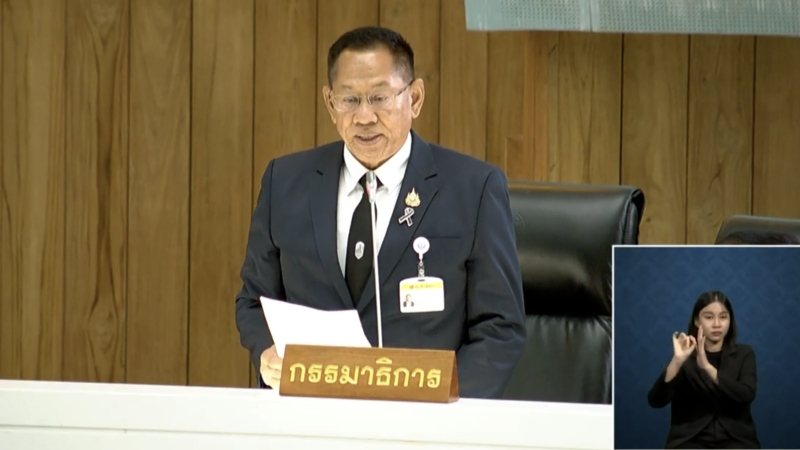
The proposal was presented by Aphinan Phuekphong, Senator and Chairman of the Senate Sub-Committee on Decentralisation, Transfer of Responsibilities, Revenue Allocation to Local Administrative Organisations and Special Forms of Local Government.
The study calls for both Phuket and Chiang Mai to be upgraded to special administrative entities similar to Bangkok Metropolitan Administration, effectively granting the provinces “metropolitan” status.
Under the proposal, Phuket residents would directly elect a ‘Metropolitan Governor’ for a four-year term, together with a deputy governor and administrative team. A legislative council would also be elected by the public, while a separate ‘citizens’ council’ made up of representatives from professional and community groups would be established to help guide development policy.
In presenting the proposal, Mr Aphinan said Phuket currently faces long-term structural problems due to heavy reliance on central government administration despite being one of Thailand’s most important tourism economies.
According to the study, Phuket welcomes around 14 million tourists annually and generates an estimated B500 billion in tourism revenue each year, yet receives only around B7.5 billion in annual state budget allocations.
The report also highlighted what it described as a lack of continuity in provincial administration caused by frequent transfers of governors appointed by the Interior Ministry.
The study noted that Phuket has had 14 governors over the past 19 years, meaning each governor has served an average term of little more than one year.
Supporters of the proposal argue this prevents long-term planning and delays responses to local problems.
The report cited issues such as beach management and infrastructure planning as examples where local authorities lacked sufficient power and decisions had to be referred back to Bangkok.
Under the proposed metropolitan model, many responsibilities currently handled by 34 regional government agencies would be transferred directly to Phuket authorities.
The proposal would also allow greater financial autonomy, including a larger share of locally generated tax revenue.
One key suggestion is increasing Phuket’s retained share of value-added tax revenue from around 10% to 50%.
The study also recommends examining around 20 new local tax mechanisms, including environmental and education-related levies.
Existing municipalities and tambon administration organisations (OrBorTor) in Phuket would remain in place under the proposal.
The idea received support from Phuket MPs following its presentation.
Chalermpong Saengdee, MP for Phuket Constituency 2, described the proposal as “good news” and said preparations were underway for a future Phuket governor election that could help transform the island into a stronger tourism and economic hub.
Somchart Techathaworncharoen, MP for Phuket Constituency 1, said he was encouraged to see broader political support emerging for the long-debated concept of Phuket self-governance.
Mr Somchart said he had consistently promoted the ‘Phuket Self Governance’ or ‘Phuket Metropolitan Area’ concept in Parliament and pledged to continue pushing the issue forward.
The Senate subcommittee said its findings were based on extensive consultations, including 19 formal meetings, field visits to Phuket and Chiang Mai, public hearings, and seminars involving academics, civil society groups, private sector representatives and government agencies.