


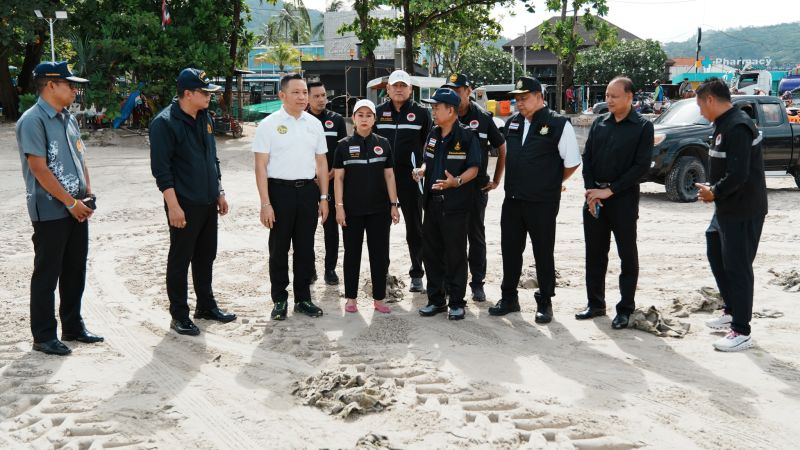
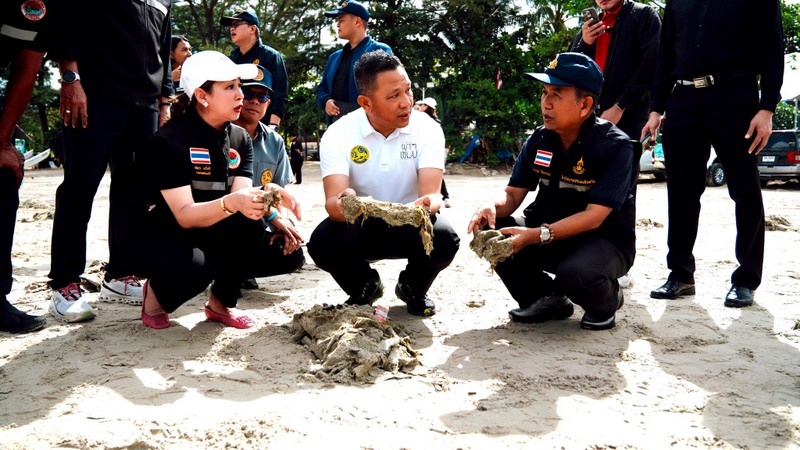
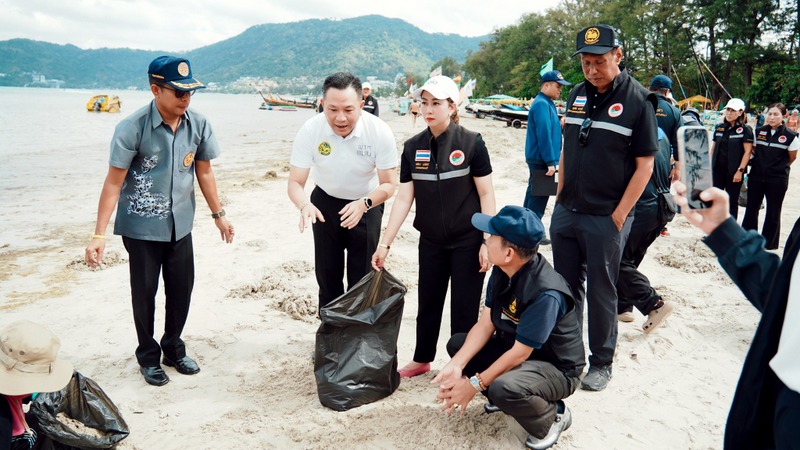
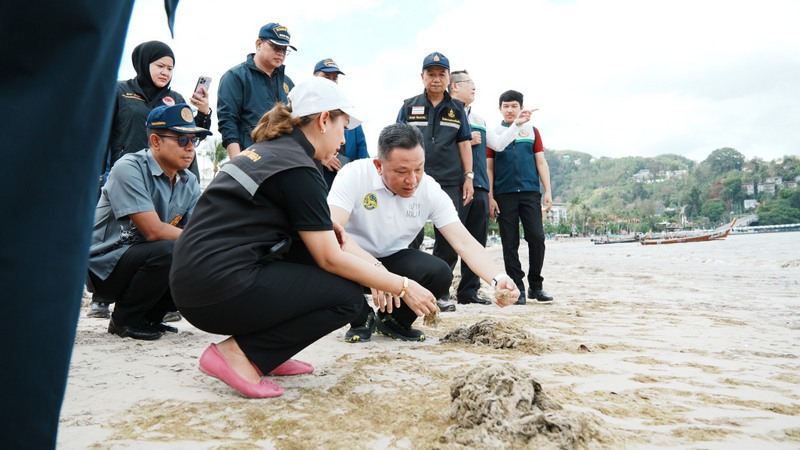


Governor Nirat led a field visit to Patong Beach, near the Sea Pearl intersection, yesterday (Feb 17) amid growing local concern that cruise ships moored offshore may be contributing to the algae growth.
Joining the inspection were Kathu District Chief Akkarapol Suthirak Jitsupap; Patong Mayor Lalita Maneesri and Phuket Marine Office Chief Adul Ralukmoon.
Also joining the foray were Phuket Provincial Fisheries Office Chief Prayuth Rattanawan; Phuket Provincial Natural Resources and Environment Office Director Natthakrit Phonphet; Phuket Provincial Public Relations Officer Wimol Nukaeo; Patong Municipal Council Chairman Veerawich Kreuasombat; and other relevant officials.
Following the site inspection, Governor Nirat chaired a meeting at 10:30am at the Patong Municipality office to discuss both immediate and long-term solutions.
Addressing speculation from local residents, the Governor said cruise ships currently anchor about two kilometres offshore at a depth of approximately 17 metres. As an initial measure to ease public concern, the province has adjusted the mooring distance to three kilometres from shore, where the average depth is around 22 metres.
The five-metre increase in depth is expected to reduce any potential impact from vessel movement, including propeller activity, on the seaweed, he said. The new anchoring distance has been communicated to ship agents and cruise operators, and authorities will monitor the results to determine whether the change improves the situation.
The Marine Department confirmed it is ready to support the province’s measures and will assess the effectiveness of the revised docking distance. If the adjustment helps alleviate the problem, it may be adopted as an appropriate approach. If not, officials will consider alternative measures.
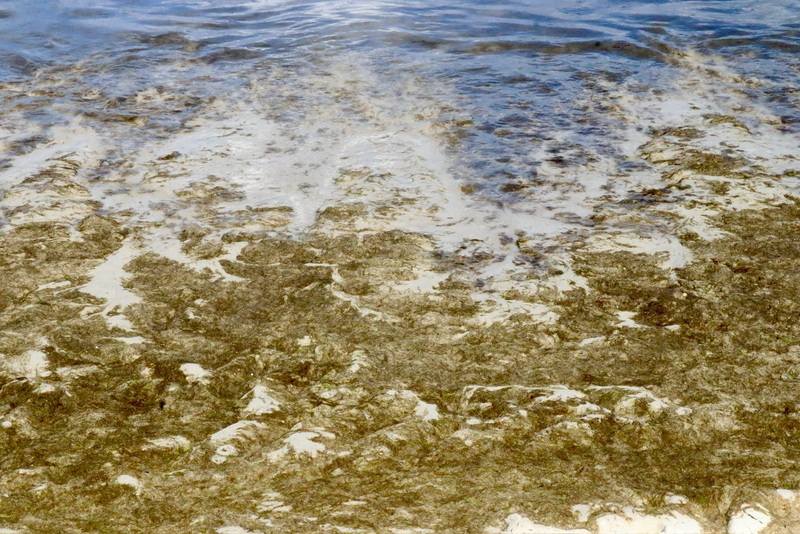
According to scientific data presented by the Phuket Provincial Fisheries Office, seaweed and algae growth can increase significantly when environmental conditions are favourable.
Contributing factors may include “high levels of phosphate nutrients from wastewater”, sufficient sunlight and suitable sea conditions, potentially leading to a bloom similar to plankton proliferation, admitted an official report of the visit.
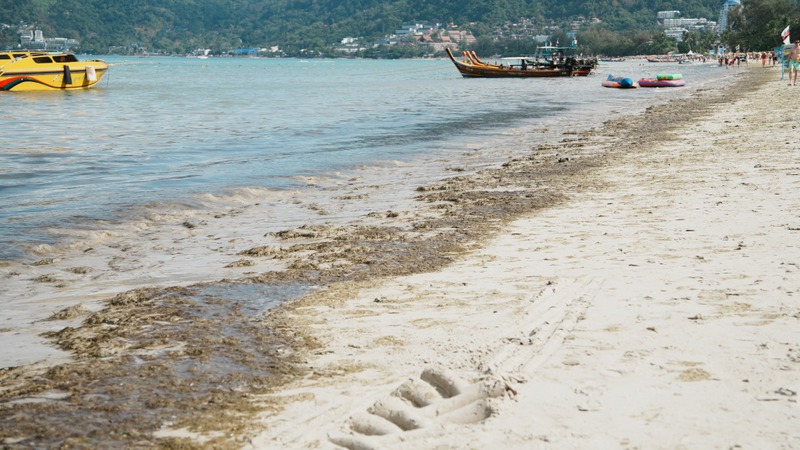
When strong waves or monsoon conditions occur, accumulated seaweed may be dislodged and float to the surface, eventually washing ashore, the report said.
Officials stressed that while the cruise ship hypothesis remains under consideration, further scientific investigation is required to establish any direct link. It is not customary, and it is illegal, for any vessel to discharge any waste from the septic tanks while in any port or harbour.
The meeting agreed to coordinate with academic institutions to conduct in-depth studies into the underlying causes. Officials noted that such seaweed accumulations commonly occur between January and April, during the high tourist season.
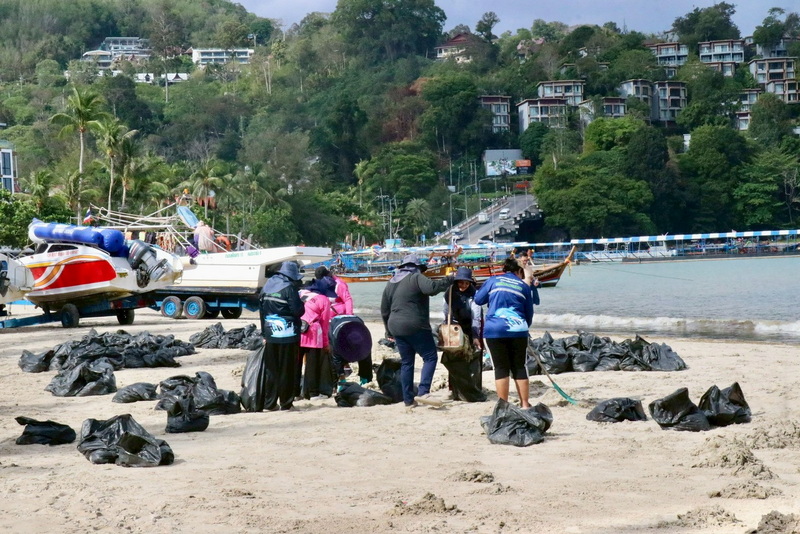
In the meantime, Patong Municipality has begun collecting and burying the seaweed, as it cannot be reused for other purposes. The clean-up operation is expected to be completed within one to two days.
Regardless, during yesterday’s visit authorities repeatedly confirmed that the beach remains open and safe for residents and tourists.
In addition to addressing the immediate seaweed issue, the meeting also discussed reducing organic waste in Patong as a longer-term preventive measure.
Officials plan to introduce technology to manage waste at the source before it is transported to the Phuket Provincial Solid Waste Disposal Centre at Saphan Hin, with the aim of reducing nutrient runoff that could contribute to marine growth.
Governor Nirat said the province would urgently tackle the problem in the short term while developing sustainable, long-term solutions to protect Patong Beach and maintain public confidence during the peak tourism season.