


Some 11 kilometres down, in the deepest explored part of the ocean, Victor observed several marine creatures, one of which is a potentially new species. However, it’s his other more devastating discoveries that caught the world’s attention: a plastic bag and sweet wrappers. This suggests that the very deepest oceans are the repositories of plastic waste. A serious matter indeed.
The challenges facing our oceans have been a talking point for some time. World Oceans Day, observed on June 8 each year, was officially declared by the UN in 2008, but its origins can be traced back to a proposal by the Canadian government back in 1992 at the Earth Summit in Rio de Janeiro, Brazil, some 26 years ago.
The theme for World Oceans Day 2019 in Thailand is “Gender and Thai Seas” with a goal to build greater ocean and gender literacy and discover possible ways to promote gender equality in ocean-related activities. Focus will be on marine scientific research, marine biodiversity conservation, fisheries, aquaculture, food security labour at sea, migration by sea, human trafficking, building resilience on climate change impacts, ecotourism, policy making and management.
While each country marks the day differently according to how the ocean affects them and how they affect the ocean, there is a particular poignancy with Thailand. The country is one of five Asian countries which dumps more plastic in the ocean than the rest of the world combined. Thailand has poor waste processing infrastructure and the petroleum-based non-biodegradable plastics seriously impact health and marine life, releasing toxins into landfill, rivers and, indeed, oceans.
In Phuket specifically, each person on the island generates 1.13 kilograms of waste per day (50% of which is biodegradable). That’s over 1,000 tonnes of waste sent to the Saphan Hin incinerator every day.
The point of marking international days is not to scaremonger, but to educate about the issues of concern, mobilise change and celebrate achievements. World Oceans Day is a good time to focus on serious initiatives that can help reduce plastic and waste on the island and look back at how far we’ve come.
I celebrated some of Phuket’s great community initiatives in a previous article – Trash Talk – such as Trash Hero Phuket who run regular beach cleans and Precious Plastic Phuket who repurpose plastic into a whole host of beautiful, practical objects.
Also of note are the Happy Green World Foundation’s educational programmes about waste, water and energy which teach children between 6 and 12 years old sustainable behaviour through a colourfully-illustrated activity guide, student book and game. These are currently being translated into Thai by students at British International School, Phuket – BISP, sponsored by the Tourism Authority of Thailand and in partnership with the Phuket Hotels Association.
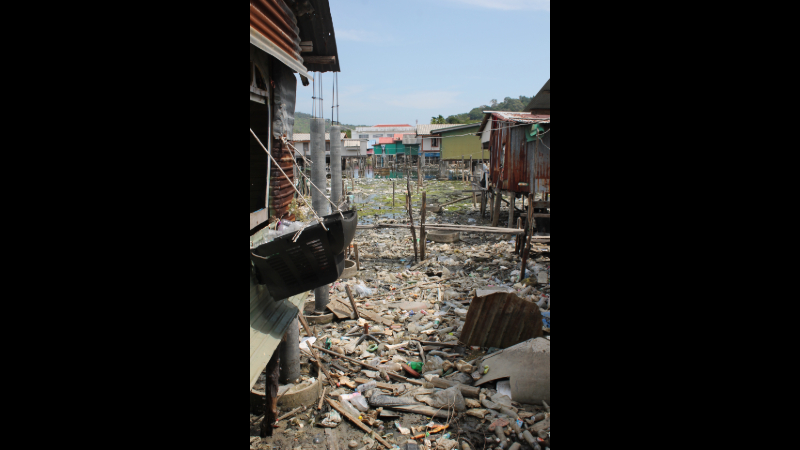
Avid readers of The Phuket News will know about the environmental efforts at Koh Siray. The inhabitants of the island, which is joined by a bridge to Phuket Town, battle with a monumental amount of plastic waste. Help was at hand on Apr 29, though, when a huge collaborative effort, comprising staff from Rassada Municipality, 70 Australian military personnel and community groups, saw a tonne of waste collected and four sustainable education centres established.
However, if these efforts in Phuket, and particularly in Koh Siray, are to seriously reduce waste and plastic, they will need a coordinated, long-term approach by districts, municipalities, hotels, retail outlets, community groups and schools, including education programmes and a change in community attitudes. The aim should not be just to reduce waste, but to turn it into a sustainable business to improve income for local communities too.
With this in mind, a strategic planning forum will be held in July – date to be confirmed – to discuss the serious action necessary to tackle the issues facing Koh Siray. All members of the community who have a strong interest in this project are invited to participate. The aim is to elevate Koh Siray’s position as a centre for tourism, take firm action on waste and water management, tackle the serious issues of the sea gypsy village and around the port, provide high quality education and health services and examine new sustainable economic businesses.
Dr Peter W Harris is the Chair of the Asia Pacific Environmental Network (APEN) Thailand/Australia. APEN, originally established in Australia and now established in Thailand, aims to contribute to building sustainable communities, including water, waste, energy and biodiversity, with a strong commitment to social justice.
If you would like to participate in the strategic planning forum, contact Dr Harris via email at apenseek@gmail.com