


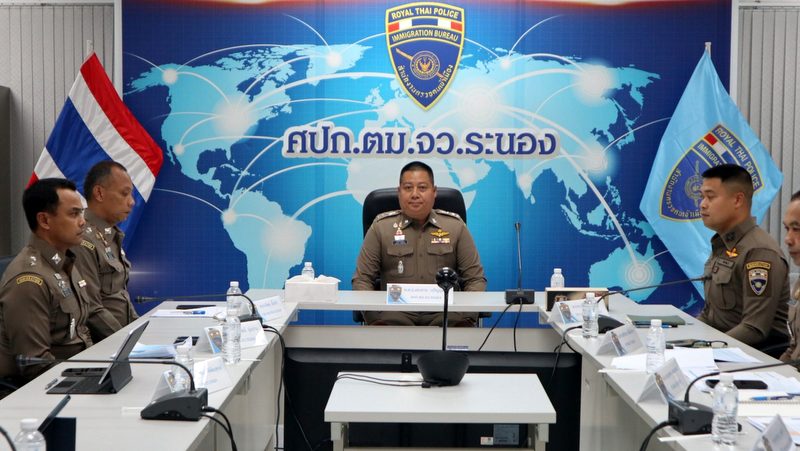
Pol Col Denchai Charoenyut said many foreign visitors misunderstand the regulation, believing the 150-day cap does not apply to land border crossings – a belief he said is incorrect.
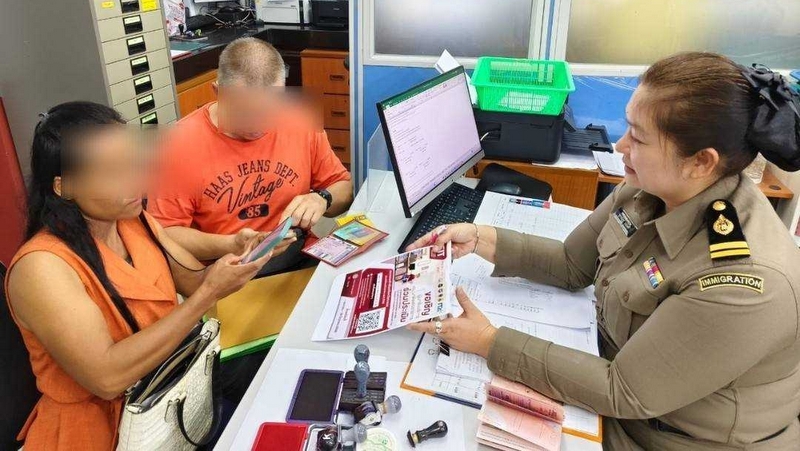
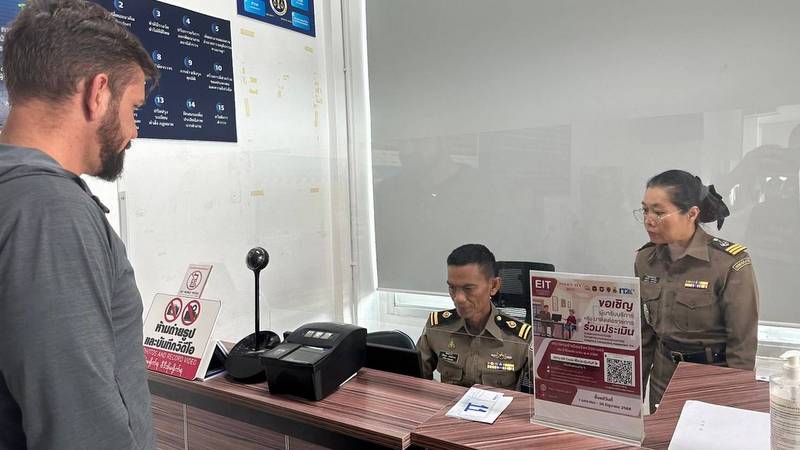
Pol Col Denchai’s response follows The Phuket News receiving reports of confusion at the Ranong Immigration Office yesterday (Dec 23), where foreigners had arrived in order to conduct a ‘visa run’ ‒ only to be told that they would not be permitted re-entry.
“The intention is to not allow foreigners to use tourist visas to stay for other reasons,” Pol Col Denchai told The Phuket News. “When stays exceed 150 days in a year, Immigration considers that longer than what a tourist would normally need.”
Under current rules, visa-free nationals are granted a stay of up to 60 days per entry, which may be extended by 30 days, for a maximum of 90 days per visit. However, Immigration policy limits the total accumulated stay across multiple entries to no more than 150 days per calendar year, Pol Col Denchai explained.
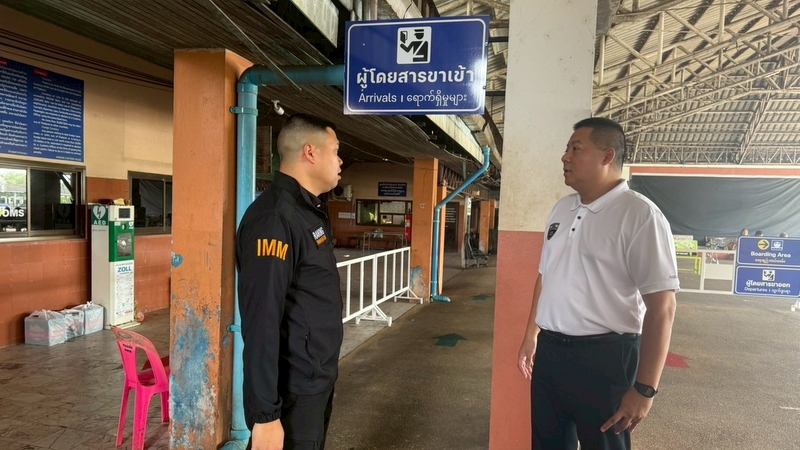
Pol Col Denchai emphasised that enforcement is particularly strict at land border crossings, such as the Ranong checkpoint, because entry and exit via land routes are easier than through airports.
“Land routes are where people can most easily obtain visa-free entry,” he said. “That is why Immigration must be especially strict at land borders, more so than anywhere else.”
Pol Col Denchai said the issue has become more prominent following government measures aimed at stimulating tourism, which he said have coincided with an increase in attempts to misuse visa-free privileges.
“Before, this wasn’t a problem,” he said. “But with tourism stimulus [visa-free] policies, we’ve seen more cases of people sneaking in and then working.”
He added that enforcement is not intended as a blanket prohibition, but as a safeguard against abuse of visa-free privileges, particularly in cases where individuals repeatedly re-enter Thailand without clear tourism plans.
“It’s not exactly a ban,” he said. “But the policy from the government and the Immigration Bureau is clear: whether entering by land, air, or sea, the total stay should not exceed 150 days in a year. That’s already longer than what tourists can realistically expect.”
Pol Col Denchai said exceptions may be considered in limited circumstances, provided the traveller can clearly demonstrate genuine tourism intentions. These include presenting confirmed flight itineraries, accommodation bookings, a detailed travel plan and sufficient funds for the stay.
“If the documents clearly show they’re not here to work, then Immigration should allow entry,” he said.
Ranong Immigration has never permitted entries that exceed the 150-day limit without strong supporting evidence, he added. In some cases, travellers have been allowed to cross if they could prove participation in legitimate and costly tour packages, such as island tours or travel onward to Myanmar.
“If they buy a tour package that costs tens of thousands of baht, it shows they are genuinely traveling,” Pol Col Denchai said. “They wouldn’t buy it and throw it away.”
In contrast, travellers with a history of lengthy stays who arrive without any concrete travel plans may be denied entry.
“If someone comes with no plan at all, has already stayed more than 150 days, and is just trying to get another visa-free entry, we will reconsider and may not allow it,” he said.
Foreigners intending to work or study in Thailand should apply for the appropriate visas, such as business or education visas, instead of relying on repeated visa-free entries, he added.
According to Ranong Immigration, the checkpoint handles approximately 400 to 500 entries and exits per day. Of these, about 70% are Myanmar nationals, 20% Thai nationals, and the remaining 10% are other foreign nationals, reflecting Ranong province’s typical cross-border movement patterns.