


More than a week after the Panamanian-flagged ship sank on Feb 7, the multi-agency Emergency Response Command Centre remains locked in negotiations with the vessel’s owner and insurer over who will pay for what could become a costly and technically challenging recovery operation.
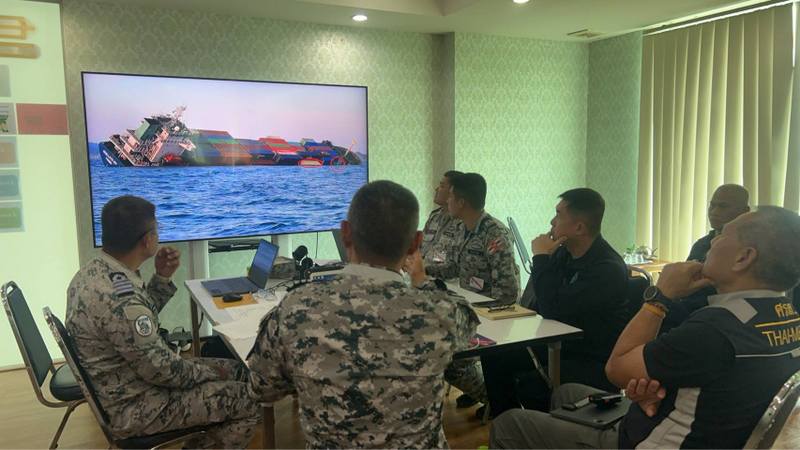
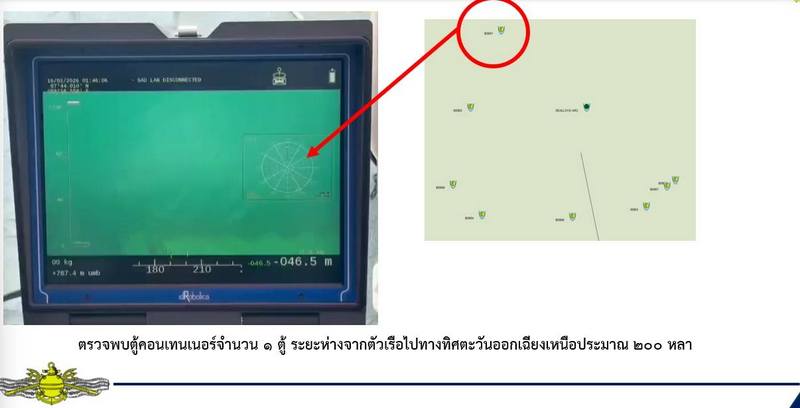
At the heart of the crisis are 290 cargo containers – including 14 carrying hazardous materials ‒ of which most are unaccounted for. A submarine drone has confirmed that many of the containers have fallen from the ship’s resting place and onto the sea floor, at a depth of just over 60 metres.
Many other containers have been seen floating adrift, only to disappear with officials left to admit that they have lost track of the container ‒ or just hope that it has sunk.
At time of press, officials were still none the wiser as to exactly which containers actually contain the hazardous materials, including car batteries.
“The situation regarding the recovery of the wreck and its marine impact is currently under detailed discussion,” Capt Pichet said this week.
“Our main missions are to ensure maritime safety and to control and mitigate environmental impact, especially the oil spill and hazardous materials.”
He confirmed that all containers will ultimately be salvaged.
On Thursday, Vice Admiral Veerudhom Muangchin, Director of Thai Maritime Enforcement Command Centre Region 3 (Thai-MECC 3) and Commander of Royal Thai Navy Region 3, who is serving as incident commander for the SEALLOYD ARC sinking, said the current goal of the operation is to recover all containers by April 30.
“Environmental impact must be prioritised, especially the 14 containers containing hazardous materials, which pose an urgent risk,” Capt Pichet said.
However, he acknowledged that the precise seabed locations of those hazardous containers have not yet been fully identified. “We do not know,” he said when asked for confirmation of their exact positions.
No official estimate of the total salvage cost has yet been released. “We have no idea of the estimated cost of the salvage operation at this stage,” Capt Pichet admitted.
Under Thai law, the shipowner – and by extension its insurer – bears primary responsibility for salvaging the wreck and recovering the cargo.
“Ultimately the ship’s insurance company has primary responsibility for salvaging the wreck, regardless of who actually conducts the salvage operation,” Capt Pichet said.
While the general cargo containers remain the property of the shipowning company and must be recovered under established procedures, the government has indicated it will assist in the recovery of the 14 hazardous containers due to the environmental risks they present.
The latest high-level meeting concluded that each government agency involved should initially cover its own operational expenses and compile a full estimate of costs incurred. A consolidated bill will then be submitted to the ship’s insurer for reimbursement.
HIDDEN HAZARD
Beyond environmental concerns, maritime safety has emerged as a pressing issue.
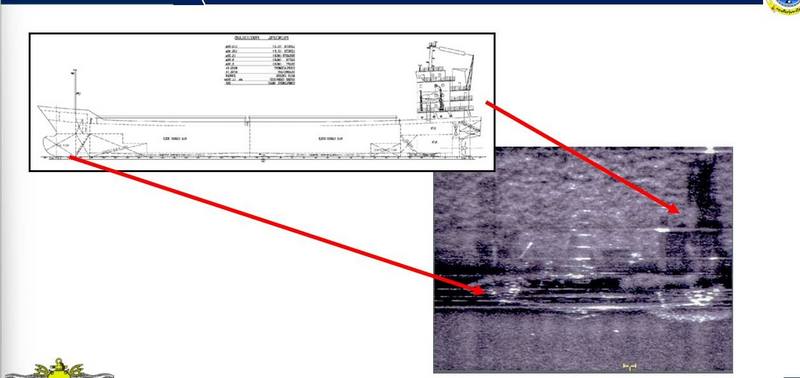
Earlier official statements placed the wreck at a depth of 61 metres on sandy-mud seabed, with the aft superstructure 14 metres below the surface. However, updated assessments now confirm the uppermost structure is actually about 20 metres beneath the waterline.
While this is considered a safe depth for most small and medium vessels, it could pose a risk to larger ships operating in the area.
“So the ship must be removed,” Capt Pichet said. “We are trying our best to come up with a solution – our goal is to have the ship removed for safety reasons. Otherwise the ship will remain a hazard to other large vessels in the area.”
Among those larger vessels regularly calling at Phuket is the cruise liner ‘Genting Dream’, a 150,695-gross-tonne ship measuring 335 metres in length, with an 8.3-metre draft and 18 decks rising 61 metres above the waterline.
Although its draft would not bring it close to the wreck itself, officials say navigational safety margins must account for weather, currents and potential shifts in the wreck’s structure over time.
All shipping companies have been formally notified of the wreck’s coordinates and instructed to record them in their GPS systems as a warning point. The Phuket Marine Office has also informed every registered boat operator in the area and ordered them to avoid the danger zone.
Warning notices to mariners remain in force.
OIL SPILL CONCERNS
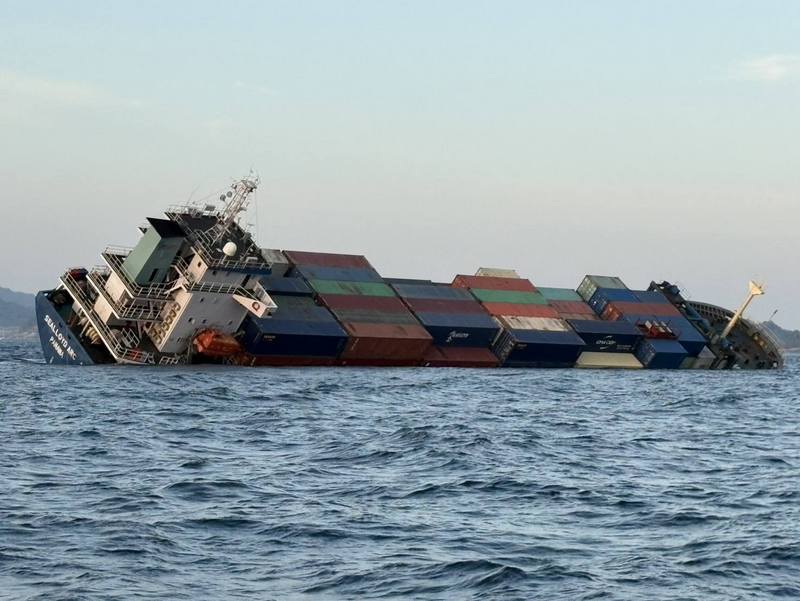
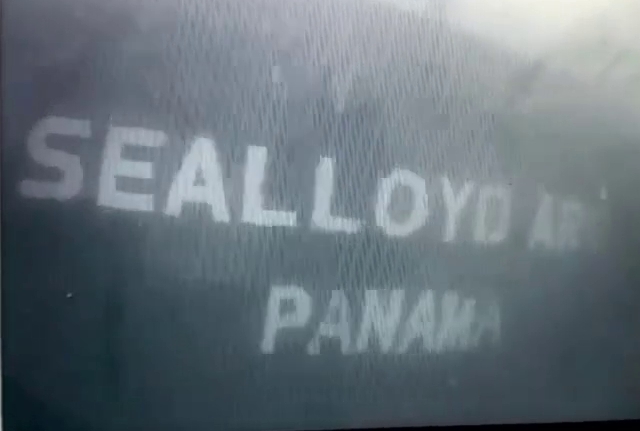
According to Adoon Raluekmoon, Chief of the Phuket Marine Office, the SEALLOYD ARC sank on Feb 7, at approximately 8pm, after losing stability earlier that afternoon.
At around 3:30pm, the Marine Department received a radio request for assistance from the Andaman Sea Maritime Traffic Control and Safety Center regarding the vessel, which had reported taking on a large volume of water midship on the starboard side. The flooding caused the ship to list to port before capsizing southwest of Koh Kaew Noi, near Laem Phromthep.
All 16 crew members were safely rescued and brought ashore at Chalong Pier without injury.
The vessel was carrying 98 tonnes of heavy fuel oil (bunker fuel) and 32 tonnes of marine diesel oil at the time of sinking.
Initial observations detected a transparent oil film on the surface, believed likely to break down naturally under sunlight. No heavy fuel slick has been observed.
Capt Pichet said it remains impossible to accurately estimate the volume of oil released in litres, as there is no clear formula for calculating leakage from a submerged wreck of this type.
“The oil slick continues to surface periodically, but the trend is decreasing,” he said.
At its widest, the slick dissipated over an area of about five nautical miles. It has since reduced to around three nautical miles, suggesting a significant drop in volume.
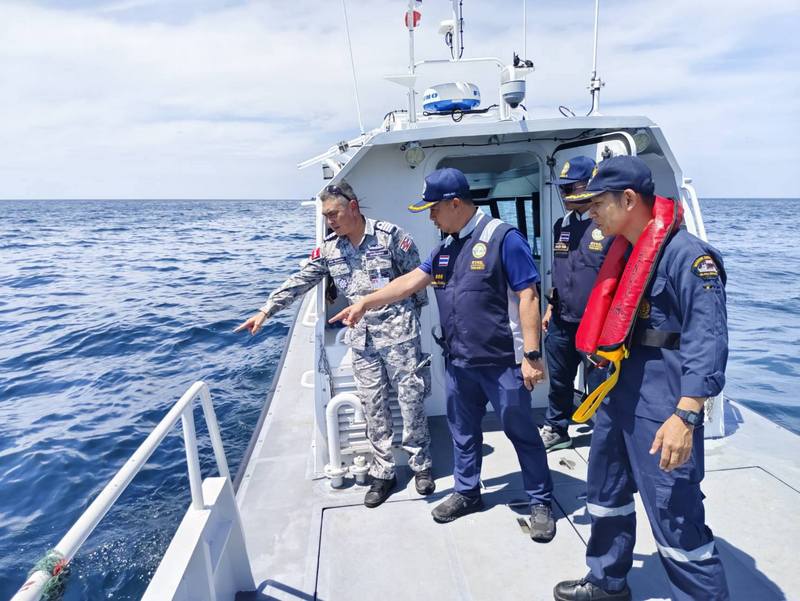
Even so, officials have not yet located the exact point of leakage from the wreck. Search efforts this week were ongoing, with the aim of sealing the source directly.
Authorities are also closely monitoring currents and wind patterns to assess whether any shift in conditions could drive contamination toward Phuket’s coastline. So far, modelling indicates any residual slick is drifting southwest into open sea.
TWO PHASES
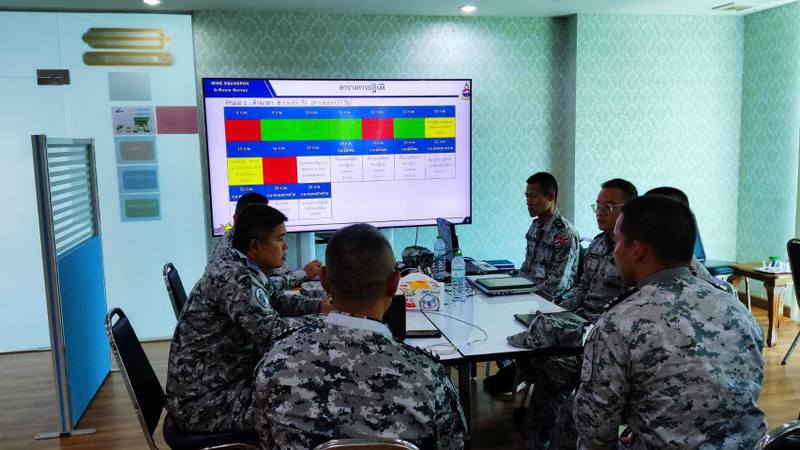
The operation to retrieve containers has been divided into two phases.
Phase One focuses on urgently recovering containers found floating at sea to prevent collisions. Crane vessels equipped with container-lifting gear have been mobilised, and tugboats are towing recovered containers onto barges.
Phase Two will address containers that have sunk to the seabed. Because this requires specialist expertise, a private salvage company will be appointed to submit a recovery plan for Marine Department approval before commencing operations.
Of the 290 containers on board, at last report 218 were believed to remain on the seabed near the wreck. Seventy-nine were initially confirmed floating, though many later sank again. Ten are currently under control.
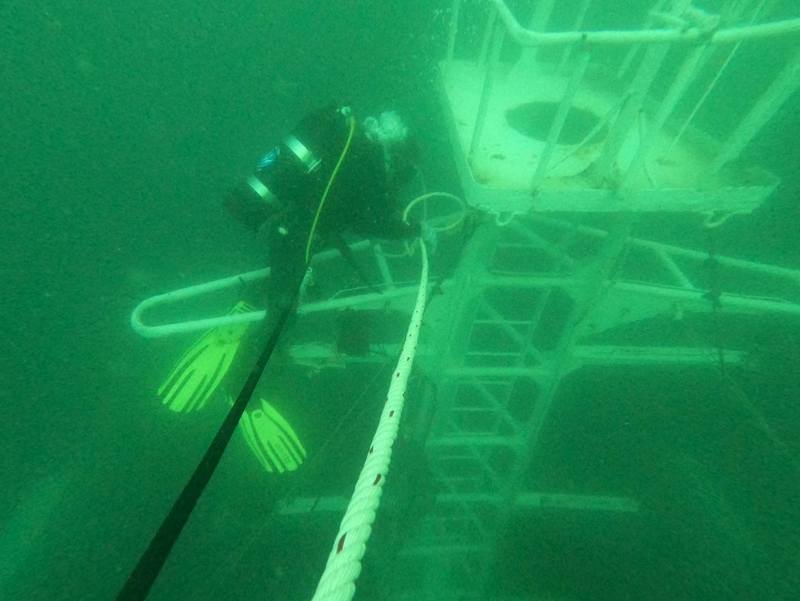
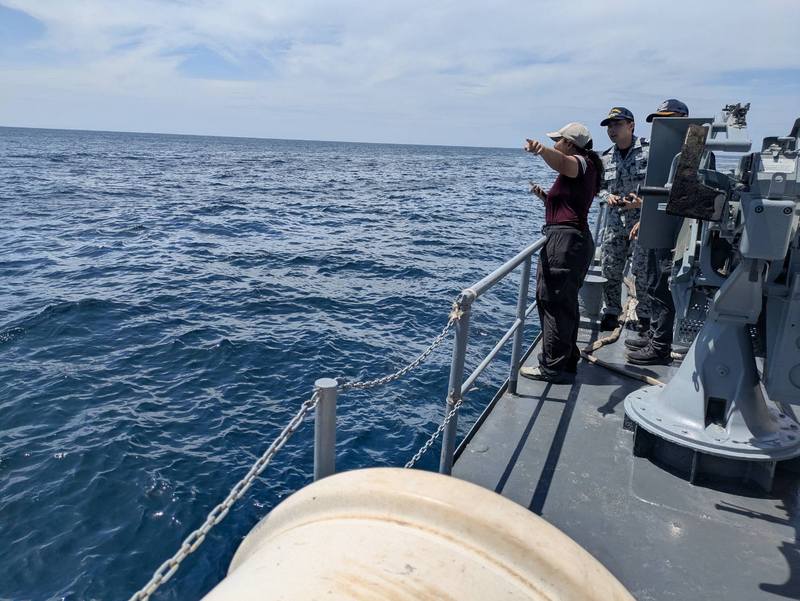
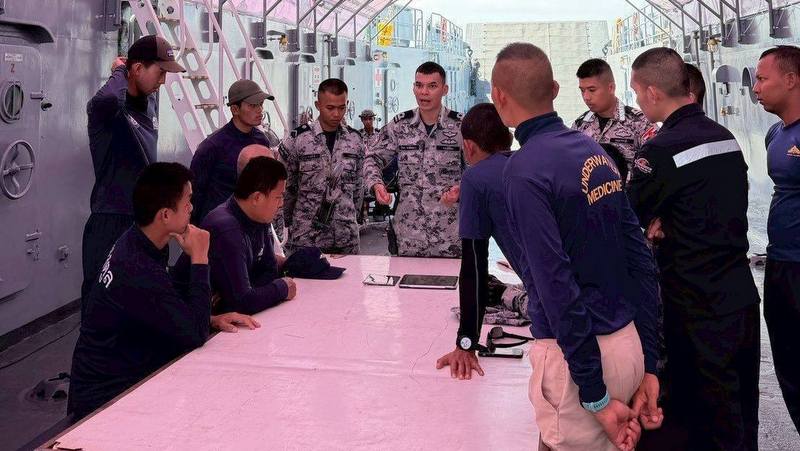
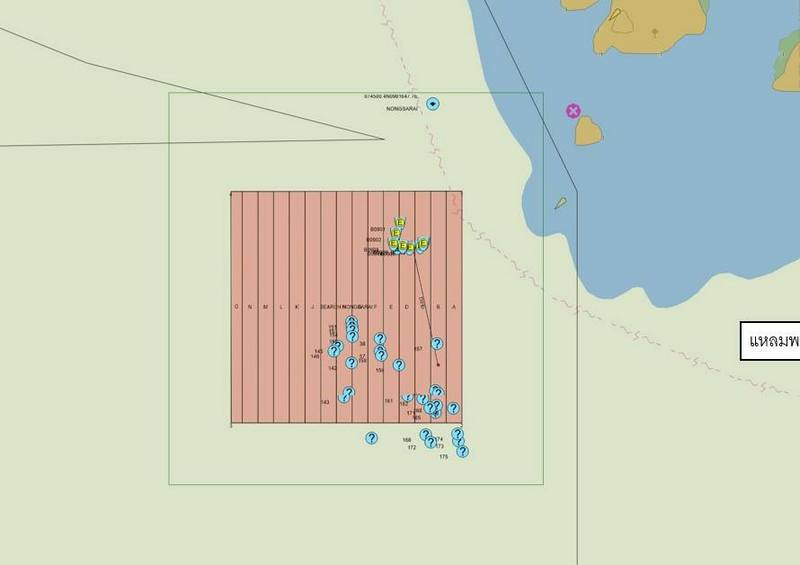
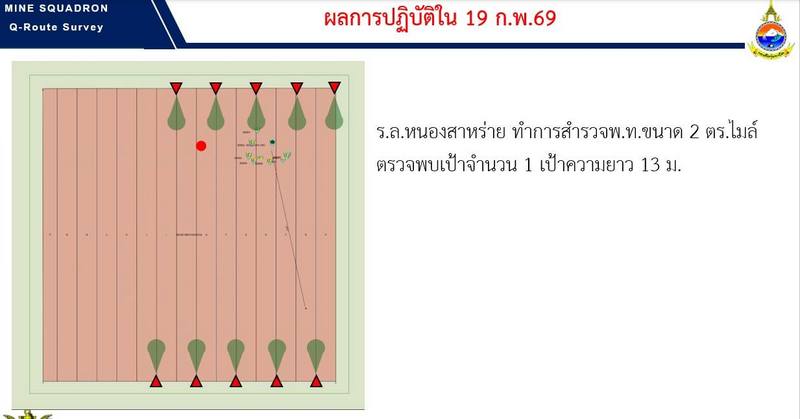
Divers and sonar teams have been mapping scattered containers around the wreck site to establish precise coordinates.
Under Section 121 of the Thai Maritime Navigation Act, the Phuket Marine Office has formally ordered the shipowner to salvage the vessel and control damage from the sinking within 30 days. An order has also been issued requiring installation of buoys to mark the wreck’s location.
A police report has been filed under Section 119 bis of the same Act to initiate legal proceedings related to residual oil on board.
Spirga Service (Thailand) Co Ltd has been appointed as the shipowner’s local coordinating representative. The insurer has submitted documentation expressing its intention to participate in resolving the situation, pending official approval.
At a meeting chaired by Admiral Thadawut Thadpitakakul, Secretary-General of the Maritime Security Command, last Saturday (Feb 14), agencies were instructed to integrate operations, prioritise safety and ensure all expenditures are properly documented to secure reimbursement.
For now, however, the most urgent task remains containing pollution and preventing maritime accidents.
“The most urgent task at present is to locate and seal the oil spill,” Capt Pichet said.
But with hazardous cargo still unaccounted for and a 4,334-tonne wreck sitting with its superstructure just 20 metres below the surface off Phuket’s southern tip, pressure is mounting for a decisive salvage plan. Until the SEALLOYD ARC is lifted from the seabed, officials concede, the danger is far from over.