


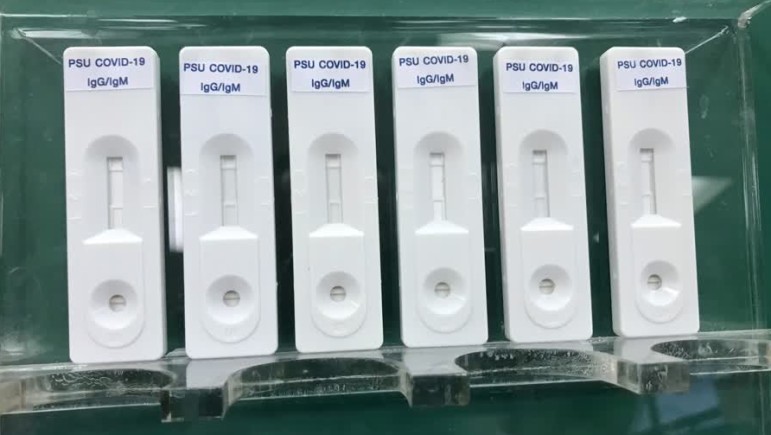
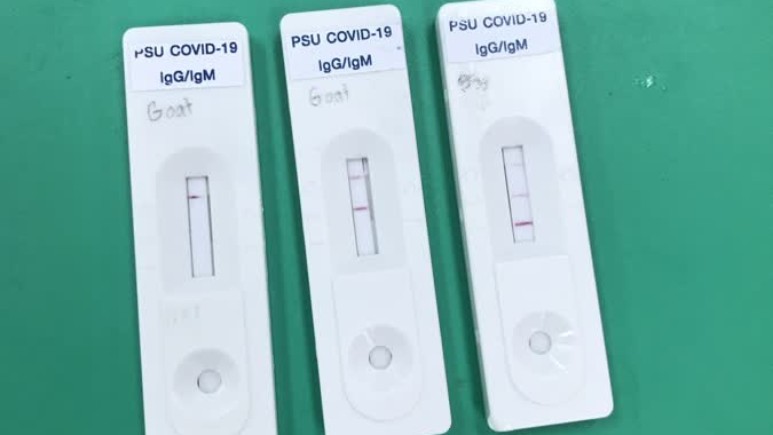
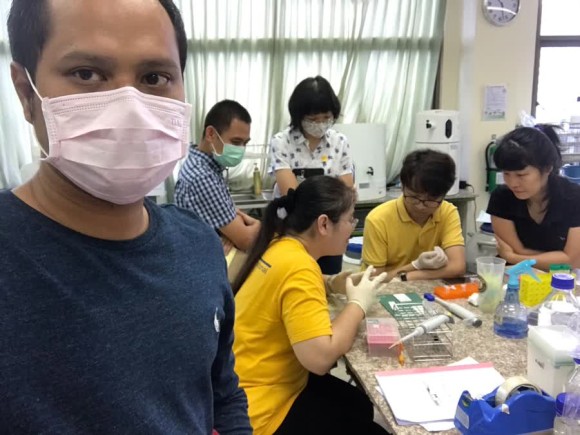
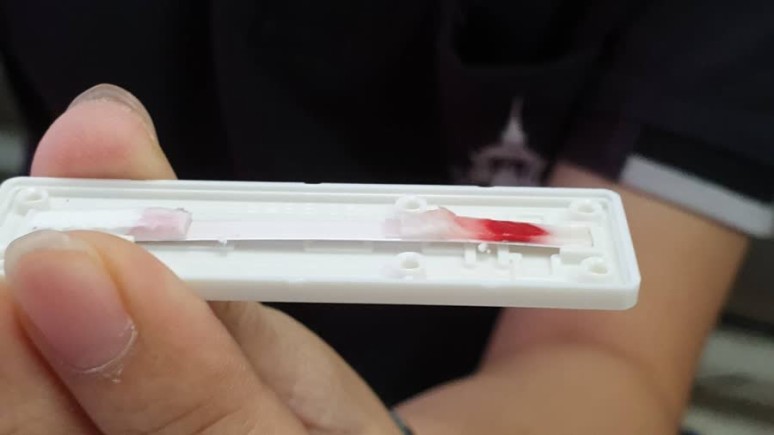
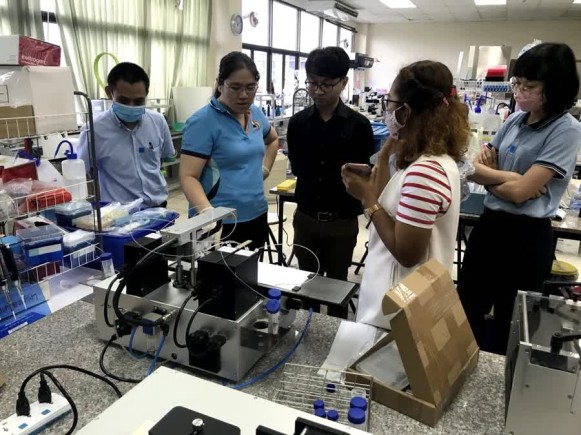
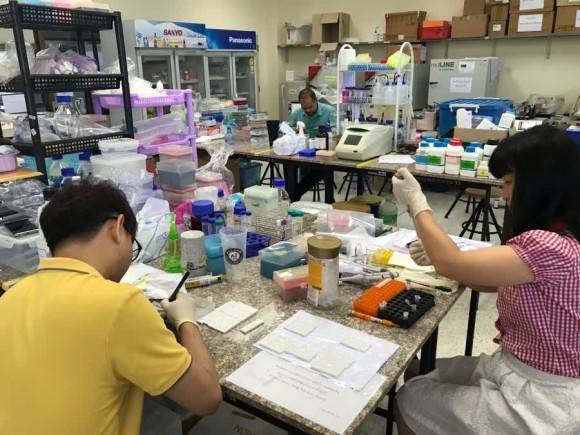
The new rapid test devices were launched by video conference at the unversity’s Faculty of Medicine yesterday (Apr 27)
Present for the launch were PSU Hatyai campus president Asst Prof Niwat Keawpradub PhD along with Asst Prof Sunton Wongsiri M.D., a lecturer at PSU’s Faculty of Medicine’s Department of Orthopedics, and Asst Prof Theerakamol Pengsakul PhD of the unversity’s Faculty of Medical Technology.
Prof Niwat said that the rapid test will be a “great weapon” in medical staff’s fight against the virus pandemic.
“We have worked together with researchers from many faculties and took much effort to solve this problem as the main medical center of the south,” he added.
Asst Prof Sunton explained that the standard testing for the COVID-19 is to search for the RNA of the virus by examining secretions in the respiratory tract, which he said usually take two to three hours and expertise in operation of the equipment used and to interpret the results.
“The equipment used to test [for COVID-19] is expensive and not suitable for use in the field. The staff collecting the samples also are exposed to a high risk of infection. They have to be close to the patient and handle the samples, which may be heavily contaminated with the virus,” Asst Prof Sunton said.
Dr Theerakamol explained that the rapid test devices can be used for conducting initial tests of PUIs.
The tests analyse a person’s Immunoglobulin M (IgM) and Immunoglobulin G (IgG) levels, which both will give an indication of the condition of the person’s immune system, one of the key ways of identifying whether a person is infected with COVID-19. he said.
“The test needs only 15-20 minutes to show the results, and it takes only 15-20 microlitres, or around two to three drops of blood from the tip of the finger. The amount of blood needed to conduct the test is very small, so even if it is carrying the virus there is low risk of infection for medical staff conducting the test,” Dr Theerakamol explained.
“The test is suitable for use in field testing, as it’s portable and easy to take to the houses where high-risk people are under self-quarantine. They do not need to go to local hospitals, which reduces the risk of virus spreading and the work of medical staff in the hospital.
“Also, the test device can be kept in normal temperatures for months,” he added.
The World Health Organisation (WHO) has urged caution in the use of “rapid tests” for COVID-19, praising the efforts of people developing such tests but at the same time warning against using such tests for conclusive evidence of whether or not a patient is actually infected with the virus.
“WHO applauds the efforts of test developers to innovate and respond to the needs of the population.
“However, before these tests can be recommended, they must be validated in the appropriate populations and settings. Inadequate tests may miss patients with active infection or falsely categorize patients as having the disease when they do not, further hampering disease control efforts. At present, based on current evidence, WHO recommends the use of these new point-of-care immunodiagnostic tests only in research settings. They should not be used in any other setting, including for clinical decision-making, until evidence supporting use for specific indications is available.*
“WHO continues to evaluate available immunodiagnostics tests for COVID-19 and will update this scientific brief when necessary, the global agency added.
* Note: The text is marked in BOLD in the statement by the WHO.