


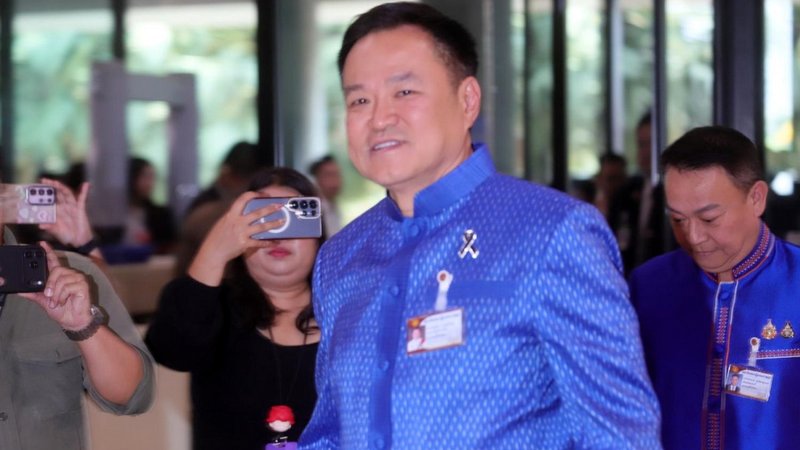
They reacted to the announcement of the Cabinet members in the Royal Gazette yesterday, which paves the way for a government with full authority to address these problems, reports the Bangkok Post.
BRIGHT OUTLOOK
Poj Aramwattananont, chairman of the Thai Chamber of Commerce, said the private sector is confident that the new Cabinet will perform its duties effectively and is eager to work closely with the government to tackle the challenges.
The private sector hopes to see the economic Cabinet functioning as a truly united team, breaking down silos between ministries, making decisions swiftly, and remaining alert to global competition.
Moreover, it is urging the government to look beyond short-term fixes, seeking clear and practical plans that can be executed promptly. Such approaches should ensure continuity in addressing challenges, regardless of political changes, rather than being reset with each new administration.
He said it is particularly important to focus on how the country manages global geopolitics and energy costs. By planning smart trade strategies with both China and the US and maintaining political stability, Thailand can attract investment and boost exports. Keeping energy and electricity prices stable and competitive is also crucial.
Mr Poj added that structural reforms are needed to reduce national costs. Streamlining bureaucracy and integrating data can ease burdens on both individuals and businesses, while tougher action against corruption would prevent missed opportunities for the country.
The private sector is also urging the government to revitalise the real economic foundation ‒ particularly the agricultural sector, which continues to face structural challenges.
If these problems are addressed, Thailand’s processed food industry will have the resources it needs to expand globally.
At the same time, the government should accelerate efforts to build a comprehensive database of small and medium-sized enterprises (SMEs) so support can reach those who need it most. Adoption of digital and artificial intelligence technologies can also help strengthen the competitiveness of Thai businesses, he added.
BETTER CRISIS MANAGEMENT
Kitpon Praipaisarnkit, vice-president of UOB Kay Hian Securities, said the new administration led by the Bhumjaithai Party should be better able to manage the ongoing oil crisis, given the party’s large majority in the coalition government.
"Clearly, the new Cabinet faces an urgent need to tackle the energy price crisis, which the caretaker government was unable to address efficiently over the past month, possibly because they were unaware of the full scale of the problem," he told the Bangkok Post.
Now that the new administration has full authority, with Bhumjaithai controlling the majority of the government, it should be able to handle energy-related issues more effectively, Mr Kitpon added.
The Thai economy, meanwhile, awaits a boost in the form of stimulus as the new government takes office amid protracted US-Iran tensions, now over a month old.
Most economic ministers are well regarded for their designated roles, and they should be given some time to perform, Mr Kitpon added.
Nuttawut Wongyaowarak, vice-president for research at Globlex Securities, said energy prices and the efficient management of oil reserves are the major challenges facing the new government.
Oil prices remain well above the copy00-per-barrel mark, and with the major Strait of Hormuz still blocked amid prolonged tensions in the Middle East, it will take more time for crude to be delivered to Thailand, he explained.
"The government’s focus now seems to be on reducing the burden on consumers as oil prices have skyrocketed. However, the market still needs to see stimulus measures that could boost economic growth," Mr Nuttawut noted.
CHALLENGES AHEAD
The Federation of Thai Industries (FTI) has urged newly appointed Industry Minister Varawuth Silpa-archa to introduce urgent measures to ease the impact of soaring energy costs while guiding Thailand’s manufacturing sector towards digital and green transformation.
FTI vice-chairman Apichit Prasoprat, who is vying for the federation’s chairmanship, warned that global energy prices could remain high for at least two years if the Middle East conflict continues.
"Manufacturing, industry, and SMEs will suffer from this crisis," he said, stressing that short-term relief is needed to offset rising fuel and electricity bills.
The FTI fears that high energy costs could force some operators to suspend production.
Mr Apichit added that Thailand must adopt new policies to help businesses transition from traditional manufacturing to high-value-added industries. He highlighted the need for green manufacturing, artificial intelligence, and data centre development to strengthen competitiveness.
The federation also called on the minister to support wider use of renewable energy, such as solar cells, biomass, and biogas. While Thailand has strong potential in renewables, current regulations do not adequately encourage industrial operators or SMEs to adopt them.