



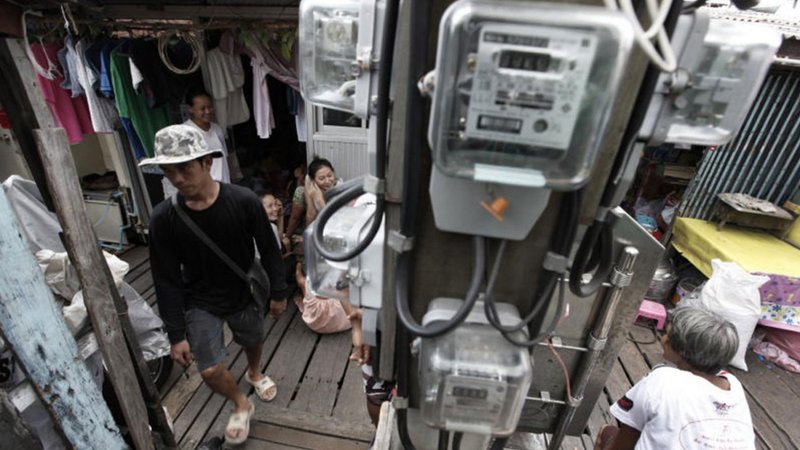
Worawit Srianantaraksa, a member of the ERC, said on Monday (Mar 23) that the new tariff structure will be considered at the regulator’s board meeting on Wednesday, reports the Bangkok Post.
The ERC earlier outlined three possible scenarios for the fuel tariff (Ft) calculation, he said.
In the first scenario, the Ft is to be calculated strictly in line with a formula that includes full repayment of outstanding costs borne by the Electricity Generating Authority of Thailand (Egat), currently estimated at about B36 billion. Under this option, the electricity tariff would rise to B4.59 per unit.
The second scenario excludes the repayment and would result in a lower tariff of B4.08 per unit.
Under the third scenario, Egat’s debt repayment would be excluded and around B9.4bn from a claw-back mechanism would be used to subsidise power costs. This would reduce the tariff by about 13 satang per unit, bringing it to B3.95 per unit ‒ still higher than the current rate of B3.88 per unit.
Mr Worawit said that if the government wants to maintain the electricity tariff at the current level, additional support measures would be required as LNG costs have surged rapidly due to instability in the Middle East.
LNG prices have risen to US$25 per million British thermal units (Btu), up from US$11 previously.
Towards mitigating the impact, the ERC member explained natural gas production in the Gulf of Thailand has been ramped up by 150mn cubic feet per day, bringing total output to about 2bn cubic feet per day.
He said authorities are also in talks with LNG importers to accelerate procurement from alternative sources, including the Asia-Pacific region and West Africa.
At the same time, Egat has been instructed to adjust its power generation plan by increasing output from the Mae Moh power plant, which uses coal and has lower production costs than other energy sources.
Currently, Mae Moh power plant is generating about 700 megawatts out of its total capacity of 1,200 megawatts.
Efforts are also under way to secure additional electricity from hydropower sources, both domestically and from Laos, to bolster energy security during the period of volatile fuel prices.