


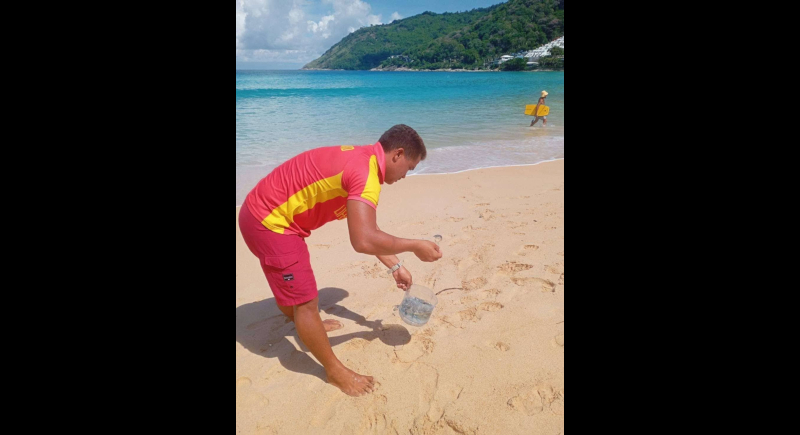
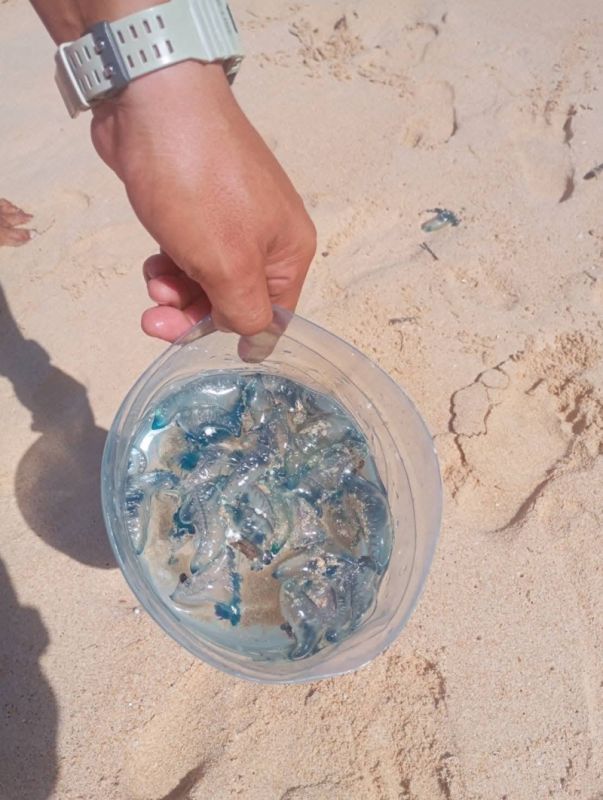
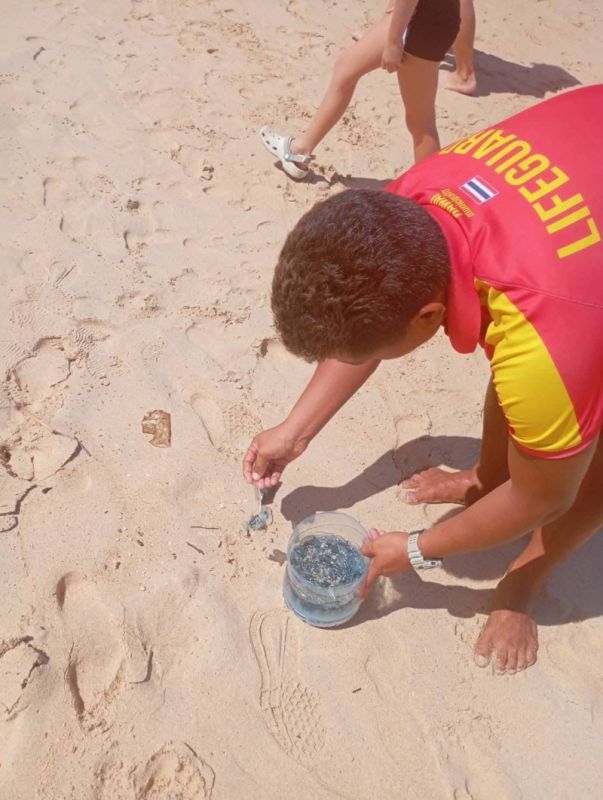
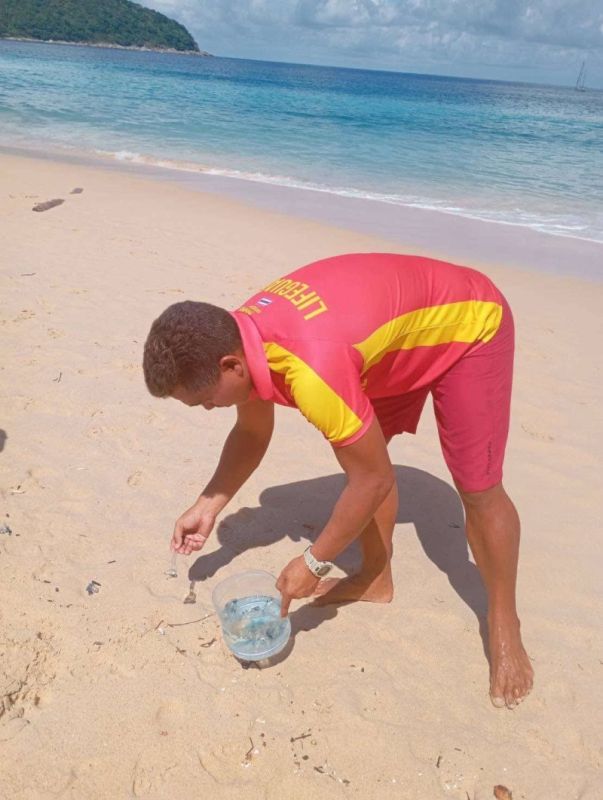
The alert was issued through the Phuket Lifeguard Service Facebook page yesterday (June 14), accompanied by photographs showing two Portuguese Man-o-War specimens being collected in a glass container.
According to the warning, the jellyfish were found at Nai Harn Beach, Kata Noi Beach and Kata Beach, prompting lifeguards to increase monitoring and surveillance measures to protect beachgoers and tourists.
Officials explained that Portuguese Man-o-War are highly venomous marine animals and can still pose a danger even after being washed ashore.
Contact with the creatures can cause severe burning pain, swelling, redness and skin rashes. In some cases, victims may suffer serious allergic reactions requiring immediate medical treatment, the warning noted.
Lifeguards urged tourists, swimmers and beach operators to exercise caution and check their surroundings carefully before entering the water.
Beachgoers were also advised to avoid touching any jellyfish or unidentified marine creatures found in the sea or on the beach.
Anyone who spots a jellyfish resembling a Portuguese Man-o-War is asked to immediately notify the lifeguard on duty.
If stung, people should leave the water immediately, alert lifeguards or other staff for first aid assistance, and seek medical attention as soon as possible.
The Phuket Lifeguard Service confirmed that it will continue monitoring the situation and providing updates to help prevent injuries from venomous jellyfish during the current period.